
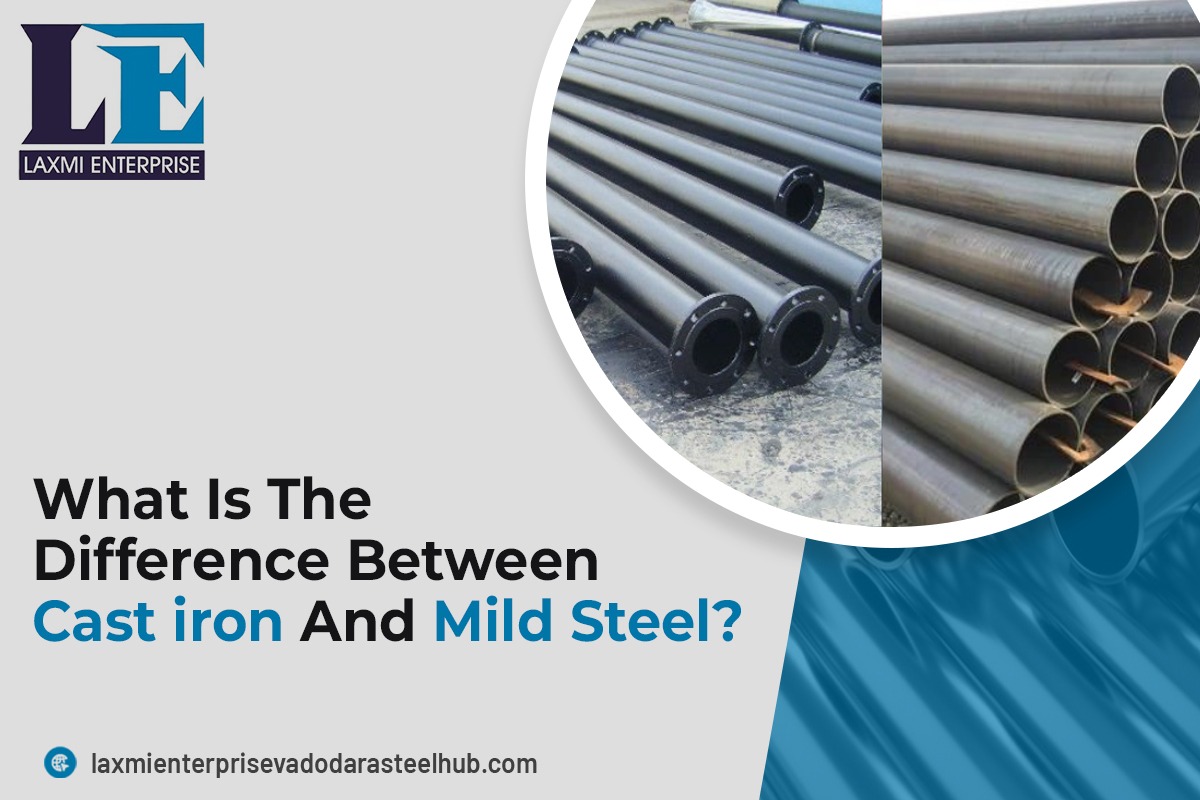
Metals are the foundation of the manufacturing industries. Most of the manufacturers use iron and steel because of their qualities, like high tensile strength, durability, and ability to retain luster for a long time. However, some people debate upon the qualities of cast iron, claiming that it is stronger than mild steel. In this blog, we will explore the differences between cast iron and mild steel.
What is Cast Iron?
Cast iron is formed by smelting the alloy of iron and carbon. The carbon content of this iron is only 2–4%. After that, the ironsmith pours iron into the mold instead of shaping it with a hammer and tools. It also contains silicone, sulfur, phosphorus, and manganese. It possesses several mechanical qualities, including toughness, ductility, hardness, and elasticity. There are various types of grey iron, white iron, malleable iron, ductile iron, and compacted iron graphite.
What is Mild Steel?
It is a type of steel with an extremely low percentage of carbon content. Typical concentrations of steel found are around 0.05% to 0.25%. Due to the lesser amount of carbon, the steel is more ductile, machinable, and easier to weld. Mild steel also contains high levels of iron and ferrite, making it magnetic.
In the manufacturing sector, mild steel is a common choice for building automobiles, tools, machinery, and weapons. The low concentrations of carbon make this steel more affordable than high-carbon steel; however, it requires a proper coating to ensure longevity. Laxmi Enterprise provides the highest quality of zinc-coated mild-steel bars. As a leading MS steel supplier in Vadodara, we source our mild steel from trusted manufacturers, including MS pipes, MS beams, MS channels, TMT bars, etc. Each one is sourced, expertly customized, and consistently fulfils your needs.
Also Check: Maintenance Tips for Mild Steel
Difference Between Cast Iron and Mild Steel
| Feature | Cast Iron | Mild Steel |
|---|---|---|
| Composition | Contains 2–4% carbon, along with silicon and traces of other elements | Contains up to 0.25% carbon, with iron as the primary element |
| Strength | High compressive strength but lower tensile strength | High tensile strength and good ductility |
| Hardness | Hard and brittle | Softer and more malleable |
| Ductility & Malleability | Low ductility; breaks under sudden impact | High ductility; can bend and shape easily |
| Corrosion Resistance | Moderate corrosion resistance due to high carbon content | Lower corrosion resistance unless coated or treated |
| Machinability | Easy to machine but produces brittle chips | Good machinability with continuous chips |
| Weldability | Poor weldability due to brittleness | Excellent weldability |
| Common Uses | Engine blocks, pipes, manhole covers, and cookware | automobile |
| Cost | Generally cheaper | Slightly more expensive |
| Appearance | Dull grey with rough texture | Smooth surface, silvery-grey |
Conclusion
Although cast iron and mild steel appear to be similar, they have a lot of differences. They are both used in manufacturing units for different purposes. Mild steel stands out as an excellent choice of metal, as it is durable, has high tensile strength, is cheaper, has excellent weldability, and is resistant to corrosion. For all your MS steel products, choose Laxmi Enterprise MS steel product supplier in Vadodara. Our products are carefully curated to meet the needs and expectations of our customers. They are tailored to the requirements of the client and the application. Call us to discuss your requirements.
Also Read: The Role of Mild Steel in the Manufacturing of Furniture