Tejas

Categories
MS Steel

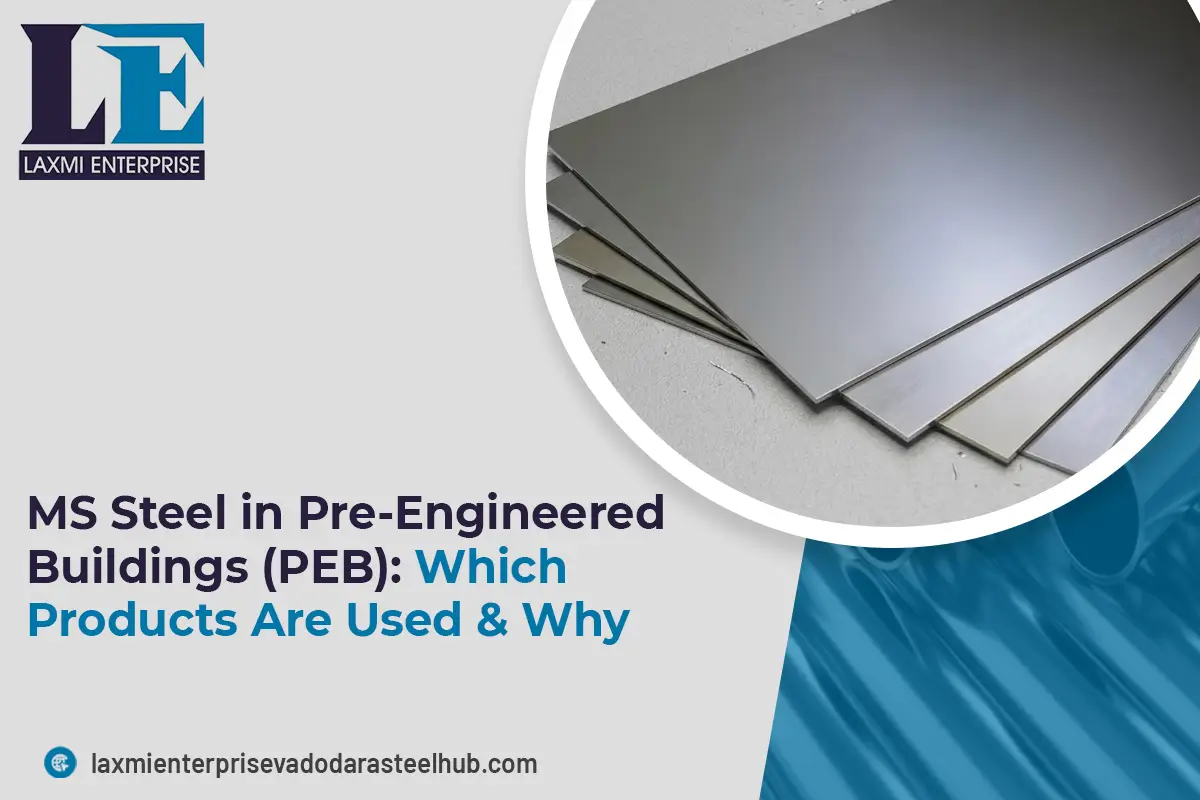
MS Steel in Pre-Engineered Buildings (PEB): Which Products Are Used & Why

Pre-Engineered Buildings (PEB) have become a popular choice for modern construction due to their speed, cost efficiency, and structural flexibility. These buildings are commonly used for warehouses, factories, industrial sheds, commercial spaces, and large infrastructure projects. One of the key reasons behind the strength and durability of PEB structures is the use of high-quality MS (Mild Steel) structural components. From mild steel angles and beams to TMT bars and pipes, these products are widely used in PEB construction because they provide excellent strength, ease of fabrication, and long-term durability, making them ideal for large-span structures and heavy-load applications. 

Why MS Steel Is Used in Pre-Engineered Buildings

MS steel is preferred in PEB construction because of several important advantages.

  1. High Strength With Good Flexibility: Mild steel offers high strength and excellent flexibility, allowing structures to withstand heavy loads and environmental stresses.
  2. Machinability: It is easy to fabricate, weld, and assemble, which speeds up construction timelines
  3. High Quality Results: MS steel components can be manufactured with precision, ensuring consistent quality and structural stability.

Because of these benefits of mild steel, contractors often rely on reliable suppliers such as Laxmi Enterprise MS steel product supplier in Vadodara to source structural steel components for PEB projects.

Common MS Steel Products Used in PEB Structures

PEB systems use different types of steel components to create strong and stable frameworks.

#1 TMT Bars for Reinforcement

TMT bars are widely used in the foundation and reinforcement structures of pre-engineered buildings. They provide tensile strength and structural support, ensuring the building can withstand heavy loads and external forces. Builders often procure materials through TMT bar wholesale in Vadodara suppliers to ensure consistent quality and bulk availability for large projects.

#2 MS Channels for Structural Framework

MS channels are essential in PEB construction as they are used for framework support, bracing systems, and structural alignment. Their “C” shape provides strong load-bearing capability while maintaining structural stability. Contractors working on industrial projects frequently source ISMC MS channel in Vadodara for framework fabrication and structural reinforcement.

#3 Mild Steel Pipes for Structural Support

Mild steel pipes are commonly used in PEB structures for support columns, trusses, and piping frameworks. They provide excellent durability and are suitable for both structural and utility applications. Many builders prefer sourcing these materials from a reliable mild steel pipes supplier in Vadodara to ensure durability and long service life.

Conclusion

Pre-Engineered Buildings rely heavily on high-quality mild steel components to achieve strength, durability, and cost efficiency. Structural elements such as TMT bars, MS channels, and mild steel pipes play a crucial role in ensuring the stability and longevity of these buildings

Partner with Laxmi Enterprise for Quality MS Steel Products

Laxmi Enterprise is a trusted MS steel product supplier in Vadodara, providing a wide range of structural steel materials for construction, fabrication, and industrial projects. The company supplies premium-quality steel products, including TMT bars, MS channels, angles, pipes, bars, colour-coated sheets, roofing sheets and other products suitable for modern construction requirements. Whether you need materials for PEB structures, building frameworks, or fabrication work, Laxmi Enterprise offers the highest quality mild steel products tailored to your project needs. To discuss your project needs, call us today

Read: Checklist for First-Time Buyers of MS Steel Products

Categories
MS Channel

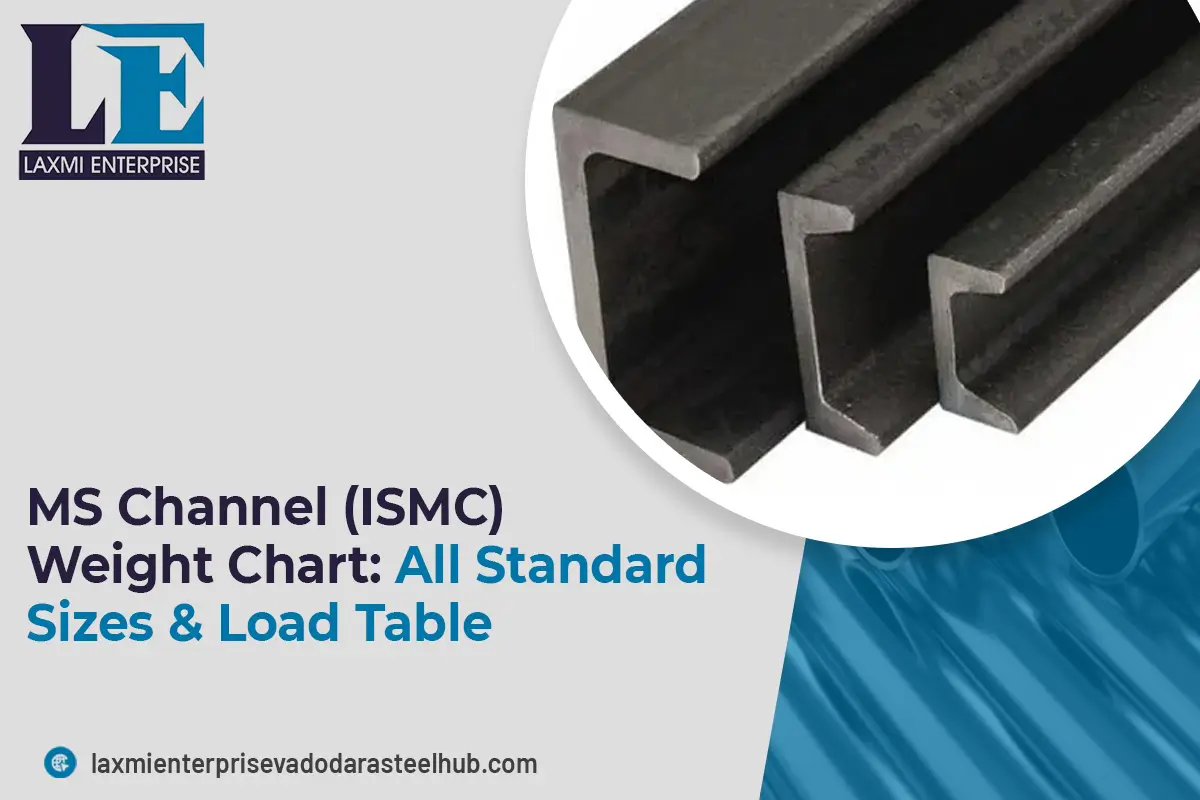
MS Channel (ISMC) Weight Chart: All Standard Sizes & Load Table

MS Channels, also known as ISMC (Indian Standard Mild Steel Channels), are widely used structural steel components in construction and industrial applications. They are designed in a “C” shape and provide strong structural support for beams, frames, and other load-bearing structures. Engineers, fabricators, and contractors often refer to MS channel weight charts to determine the correct size and weight required for structural designs. Knowing the exact weight per meter helps in estimating material requirements, transportation costs, and load capacity in construction projects. In this guide, we share the MS channel weight chart, load table and other important details. 

What is Indian Standard Medium Channel?

Indian Standard Medium Channel (ISMC) is a structural section made from mild steel and is shaped like the letter ‘C’. These C-shaped channels are widely used in fabrication, construction, framing and other applications. 

MS Channels typically consist of:

  • Web: Vertical section that carries the load
  • Flanges: The horizontal extensions that provide structural stability 
  • Thickness: Determines strength & load capacity 

Contractors and engineers rely on MS channel suppliers in Vadodara for high-quality ISMC channels tailored specifically for their applications.

MS Channel Specifications

Material: Mild steel

Shape: C-shaped

Dimension: 75mm to 300mm

Unit Length: 5.5 to 6/12/20 meters (customizable)

Weight: Varies depending on size

Finish: Main & Hot rolled 

Full Form of Channel/Beam/Angle Sections Indian Standards

ISMB: Indian Standard Medium Weight Beam

ISMC:  Indian Standard Medium Weight Channel

ISJB: Indian Standard Junior Beams

ISLB: Indian Standard Light Weight Beams

ISMB: Indian Standard Wide Flange Beams

Standard MS Channel Sizes

MS channels are available in different sizes and thicknesses, depending on structural requirements. The size of the channels is often identified by their depth (height of the web) in millimetres. 

Some of the commonly used ISMC channels are:

  • ISMC 75
  • ISMC 100
  • ISMC 125
  • ISMC 150
  • ISMC 175
  • ISMC 200
  • ISMC 250
  • ISMC 300
  • ISMC 350
  • ISMC 400

Each size has a specific weight per meter and load capacity, which is important for structural design. 

MS Channel (ISMC) Weight Chart

Below is a standard ISMC MS channel weight chart used in construction and fabrication projects.

ISMC SizeDepth (mm)Flange (mm)Web thickness (mm)Weight (Kg/m)
ISMC 7575404.87.14
ISMC 100100505.09.56
ISMC 125125655.313.10
ISMC 150150755.716.80
ISMC 175175756.019.60
ISMC 200200756.522.30
ISMC 250250827.530.60
ISMC 300300907.836.30
ISMC 3503501008.542.10
ISMC 4004001008.850.10

This weight chart helps engineers quickly determine the weight per meter of ISMC channel, which is essential for calculating the total material requirement for their specific projects. 

MS Channel Load Weight Bearing Capacity

The load bearing capacity of MS channel depends on a few factors, including:

  • Channel size and thickness
  • Material grade
  • Length of the channel
  • Structural design and support conditions

Large channels with thicker web and flanges can support heavier loads. Most structural engineers use design calculations and structural analysis to determine precise load capacity for a specific application. When selecting channels for construction or fabrication, it is important to work with an experienced MS Steel Supplier in Vadodara, like Laxmi Enterprise, to ensure the material meets required standards and quality specifications.

How to Calculate MS Channel Weight

The weight of an MS channel can be calculated using the following formula:

Weight (in kgs) = Weight per meter x Length 

For instance, if you are using ISMC 150, which weights approx 16.8 kg per meter, and the length is 6 meters, in such case, the total weight would be:

16.8 x 6 = 100.8 kgs

How to Choose the Right MS Channel

Choosing the correct MS channel size depends on several factors, including:

  • Structural Load Requirements: Heavier loads require larger channels with greater thickness and strength.
  • Application Type: Different projects require different channel sizes depending on whether they are used for structural support, fabrication, or reinforcement.
  • Material Quality: Always ensure the material comes from trusted MS steel Vadodara suppliers to maintain structural safety and durability. 
  • Project Budget: Weight and size directly affect cost, so selecting the right size ensures efficient use of materials.

Why Choose Laxmi Enterprise for High-quality MS Channels

When sourcing structural steel, quality and reliability are essential. Laxmi Enterprise is a trusted MS rolling channel supplier in Vadodara, providing high-quality mild steel products for fabrication, construction and other industrial applications. We supply a wide range of ISMC MS channel in Vadodara with standard sizes and quality assurance. Whether you require MS channels for construction, structural frameworks, or fabrication work, Laxmi Enterprise ensures consistent quality and dependable supply. For the best quotes, call us today. 

Frequently Asked Questions (FAQs)

ISMC stands for Indian Standard Mild Steel Channel, which refers to standardized mild steel channels used in structural construction and fabrication.

MS channel weight is calculated using the weight per meter specified in the ISMC chart multiplied by the total length of the channel.

MS channels are used in construction frameworks, machinery structures, bridges, fabrication works, and industrial buildings.

You can purchase high-quality steel channels from a reliable MS Steel Supplier in Vadodara, such as Laxmi Enterprise, which supplies standard ISMC channels for construction and fabrication needs.

Categories
MS Angle

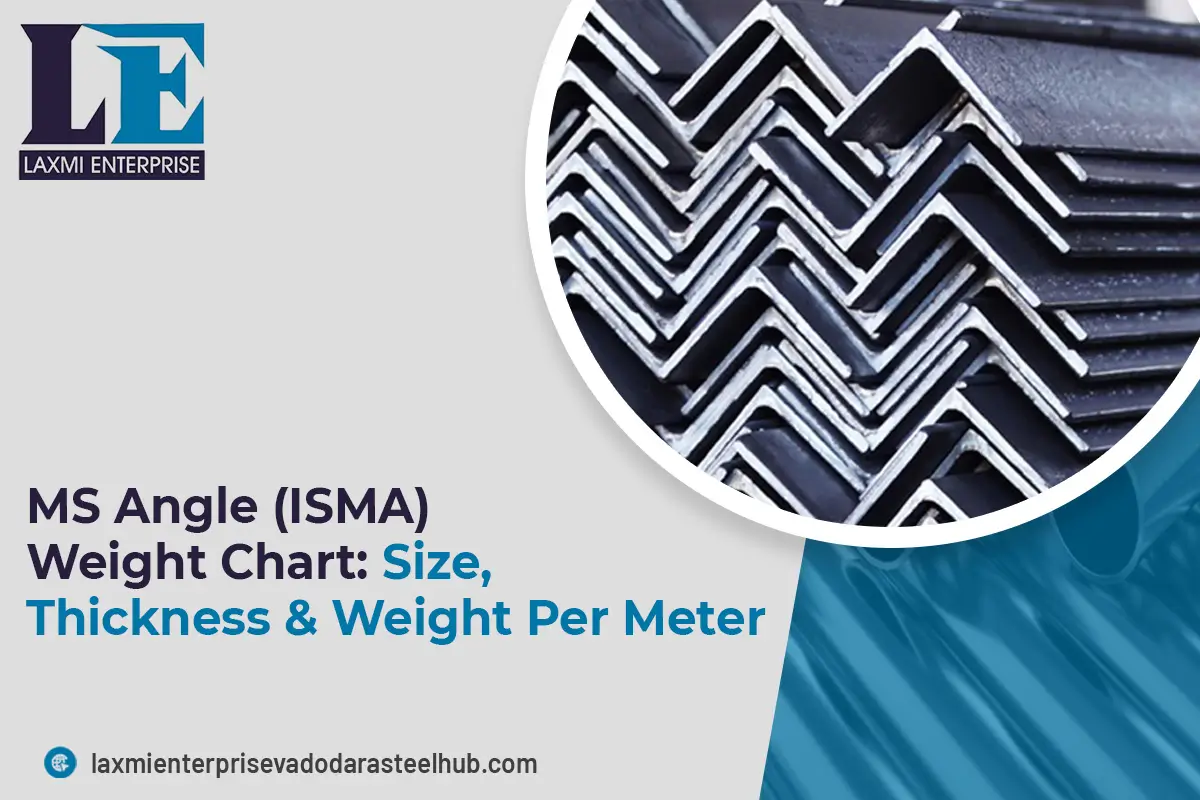
MS Angle (ISMA) Weight Chart: Size, Thickness & Weight Per Meter

ISA (Indian Standard Angle) are widely used in construction, engineering and fabrication projects. Their simple L-shaped cross-section provides excellent strength and support, making them suitable for a wide range of structural applications. Engineers, contractors and fabricators rely on MS angle weight charts to determine the exact size, thickness and weight per meter required for construction projects.

These charts help estimate material quantities, calculate structural loads, and plan transportation and fabrication requirements. We, at Laxmi Enterprise, provide a complete ISMA MS angle weight chart, including standard sizes, thickness specifications, and weight per meter to help professionals select the right steel angle for their projects.

What is Indian Standard Medium Angle?

Indian Standard Medium Angle is a structural steel section made of mild steel and shaped like the letter ‘L’. It consists of two perpendicular legs that provide strength and stability when used in structural frameworks.  The MS steel product supplier in Vadodara provides these materials for construction and engineering projects, following standard dimensions and weight specifications. 

ms angle

Indian Standard Medium Angle Specifications

Material: Mild steel 

Shape: L/V shape 

Dimension: 19x19x2 & above

Unit Length: 20 ft

Standard MS Angle Sizes

These MS angles are available in various sizes depending on the length of the legs and thickness. The size of the angle is typically expressed as length × length × thickness (in millimetres). Some of the commonly used ISMA sizes are:

  • 19 x 19 x 2 mm
  • 20 × 20 × 3 mm
  • 25 × 25 × 3 mm
  • 30 × 30 × 3 mm
  • 40 × 40 × 5 mm
  • 50 × 50 × 5 mm
  • 65 × 65 × 6 mm
  • 75 × 75 × 6 mm
  • 90 × 90 × 8 mm
  • 100 × 100 × 8 mm

MS Angle (ISMA) Weight Chart

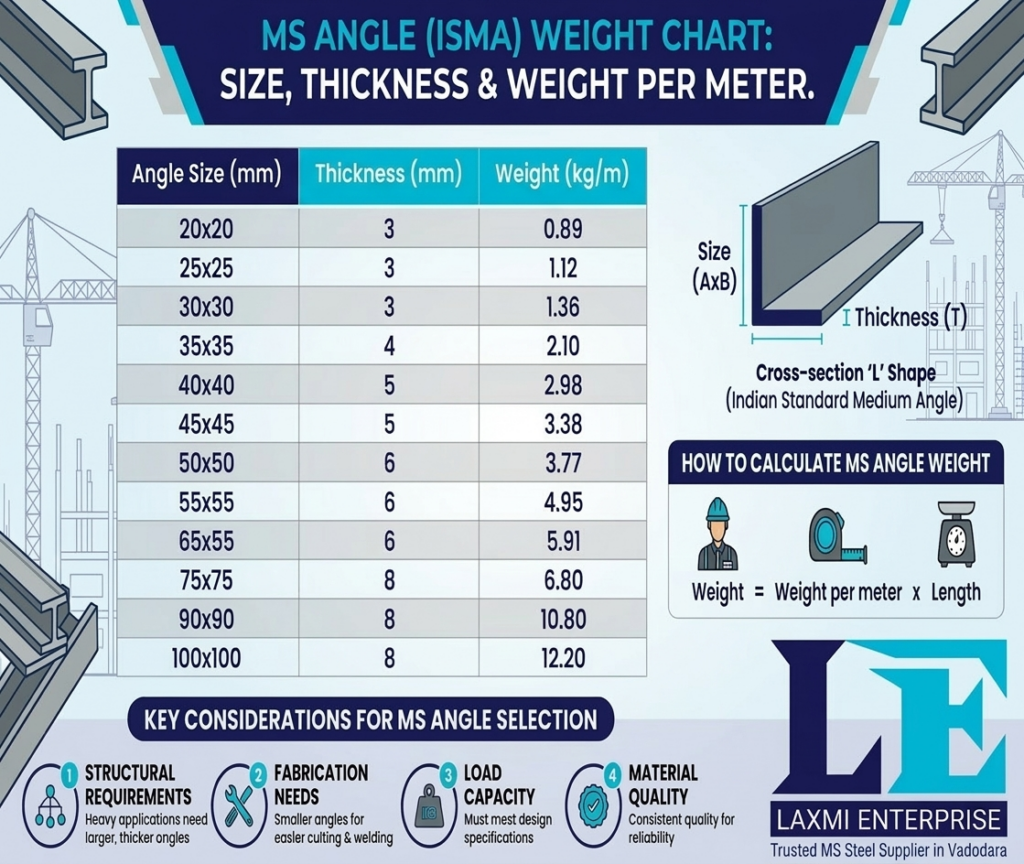
Below is a standard ISMA MS angle weight chart showing commonly used sizes, thickness, and weight per meter.

Angle Size (mm)Thickness (mm)Weight (kg/m)
20X2030.89
25X2531.12
30X3031.36
35X3542.10
40X4052.98
45X4553.38
50X5053.77
55X5564.95
65X6565.91
75X7566.80
90X90810.80
100X100812.20

This chart provides a quick reference for engineers to determine the weight per meter of MS angles, which is essential for structural calculations and material planning.

MS Angle Dimensions and Thickness

The performance of the MS angle in structural applications depends on various factors, including:

  • Leg Length: The length of each leg determines the size of the angle and the structural strength it provides.
  • Thickness: The thickness of the steel affects both weight and load-bearing capacity. Thicker angles are used in heavy structural applications.
  • Weight Per Meter: Weight per meter helps calculate the total weight required for construction or fabrication projects.

By referring to the ISMA weight chart, engineers can choose the correct steel angle size that meets structural design requirements.

How to Calculate MS Angle Weight

The weight of MS angle can be calculated using the following formula:

Weight= Weight per meter x length 

For instance, if the weight of a 50 × 50 × 5 mm angle is approximately 3.77 kg per meter, and the required length is 6 meters, the total weight would be:

3.77 × 6 = 22.62 kg

How to Choose the Right MS Angle

MS Angle Weight Calculator
Weight: 0.00 kg

To select the right MS angle, take into consideration the following factors:

  • Structural Requirements: Heavy structural applications require larger angles with greater thickness.
  • Fabrication Needs: Fabrication projects may require smaller angles that are easier to cut and weld.
  • Load Capacity: Angles used in load-bearing structures must meet the required strength specifications.
  • Material Quality: Always purchase steel froma  trusted MS angle supplier in Vadodara to ensure consistent quality and structural reliability. 

Conclusion

Understanding the MS angle weight chart allows you to accurately estimate loads, budget and ensure structural safety & integrity. When sourcing structural steel, choosing a reliable supplier is just as important as selecting the correct size and specification. Laxmi Enterprise, a trusted MS Steel Vadodara supplier, provides high-quality MS angles suitable for a wide range of applications in construction and engineering. We supply MS angles from top steel brands such as SAIL, JINDAL, and VIZAG, ensuring superior strength, durability, and consistent quality. To discuss your mild steel requirements, call us today. 

Read: Best Time to Buy Steel

Frequently Asked Questions (FAQs)

ISMA stands for Indian Standard Mild Steel Angle, which refers to standardized mild steel angles used in structural and construction applications.

MS angle weight is calculated using the weight per meter specified in the ISMA chart multiplied by the total length of the angle.

MS angles are used in construction frameworks, fabrication structures, machinery supports, bridges, and industrial buildings.

You can purchase high-quality MS Steel Vadodara from trusted suppliers like Laxmi Enterprise. To discuss your project, call us today. 

Categories
MS Steel

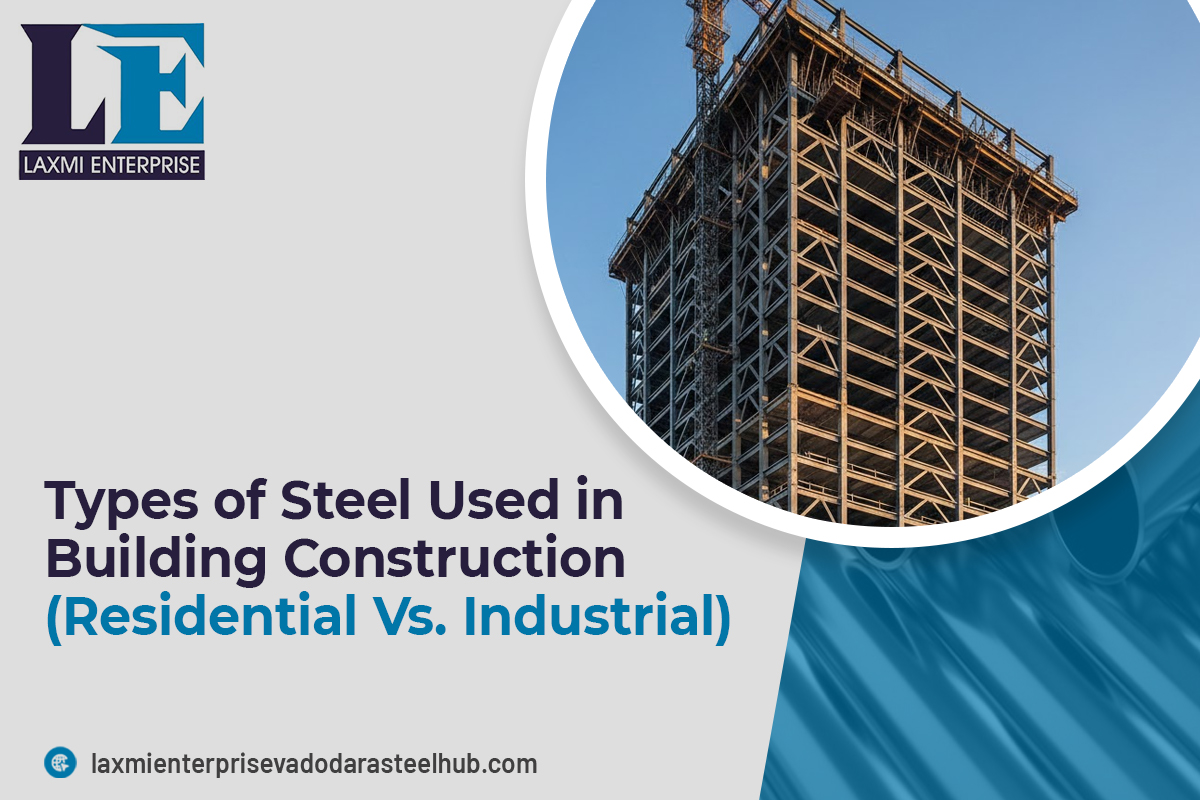
Types of Steel Used in Building Construction (Residential Vs. Industrial)

Steel is the backbone of modern construction. From small residential homes to massive industrial factories, different types of steel are used depending on strength, durability, and load requirements. Understanding the difference between residential and industrial steel helps builders, contractors, and property owners make smarter material choices. So let’s get started! 

Why Steel Is Essential in Construction

Steel is widely used because of its:

  • High tensile strength
  • Durability and long lifespan
  • Resistance to fire and environmental stress
  • Flexibility in design
  • Cost-effectiveness over time

However, not all steel is the same. The type used in a residential house differs significantly from what is required in industrial buildings.

Steel Used in Residential Construction

Residential buildings typically include houses, apartments, villas, and small commercial spaces. These structures require steel that provides strength while maintaining cost efficiency.

#1 TMT Bars (Thermo-Mechanically Treated Bars)

TMT bars are the most common steel product used in residential construction. They are mainly used for reinforcement in:

  • Foundations
  • Columns
  • Slabs
  • Beams

TMT bars offer high strength and flexibility, which helps buildings withstand earthquakes and structural stress. For homes and small buildings, medium-grade TMT bars are generally sufficient. If you are planning a project, working with a trusted TMT bar supplier in Vadodara, like Laxmi Enterprise, ensures you get quality-certified materials suited for both residential and industrial needs. Choosing the right supplier is just as important as choosing the right steel.

#2 Mild Steel (MS) Sections

Mild steel is commonly used in:

  • Window grills
  • Gates
  • Stair railings
  • Small structural supports

MS sections are easy to fabricate and weld, making them ideal for residential construction.

#3 MS Channels and Angles

Structural elements like ISMC MS channel in Vadodara are widely used in small framing structures, roof supports, and lintel beams. These channels provide additional support without adding excessive weight to the structure.

Steel Used in Industrial Construction

Industrial construction includes factories, warehouses, power plants, refineries, and large commercial complexes. These structures require heavy-duty steel capable of handling high loads and stress.

#1 Structural Steel Beams

Industrial buildings rely heavily on I-beams and H-beams for load-bearing frameworks. These beams support:

  • Large roof spans
  • Heavy machinery loads
  • Multi-level platforms

Working with experienced steel beam suppliers in Vadodara, like Laxmi Enterprise, ensures access to properly graded and tested beams for industrial safety standards.

#2 Heavy-Duty TMT Bars

Unlike residential buildings, industrial structures often require higher-grade TMT bars for:

  • Thick foundations
  • Machinery platforms
  • High-load columns

These bars provide superior tensile strength and durability.

#3 MS Plates and Heavy Sections

Industrial construction also uses:

  • Thick MS plates
  • Heavy channels
  • Structural steel columns

These materials support large-scale operations and dynamic loads that residential buildings typically do not experience.

Residential vs Industrial Steel: Key Differences

table

Industrial steel must meet stricter safety and engineering standards due to the higher risk and load factors involved.

How to Choose the Right Steel for Your Project

When selecting steel, consider:

  1. Load Requirements: Residential projects require moderate strength, while industrial projects demand high load-bearing capacity.
  2. Budget: Industrial-grade steel is more expensive due to higher thickness and strength.
  3. Building Type: A warehouse requires different structural support compared to a home.
  4. Compliance with Standards: Always ensure steel meets IS standards for quality assurance.

Understanding the types of steel used in building construction helps ensure structural safety and durability. Residential projects require cost-effective and moderate-strength steel, while industrial projects demand heavy-duty structural materials capable of handling extreme loads. For high-quality mild steel products tailored to both residential and industrial projects, trust Laxmi Enterprise- the best MS Steel Supplier in Vadodara. We supply premium TMT bars, MS channels, structural steel beams, and more – all meeting industry standards. Contact us today for bulk orders and expert consultation.

Read: Top Mild Steel Products to Use in Indian Construction Projects in 2026

Frequently Asked Questions (FAQs)

TMT bars and mild steel sections are most commonly used for residential construction.

Industrial buildings carry heavier loads and machinery, requiring higher-grade structural steel.

It is not recommended, as residential steel may not meet industrial load and safety requirements.

MS channels are used for framing, structural support, and roof reinforcement.

Always purchase from trusted suppliers who provide IS-certified materials.

Yes, TMT bars are essential for reinforcing concrete in foundations and slabs.

Categories
MS Steel

What is IS 2062 Steel Grades? Meaning & Applications

Steel plays a vital role in modern construction and fabrication, but not all steel is the same. One of the most commonly used structural steel standards in India is IS 2062. If you are involved in construction, engineering, or fabrication, understanding IS 2062 steel grades helps you select the right material for strength, durability, and safety. 

What is IS 2062 Steel?

IS 2062 is an Indian Standard specification for hot-rolled medium and high tensile structural steel. It defines the chemical composition and mechanical properties required for structural steel used in construction and engineering.

In simple terms, IS 2062 ensures that the steel you use has:

  • Proper strength
  • Controlled chemical composition
  • Reliable performance under load
  • Consistent quality

This standard is widely used for structural mild steel products such as beams, plates, angles, channels, and flats. For construction firms, it is crucial to use top-quality steel for their projects. Businesses looking for reliable structural materials often depend on a trusted MS steel product supplier in Vadodara to ensure quality-certified steel that meets IS standards. Laxmi Enterprise is known for supplying premium-grade structural steel suitable for residential, commercial, and industrial applications.


Is IS 2062 Mild Steel?

Yes, IS 2062 is considered a structural mild steel standard. Mild steel typically contains a low percentage of carbon, making it:

  • Easy to weld
  • Easy to fabricate
  • Ductile and flexible
  • Cost-effective

Because of these properties, IS 2062 grade steel is ideal for structural frameworks, bridges, buildings, and machinery platforms.

Common IS 2062 Steel Grades Explained

IS 2062 steel comes in different grades based on strength levels. The most common grades include:

#1 IS 2062 E250 (Fe 410)

  • Yield Strength: 250 MPa
  • Used in general structural applications
  • Suitable for residential buildings and light industrial structures

This is one of the most widely used grades in construction.

#2 IS 2062 E350 (Fe 490)

  • Higher yield strength than E250
  • Used in heavy structural projects
  • Ideal for industrial sheds and load-bearing frameworks

This grade offers better resistance to stress and heavy loads.

#3 IS 2062 E410 / E450

  • High tensile strength
  • Used in heavy-duty industrial construction
  • Suitable for bridges, large infrastructure, and heavy fabrication

These grades are selected where maximum structural strength is required.

Chemical Composition of IS 2062 Steel

The strength and performance of IS 2062 steel depend on its chemical composition. It typically contains:

  • Carbon (C) – Provides strength
  • Manganese (Mn) – Improves toughness
  • Silicon (Si) – Enhances durability
  • Sulphur (S) & Phosphorus (P) – Controlled within limits for quality

Low carbon content ensures that the steel remains weldable and easy to fabricate.

Applications of IS 2062 Steel

IS 2062 steel is widely used across multiple industries due to its versatility.

#1 Building Construction

  • Structural frames
  • Columns and beams
  • Platforms
  • Roof supports

Many contractors prefer sourcing MS Steel Vadodara materials from reliable suppliers to ensure compliance with structural standards.

#2 Industrial Sheds & Warehouses

Industrial buildings require strong steel capable of supporting heavy machinery and large spans. Grades like E350 are commonly used in these applications.

#3 Fabrication & Engineering Projects

IS 2062 steel is also used in:

  • Machinery components
  • Fabricated structures
  • MS plates and flats
  • Equipment bases

Builders often rely on a dependable mild steel flat bar supplier in Vadodara like Laxmi Enterprise  to source quality flat bars used in fabrication work.

#4 Bridges and Infrastructure

Higher grades like E410 and E450 are used in:

  • Bridges
  • Flyovers
  • Large infrastructure projects

These applications require steel that meets strict strength and safety standards.

Why Choosing the Right Grade Matters

Selecting the correct IS 2062 grade ensures:

  • Structural safety
  • Long-term durability
  • Cost efficiency
  • Compliance with engineering standards

Using the wrong grade can lead to structural failure or increased maintenance costs. That’s why consulting experienced suppliers and engineers is essential before finalizing material selection.

Conclusion

IS 2062 steel grades play a critical role in ensuring structural strength and safety in construction and industrial projects. As a structural mild steel standard, it offers reliability, durability, and flexibility for a wide range of applications. Understanding the differences between grades like E250, E350, and E410 helps you make informed decisions for your project. At Laxmi Enterprise, Vadodara, we specialize in supplying high-quality IS 2062 structural steel products for residential, commercial, and industrial projects. From MS beams and channels to plates and flat bars, we provide materials that meet industry standards and performance expectations. Contact Laxmi Enterprise today for bulk orders and expert consultation.

Read: Mild Steel HSN Codes Explained & GST Rate in India

Frequently Asked Questions (FAQs)

IS 2062 is an Indian Standard specification for structural mild steel used in construction and engineering.

Yes, grades like E250 are commonly used in residential buildings.

E350 has higher yield strength and is used for heavier structural applications compared to E250.

Yes, due to its low carbon content, it offers good weldability.

It is used in buildings, bridges, industrial sheds, platforms, and fabrication projects.

Selection depends on load requirements, structural design, and project type. Consult your engineer or supplier for guidance.

Categories
MS Pipes

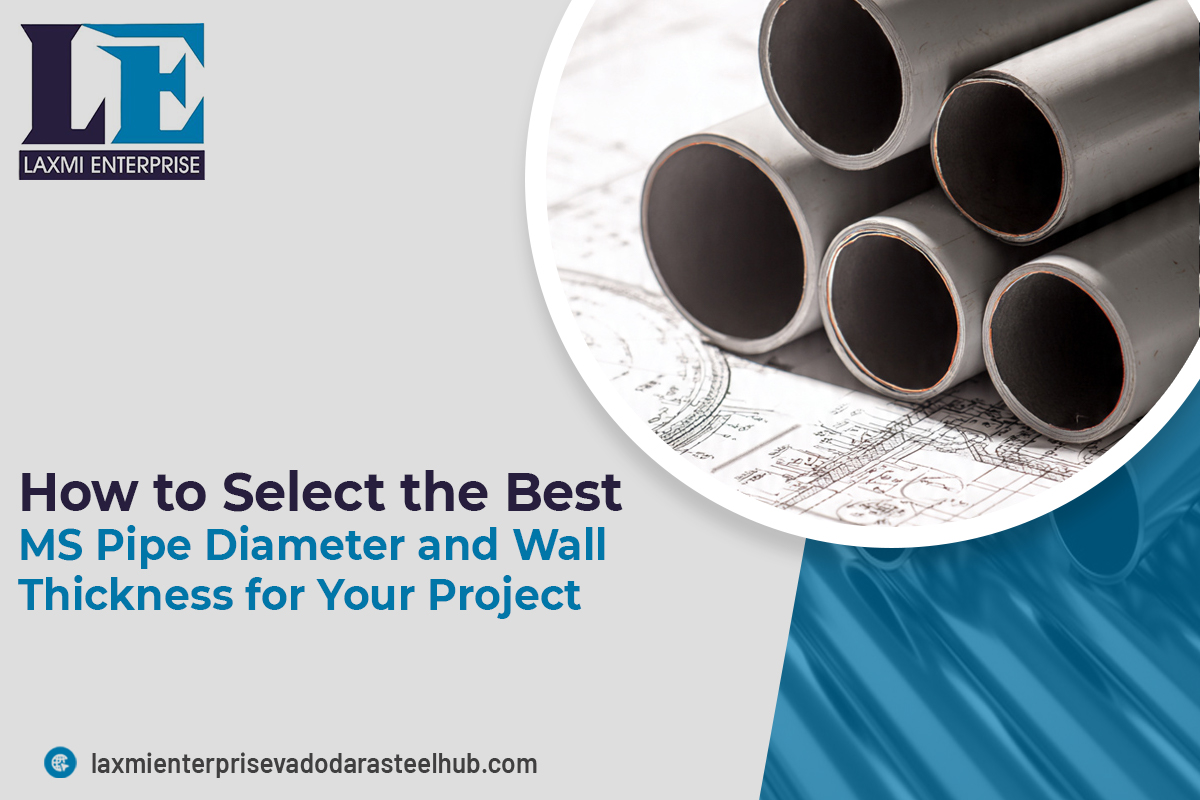
How to Select the Best MS Pipe Diameter and Wall Thickness for Your Project

Choosing the right MS pipe for your project is not just about picking a random size. The correct diameter and wall thickness directly affect strength, durability, cost, and safety. Whether you are working on plumbing, fabrication, construction, or industrial installations, selecting the proper pipe specifications ensures long-term performance and reliability. In this guide, we’ll break down how to choose the best MS pipe diameter and wall thickness based on your specific use case.

Understanding MS Pipe Diameter

The diameter of an MS pipe determines how much fluid it can carry or how much load it can support. There are two important terms you should know:

  • Outer Diameter (OD): The total external width of the pipe.
  • Inner Diameter (ID): The internal space where fluid flows.

For plumbing or water supply systems, a larger inner diameter allows better flow and reduces pressure loss. If the diameter is too small, it may restrict flow and increase system strain. For structural applications like railings, sheds, scaffolding, or frames, diameter plays a key role in load-bearing capacity. Larger diameters generally offer better resistance to bending and stress.  Consulting a reliable MS steel product supplier in Vadodara, like Laxmi Enterprise  can help you choose the correct mild steel pipe grade and diameter for your specific application.

Before choosing the diameter, ask yourself:

  • What is the purpose of the pipe?
  • Will it carry liquid, gas, or serve as structural support?
  • What level of load or pressure will it handle?

Read: Types of MS Pipes for Plumbing and Construction

How to Select the Best MS Pipe Diameter and Wall Thickness for Your Project?

Choosing the Right Wall Thickness

Wall thickness determines the strength and durability of the pipe. Thicker walls provide higher resistance to pressure and mechanical stress, but they also increase weight and cost.

MS pipes are commonly available in different classes under the IS standards:

  • Class A (Light): Suitable for low-pressure applications such as basic plumbing.
  • Class B (Medium): Ideal for general construction and moderate-pressure uses.
  • Class C (Heavy): Designed for high-pressure and heavy-duty industrial applications.

For example:

  • Light frameworks or indoor plumbing can use thinner walls.
  • Industrial pipelines or structural columns require thicker walls for added safety.

Always balance performance with budget. Over-specifying thickness increases costs unnecessarily, while under-specifying can lead to safety risks.

Consider the Application Type

Different applications demand different specifications:

1. Plumbing & Water Supply

Choose a diameter based on the expected flow rate. Medium wall thickness (Class B) is commonly preferred.

2. Structural & Fabrication

For gates, grills, sheds, and supports, both diameter and thickness must match the expected load.

3. Industrial Use

For high-pressure systems, thicker walls and proper grade selection are critical.

Working with an experienced mild steel pipes supplier in Vadodara ensures you receive guidance based on your project’s exact requirements.

Check Quality Standards

Always ensure that MS pipes comply with recognized standards such as IS 1239 or IS 3589. Pipes that meet these standards provide consistent thickness, accurate dimensions, and reliable strength.

If you are purchasing in bulk, sourcing from a trusted MS pipe wholesale in Vadodara helps maintain uniform quality across the project while keeping costs competitive.

Selecting the best MS pipe diameter and wall thickness is about understanding your project’s needs and matching them with the correct specifications. When chosen correctly, MS pipes deliver strength, efficiency, and long-lasting performance.  At Laxmi Enterprise, Vadodara, we provide high-quality MS pipes in various sizes, thicknesses, and grades to suit construction, fabrication, and industrial needs. Whether you need bulk supply, customized sizes, or expert guidance, our team ensures you get the right material at the right price. Call us today to discuss your requirements.

Read: Right MS Pipe for Your Projects

Frequently Asked Questions (FAQs)

MS pipes come in various thicknesses depending on Class A, B, or C. Thickness typically ranges from light-duty to heavy-duty as per IS standards.

Inner Diameter (ID) = Outer Diameter (OD) − 2 × Wall Thickness.

Class B is commonly used for plumbing due to its balanced strength and cost.

Thin pipes are suitable for light structures but not for heavy load-bearing applications.

Wall thickness affects pressure capacity, strength, and durability of the pipe.

Choose based on load requirements, flow rate, and application type. Larger diameters support better flow and structural strength.

Categories
MS Steel

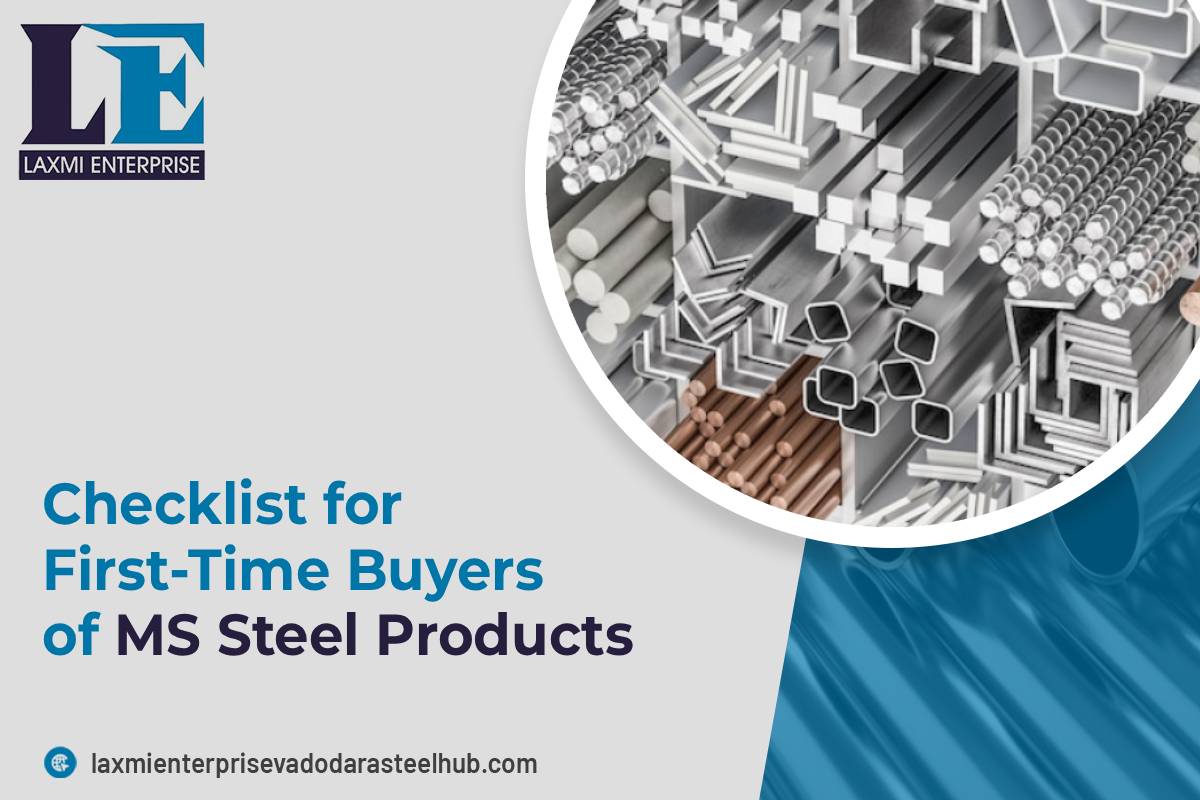
Checklist for First-Time Buyers of MS Steel Products

Mild steel is one of the most widely used metals in modern construction, fabrication, and manufacturing. It offers reliability, strength, and affordability makes it ideal for roofing, frameworks, heavy-duty machinery, and architectural structures. However, for such tasks, the user needs to understand how to choose the right type of MS steel application-specific products. This checklist for first-time buyers of MS steel products can save time and money while ensuring vital long-term performance. 

Overview of Mild Steel

Mild steel is a popular low-carbon alloy with a very small percentage of carbon, of around 0.5% to 0.25%. Laxmi Enterprise is a reputed and renowned supplier of MS steel product in Vadodara. We have a broad range of MS products: MS channels, MS bars, MS TMT bars, MS pipes, MS sheets, etc. You can purchase these products at very affordable rates. Give us a call.  There are many benefits associated with mild steel, such as 

  • The low percentage of carbon makes it highly malleable and strong.  
  • It is also considerably cheaper, easy to work with, easy to cut, shape, weld, and drill. 
  • It can be hot-rolled, cold-rolled, or galvanised based on the application and purpose. 
  • It is compatible with most of the coatings, such as paints, powder, zinc, and extends the lifespan in the external environment. 

Chemical Properties of Mild Steel

Properties 

Significance 

Base Composition

Primarily iron with carbon as the main strengthening element

Alloying Elements

Small amounts of manganese, silicon, sulphur, and phosphorus

Purpose of Additives

Improve toughness, deoxidation, machinability, and workability

Density

~7.85 g/cm³

Melting Point

1,425°C – 1,530°C

Mechanical Strength

Good tensile and fatigue strength under static and dynamic loads

Machinability

Excellent; easy to cut, drill, bend, and shape

Weldability & Forming

Thermally stable and well-suited for welding and high-temperature forming

Magnetic Properties

Magnetic and electrically conductive

Common Applications

Motor housings, fixtures, electrical, and industrial components

Carbon Content

Low carbon prevents brittleness and cracking during fabrication

Corrosion Resistance

Poor; requires painting, plating, or galvanising for outdoor use

Some of the Common MS Steel Products

  • Box Section: These hollow and strong profiles are perfect for framework, gates, handrails, columns, and fabrication works. 
  • Flat Bar: These are multi-purpose bars used for brackets, repairs, stiffeners, and reinforcement across construction and domestic projects. 
  • Angle Bar: It provides rigidity and corner strength for roof trusses, frames, and load-bearing supports. 
  • Channel & Beam: It is designed for structural frameworks, joists, and industrial builds requiring high load tolerance. 
  • Sheet & Plate: It is used in cladding, panelling, roofing, baseplates, and fabrication works. 
  • Round & Square: Our MS square & MS rectangular tube in Vadodara is common in manufacturing, machinery, and decorative metalwork applications. 

Advantages of MS Steel Products

  1. Excellent affordability 
  2. Easy to work with 
  3. Readily available 
  4. Strong and dependable 
  5. Highly weldable and formable 
  6. Fully recyclable 
  7. Accepts protective coatings

Disadvantages of MS Steel Products

  1. It requires a protective coating for outdoor purposes. 
  2. It has less surface hardness and is less resistant to wear compared to high-carbon steel.  
  3. It is unsuitable for high-temperature applications. 
  4. It should be handled with care to prevent dents or scratches.

How To Choose The Best Mild Steel Product

  • Understanding your project’s needs, such as load, exposure conditions, budget, and finish, is the first step towards choosing the best mild steel product.
  • Opt for corrosion-protected grades, such as galvanized S275, which are essential for structural applications.
  • Determine if basic cold-rolled mild steel is sufficient for indoor or light-use applications.
  • Always buy from a reliable vendor that provides cut-to-size services, like Laxmi Enterprise, the MS Steel Supplier in Vadodara
  • Before placing your order, choose the appropriate length, thickness, diameter, and quantity.
  • To get an accurate quote and guarantee that the materials arrive ready to use, enter the precise dimensions.

Conclusion

For any project to be safe, long-lasting, and economical, the proper mild steel must be chosen. You can prevent material failure and needless costs by knowing your load requirements, environment, and finish requirements, as well as by choosing the right grade, dimensions, and vendors such as Laxmi Enterprise. We are the top company for MS steel Vadodara and provide high quality, dependability, and long-term performance, which are further guaranteed by sourcing from certified, reliable suppliers and confirming adherence to accepted standards. Give us a call to know more. 

Check: Role of Mild Steel in the Manufacturing of Furniture

Frequently Asked Questions (FAQs)

S275 is the most commonly used mild steel grade for general construction due to its good balance of strength, flexibility, and affordability.

Yes, galvanised mild steel is recommended for outdoor or exposed environments as it provides corrosion resistance and extends the lifespan of the material.

Certified suppliers ensure the steel meets required standards, provide test certificates for traceability, and offer accurate cutting and delivery services, reducing the risk of defects or project delays.

Categories
MS Steel

Seasonal Buying Tips: When to Buy Steel to Save Cost

Steel is a foundational raw material for industries such as construction, infrastructure, manufacturing, and fabrication. Yet, the price of these steel products doesn’t stay static for the whole year; they keep fluctuating. It fluctuates with seasonal demand, supply dynamics, weather cycles, and broader market forces. If you are looking to buy steel, then this guide can help you reduce costs significantly and sharpen your competitive edge. In this blog, we will take you through seasonal buying tips, shedding light on when to buy steel to save costs. 

Important Features and Applications of Steel

Steel is a top choice because it balances strength, flexibility, and long-lasting reliability. It can support heavy loads, endure tough conditions, and handle constant use. At the same time, it is easy to shape and work with. From large infrastructure projects to everyday items, steel plays an important role in modern life. Its durability, versatility, and recyclability make it a smart and sustainable option for many industries. If you are looking for high-quality steel from a renowned MS Steel Supplier in Vadodara, contact Laxmi Enterprise. We are a trusted brand for mild steel products such as MS channels, MS beams, MS pipes, MS bars, etc. Interested? Call to place the order. We are delighted to help you choose the best products at reasonable prices. 

Important Steel Features

  • It supports heavy loads without bending or breaking. 
  • It performs well under stress, impact, and extreme temperatures. 
  • It can be bent, rolled, and shaped without cracking. 
  • It is easy to join and fabricate into complex structures. 
  • It can be improved with coatings or alloying. 
  • It has a long service life with minimal maintenance. 
  • It is 100% recyclable, supporting sustainable practices. 

Common Applications of Steel

  • Construction and Infrastructure: Beams, columns, TMT bars, bridges, and pipelines 
  • Automotive and Transportation: Vehicle frames, body panels, railways, and ships 
  • Industrial Machinery: Manufacturing equipment, tools, and heavy machines 
  • Oil and Gas Sector: Storage tanks, drilling equipment, and transmission pipes 
  • Household and Commercial Use: Appliances, furniture, and everyday hardware

Seasonal Buying Tips to Purchase High-quality Steel

#1 Know the Seasonal Price Cycles

The steel mainly follows a predictable seasonal demand pattern, such as 

➤ High demand season: Spring and pre-monsoon months that see intense construction activity. This period sees a surge in demand and price of steel. 

➤ Low demand season: Mid-winter and heavy rain periods generally see lower demand, giving buyers an advantageous price.

#2 Best Time of the Year to Buy Steel

➤ Mid-winter (Dec–Feb)

  • Slow construction activity.
  • Suppliers clear inventory at competitive rates. 
  • Good opportunity for bulk stocking.

➤ Post-monsoon slowdown (Oct–Nov)

  • Demand eases after seasonal peaks.
  • A transitional trough before the year-end project starts.

➤ Late monsoon to early winter (Aug–Oct)

  • Prices are moderate — not steep like peak seasons.
  • Useful window to plan for early-year project starts. 

#3 Use Forward Buying to Lock in Lower Prices

Purchasing steel before the price-surging period is the best time to get the most attractive deals. This way, the customer can improve budget predictability and improve financial planning. It helps in securing deals ahead of competitors.

#4 Diversify Suppliers to Hedge Price Risk

Relying on a single supplier increases exposure to price spikes or delivery delays. It benefits the customer in exploring different inventories of different suppliers, helps get through the local price pressures, and the regular comparison strengthens negotiation leverage.

#5 Monitor Prices in Real Time

Seasonal tips become much more effective when paired with real-time price tracking. 

  • Use digital tools to monitor supplier rate changes.
  • Subscribe to alerts on raw material or freight cost movements.
  • Keep current on policy changes or tariff announcements that affect steel pricing. Real-time monitoring turns pricing data into actionable buying signals.

#6 Negotiate for Better Deals

Low-demand periods are ideal for negotiation, as suppliers are more open to offering bulk purchase discounts, flexible delivery schedules, and favorable payment terms. Taking advantage of these quieter market phases can significantly reduce overall steel procurement costs.

Conclusion

Smart steel buying depends on timing and planning. Understanding seasonal demand patterns helps buyers avoid peak prices and secure better deals. By purchasing during low-demand periods and negotiating effectively, businesses can control costs and improve procurement efficiency. For better deals, contact Laxmi Enterprise. We are the most trusted suppliers of MS Steel Vadodara. We source our steel from trusted vendors who comply with the steel standards set by the country, and then refine it further at our facility to meet the customer demands. If you are interested in our products, give us a call. 

Also Check: Role of Steel in Renewable Energy Projects

Frequently Asked Questions (FAQs)

Steel prices are generally lower during low-demand periods such as winter and post-monsoon months, when construction activity slows down.

Seasonal demand, weather conditions, and construction cycles influence steel consumption, causing prices to rise during peak seasons and soften during slower periods.

Yes, buying in bulk during off-peak seasons often allows buyers to negotiate better prices, flexible delivery terms, and improved payment conditions.

Categories
TMT Bars

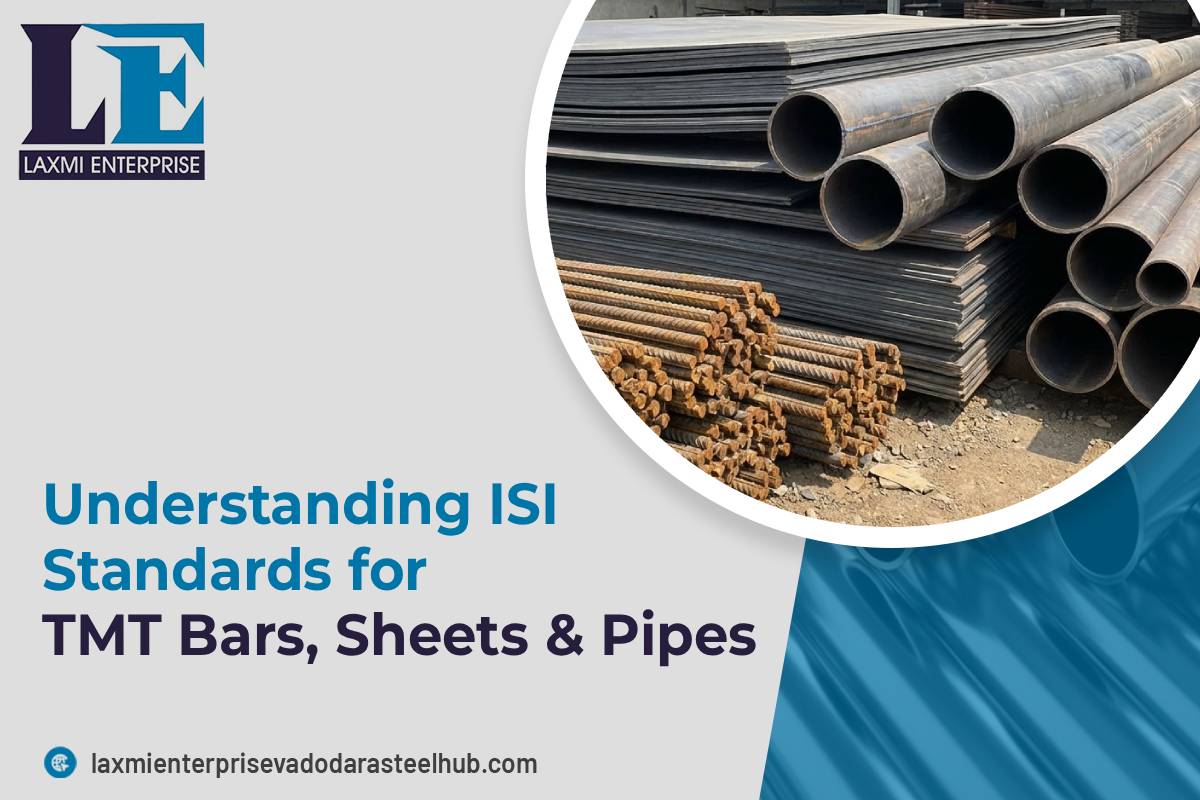
Understanding ISI Standards for TMT Bars, Sheets & Pipes

ISI standards, which are currently managed by the Bureau of Indian Standards (BIS), are essential to preserving the long-term performance, quality, and safety of building materials in India. These standards specify everything from dimensions and durability to chemical composition and strength for TMT bars, steel sheets, and pipes. 

Adhering to BIS standards contributes to the safety, dependability, and regulatory compliance of structures. In this blog, we will understand the ISI standard for TMT bars, sheets & pipes. Laxmi Enterprise is a trusted MS TMT bar supplier in Vadodara, providing the highest quality mild steel TMT bars and MS pipes sourced from top manufacturers. With this blog, we aim to help readers understand ISI Standards for TMT bars, sheets and pipes, to make informed decisions for their projects.

Let’s Take a Look at ISI Standards for Popular Steel Products

#1 TMT Bar ISI Standards (IS 1786:2008)

IS 1786:2008 outlines specifications for high-strength deformed steel bars used in reinforced concrete, which is the benchmark standard for Thermo-Mechanically Treated (TMT) bars.

  • Strength and Grades: Fe 415, Fe 500, Fe 550, and Fe 600 are common grades, where the number denotes the minimum yield strength (MPa).
  • Variants of the “D” Grade: Better elongation and increased ductility are provided by grades like Fe 500D and Fe 550D. These bars are perfect for seismically active areas because they have less phosphorus and sulfur.

Essential Technical Conditions

  • Chemical Composition: Strict restrictions on phosphorus, sulfur, and carbon to increase corrosion resistance and weldability.
  • Rib Pattern: Robust bonding with concrete is ensured by well-defined and consistent ribs.
  • Bend and Re-bend Tests: To ensure flexibility and structural safety, bars must bend without cracking.

Verification of ISI Marks

  • Genuine TMT bars are directly embossed with the grade, manufacturer’s logo, and the ISI mark (IS 1786).

#2 ISI Standards for Steel Sheets and Plates

Steel sheets and plates used in construction and engineering must meet the BIS standards related to strength, thickness, and surface protection. 

  • Structural Steel (IS 2062): For hot-rolled medium and high-tensile steel plates and sheets.
  • Galvanized Steel Sheets (IS 277): Covers zinc-coated steel used for corrosion resistance.
  • Dimensions Standard (IS 1730): Specifies standard sizes for plates, sheets, and strips.
  • Stainless Steel (IS 6911): Applies to stainless steel plates, sheets, and strips for engineering applications.

#3 ISI Standards for Pipes and Tubes

Steel pipes and tubes are regulated based on how and where they are used, such as in manufacturing steel frameworks, water supply, and gas transport. 

  • Structural Pipes (IS 1161): Used for welded or seamless steel tubes used in structural applications.
  • General Purpose Pipes (IS 1239 ): Covers mild steel pipes and fittings for general use.
  • Hollow Sections (IS 4923): Ensures accurate thickness and shape for square and rectangular hollow sections (SHS/RHS).
  • Stainless Steel Tubes (IS 6527): Applies to stainless steel tubes and wire rods.

Factors to Consider Before Purchasing a Steel Article

Key AspectWhat It MeansWhy It Matters
QCO Compliance (2024–2025)BIS Quality Control Orders make ISI certification mandatory for steel manufacturersEnsures only quality-approved steel is sold, reducing the risk of substandard materials
ISI/BIS MarkingsThe product must carry the embossed ISI/BIS mark, grade, and manufacturer’s identificationConfirms authenticity and compliance with Indian standards
Mill Test Certificate (MTC)A batch-wise certificate detailing chemical composition and mechanical propertiesVerifies the strength, ductility, and overall quality of the steel
Grade VerificationConfirms the steel grade (e.g., Fe 500, Fe 500D) matches project requirementsEnsures suitability for structural load and seismic safety
Source ReliabilityPurchasing from authorized dealers or reputed manufacturersMinimizes the risk of counterfeit or uncertified steel
Seismic SafetyPreference for ductile “D” grade steel in earthquake-prone zonesImproves structural flexibility and reduces failure risk
Avoid Non-ISI MaterialsDo not use steel without a valid ISI certificationPrevents structural failures and legal or safety issues

Conclusion

Choosing ISI-certified steel goes beyond simply meeting regulations. It’s about building with confidence. BIS standards guarantee that the steel you use has the right strength, flexibility, and quality to endure over time. With quality control orders now in effect, it’s crucial to check ISI markings, confirm grades, and request mill test certificates before buying. These simple checks can avoid significant issues later, especially in areas prone to earthquakes. Choose Laxmi Enterprise, the most trusted supplier of MS steel product in Vadodara. By opting for certified steel from reliable sources, you safeguard your structure, your investment, and the people who depend on it every day. Give us a call to know more. 

Also Check: MT Bars vs. Traditional Steel Bars

Frequently Asked Questions (FAQs)

ISI certification ensures that steel meets BIS standards for strength, safety, and durability. It confirms that the material has been tested for proper chemical composition and mechanical performance, reducing the risk of structural failures.

Look for the embossed ISI/BIS mark, the steel grade, and the manufacturer’s identification on the product. You should also ask for a mill test certificate (MTC) to verify batch-wise quality.

Yes. Under BIS Quality Control Orders, ISI certification is mandatory for many steel products, helping eliminate substandard materials from the market and ensuring safer construction.

Categories
MS Pipes

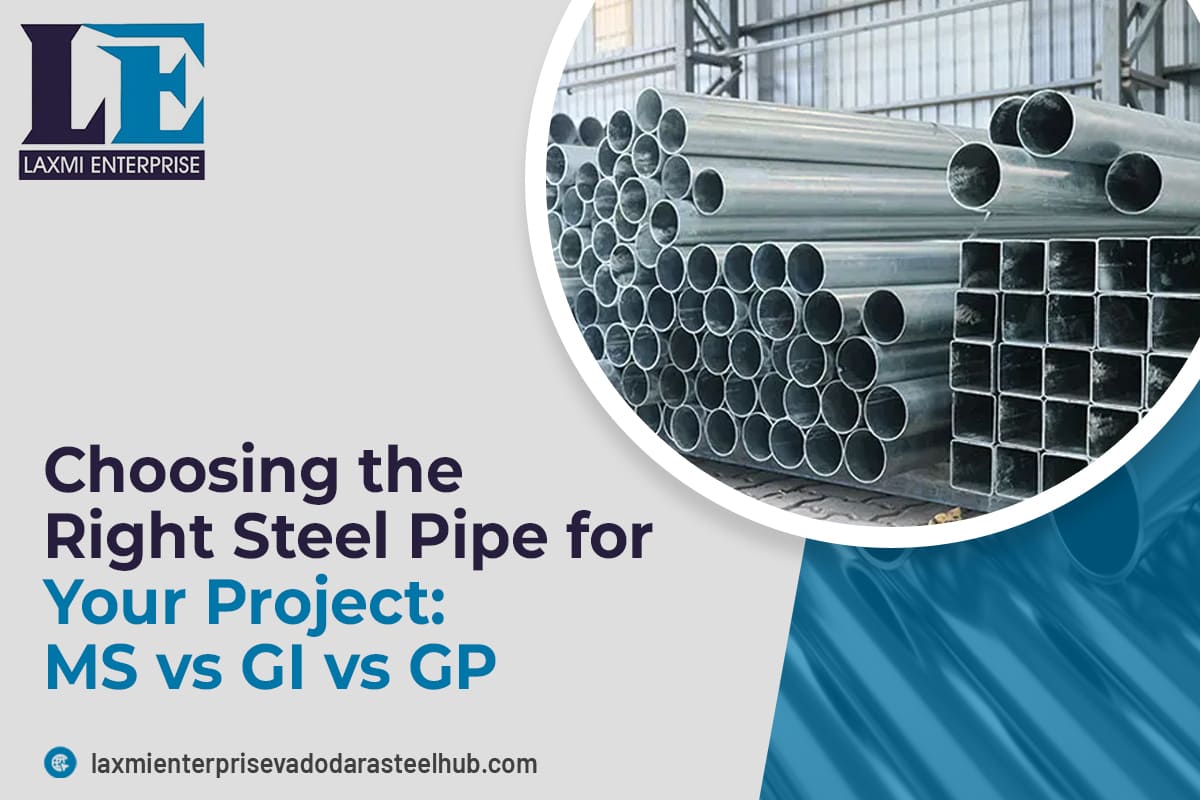
Choosing the Right Steel Pipe for Your Project: MS vs GI vs GP

Every project requires different types of pipes. When it comes to steel piping solutions for construction, fabrication, furniture, and industrial frameworks, the primary choices of the three most common pipes are MS pipes, GI pipes, and GP pipes. All three types of pipes are made of different materials, coatings, and showcase varied performance requirements. In this blog, we will analyse all three types of pipes and understand the dynamics of choosing the right steel pipe for your project. 

What is an MS Pipe?

MS pipe stands for mild steel pipes, which are made up of low-carbon steel. They contain a very small percentage of carbon in their steel (0.05-0.25%). This makes them versatile, malleable, ductile, and softer. These pipes are made at Laxmi Enterprise, a top MS steel product supplier in Vadodara. We source our steel from certified vendors, which is then hot-rolled or cold-formed steel strips. Our MS steel products, such as steel sheets, steel beams, steel channels, etc, are strong, easy to weld, easy to bend, cost-effective, and can be used for versatile applications. Call to place an order with us. 

What is a GI Pipe?

GI pipes are also known as galvanized iron pipes. These pipes are coated with protective layers of zinc, which prevent rusting, corrosion, and degradation caused due to environmental factors and exposure to chemicals. These pipes are manufactured by dipping them into molten zinc, which works as a sacrificial layer. This zinc layer corrodes first before the steel underneath. Laxmi Enterprise also provides the highest quality of galvanized pipes. It provides superior corrosion resistance, extended lifespan, high-tensile strength, and leak-proof joints. 

What is a GP Pipe?

GP pipes, also known as galvanized pipes, are manufactured from cold-rolled galvanized steel. They are made through an electro-galvanizing process. They get their coating by electroplating, which makes it smoother, shinier, and with precise surface uniformity. They are also versatile pipes with aesthetic appearance, corrosion resistance, lightweight, and excellent workability. 

Comparison Between MS Pipes, GI Pipes, and GP Pipes

ParameterMS (Mild Steel) PipeGI (Galvanized Iron) PipeGP (Galvanized Plain) Pipe
Overall ReliabilityHigh — very strong for structural workHigh — best for corrosion resistanceModerate
Corrosion ResistanceLow (but improves with paint/coating)Very High — long-lasting protectionMedium
Strength & Load CapacityExcellent — suitable for heavy-duty useExcellent — strong with added zinc layerGood, but not ideal for heavy loads
DurabilityRobust and long-lasting in structural useBest durability in outdoor & wet areasDecent but lower coating thickness
Surface FinishRough but customizableZinc-coated, durableSmooth but thin coating, less protection
WeldabilityVery good, easy to fabricateModerate (needs safety precautions)Good
LifespanLong with maintenanceLongest, minimum maintenance neededModerate–long
Cost–EffectivenessMost economical for heavy workWorth the cost due to long lifeModerate but not ideal for heavy-duty or long-term exposure
Best Use CasesConstruction, fabrication, heavy structuresPlumbing, outdoor pipelines, fencingLight fabrication, furniture, indoor use

Laxmi Enterprise’s Take on Different Types of Pipes

When choosing which type of pipes to use, consider some factors such as, 

  • MS Pipes: Use MS pipe wholesale in Vadodara for general structure and fabrication work. 
  • GI Pipes: For outdoor and water-related applications. 
  • GP Pipes: For aesthetic finish and light framework. 

Therefore, always consider crucial factors before investing in steel pipes, such as strength, durability, workability, and aesthetic appearance. If you are still confused, contact Laxmi Enterprise, the most trusted MS steel supplier in Vadodara. We have rich experience in the steel industry, and our experts can suggest the best type of steel pipes that will support your structure and enhance its looks. For all types of MS steel products, choose Laxmi Enterprise. Call us to place an order.

Also Read: Different Types of MS Pipes for Plumbing and Construction

laxmi enterprise vadodara steel hub Logo

We make it easy for our customers to order for any mildsteel material like pipe, channel, angle, beam, HR Sheet, CR sheet, TMT bars etc. We provide them according to their requirement at the best quality and cost also.

Get in touch

© 2026 Laxmi Enterprise | All Rights Reserved