Rust on steel is a common problem in construction, fabrication, and industrial applications. It can weaken steel, damage its surface, and reduce the service life of structures and machines. The good news is that rust is easy to understand and, in most cases, can be controlled.
This guide explains what rust is, how it forms, how to calculate rust and corrosion rates, and how to prevent rust on mild steel.
What Is Rust?
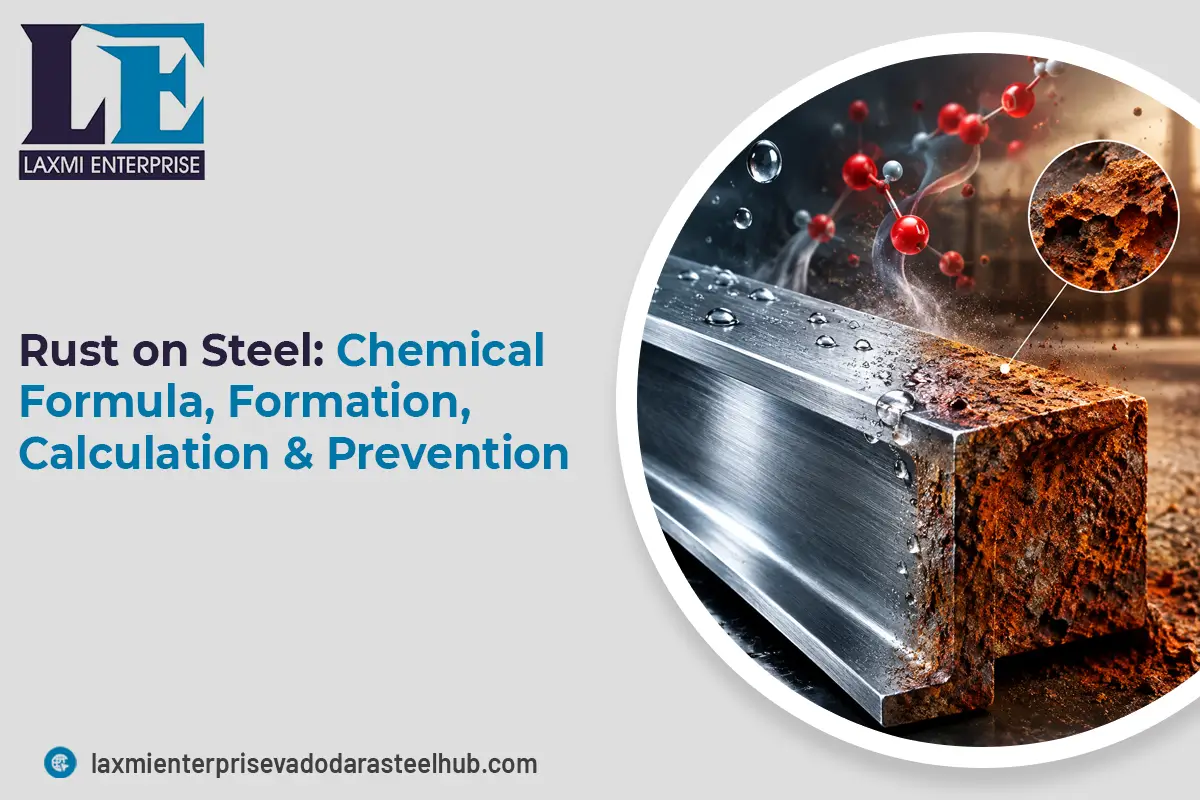
Rust is the reddish-brown layer that forms on iron and steel when they react with oxygen and water. In simple words, rust is iron oxide mixed with water.
Rust is a type of corrosion. Corrosion is the general term for a metal slowly breaking down because of a reaction with its surroundings. When iron or steel corrodes, the product is called rust. Other metals like copper and aluminium also corrode, but their corrosion is not called rust.
Mild steel is mostly iron with a small amount of carbon. Because it contains mostly iron, it can rust when left unprotected. Stainless steel rusts much less because it contains chromium, which forms a thin protective layer on the surface.
How Does Rust Form on Steel?
Rust needs three things:
- Iron — from the steel
- Oxygen — from the air
- Water — moisture, rain, humidity, or condensation
If any one of these is missing, rust will not form. For example, steel kept in completely dry air rusts very slowly.
Rusting is an electrochemical process. A drop of water on the steel surface acts like a small battery. One area of the steel loses electrons, while another area uses those electrons.
In simple words:
Iron + oxygen + water → rust
Why Rust Keeps Spreading
Rust is porous and flaky. It does not stick tightly to the steel surface. Water and oxygen can pass through it and reach the fresh steel below. So, once rust starts, it can continue eating into the steel unless the surface is cleaned and protected.
This is different from metals like aluminium, which form a thin, tightly attached oxide layer that helps prevent further corrosion.
How to Prevent Rust on Steel
The basic idea is simple: keep water and oxygen away from the steel, or give the steel something else to corrode instead.
1. Store Steel Properly
Many rust problems start before the steel is even used.
- Store steel under a roof or cover it with tarpaulin
- Keep it off the ground on wooden or concrete supports
- Allow air to flow so moisture does not stay trapped
- Do not store steel near salt, chemicals, or fertilisers
- Use older stock first (first-in, first-out)
2. Paint and Primer
Painting is the most common way to protect mild steel structures.
- Clean the surface first by removing rust, oil, dust, and mill scale using wire brushing, grinding, or blasting
- Apply a good rust-inhibiting primer
- Apply topcoats suitable for the environment
- Repaint on time when the coating becomes damaged or worn
Paint only works as long as it remains unbroken. Surface preparation is the most important step.
3. Galvanising (Zinc Coating)
Galvanising coats steel with zinc. Zinc protects steel in two ways:
- It acts as a barrier between steel and moisture
- Zinc corrodes first, protecting the steel even at small scratches. This is called sacrificial protection
GC sheets, galvanised pipes, and galvanised flats are common examples.
4. Use Coated and Colour Coated Products
For roofing and cladding, use pre-coated products instead of bare steel. Colour coated sheets and roofing sheets have a metallic coating plus paint layers that protect against rain, heat, and humidity.
5. Oil and Rust Preventive Coatings
For bright bars, machined parts, and stock kept for short periods, a thin layer of oil or rust preventive liquid keeps moisture away. This is common for MS bright bars and CR sheets.
6. Good Design
Design can reduce rust significantly:
- Avoid pockets and corners where water collects
- Provide drain holes in hollow sections and channels
- Seal welded joints properly
- Keep enough concrete cover over reinforcement bars
- Avoid direct contact between steel and different metals like copper
7. Cathodic Protection
For underground pipes, tanks, and marine structures, cathodic protection is used. A more reactive metal, such as zinc or magnesium, is connected to the steel so it corrodes instead, or a small electric current is applied to stop the steel from corroding.
8. Regular Inspection and Maintenance
Check steel structures regularly, especially after the monsoon. Treat small rust spots early before they spread. Touch up damaged paint and coatings quickly.
How to Remove Rust from Steel
Rust Level | Method |
Light surface rust | Wire brush, sandpaper, or cloth with rust remover |
Medium rust | Power wire brush, grinding disc |
Heavy rust and scale | Sand blasting or shot blasting |
Hard-to-reach areas | Chemical rust removers or rust converters |
After removing rust, apply primer and paint as soon as possible. Clean steel can start rusting again within hours in humid weather.
Is Light Rust on New Steel a Problem?
A thin, even layer of light surface rust on new steel, such as TMT bars or structural sections stored in the open for a short time, is common. If the rust is light, does not flake off, and there is no pitting, it is usually not a serious concern for the steel’s strength.
However, heavy, loose, or flaky rust, deep pitting, or visible loss of section should be checked. For reinforcement and structural work, follow the advice of your structural engineer.
The best approach is to buy steel from a supplier who stores material properly and supplies fresh, well-kept stock.
Buy Quality MS Steel from Laxmi Enterprise in Vadodara
Rust control starts with good quality steel and proper handling. Laxmi Enterprise has been supplying MS steel in Vadodara since 1998, with over 25 years of experience in the steel sector, and has been an authorised dealer of Tata Steel since 2016.
We supply a full range of MS steel products, including MS pipes, beams, channels, angles, bars, plates, HR and CR sheets, TMT bars, GC sheets, colour coated sheets, and roofing sheets from trusted brands.
If you are looking for an MS Steel Supplier in Vadodara or need guidance on choosing the right steel product for your project, contact Laxmi Enterprise. Call +91 9227442665 or email laxmienterprises2122@gmail.com.
Conclusion
Rust forms when steel is exposed to iron, oxygen, and moisture, making proper storage, surface protection, and regular maintenance important. Understanding the rusting process, corrosion rate, and prevention methods can help reduce steel damage and maintenance costs.
Whether you need steel for construction, fabrication, roofing, or industrial applications, choosing properly stored and quality material is an important first step. Laxmi Enterprise supplies a wide range of MS steel products in Vadodara to meet different project requirements.
Frequently Asked Questions (FAQs)
Iron, oxygen, and water are needed for rust to form. If any one of these is removed, rusting stops or becomes very slow.
A common formula is Corrosion Rate (mm/year) = (87.6 × W) ÷ (D × A × T), where W is weight loss in mg, D is density in g/cm³, A is area in cm², and T is time in hours.
Keep the steel dry during storage, clean the surface, and apply a protective coating such as primer and paint or galvanising. For roofing, use pre-coated sheets. Regular maintenance also helps prevent rust.
Stainless steel is highly resistant to rust because of its chromium content, but it can still corrode in harsh conditions, especially where chlorides are present. Mild steel rusts much more easily and usually needs protection.
Yes. Rust can reduce the thickness and strength of steel over time, especially when corrosion causes deep pitting or loss of material. Heavy rust should be inspected before the steel is used in structural applications.
Mild steel contains a high amount of iron. When its surface is exposed to oxygen and moisture, the iron reacts and forms rust. Proper coating, storage, and maintenance can reduce corrosion.
Yes. Light surface rust can generally be removed using a wire brush, sandpaper, or suitable rust remover. The surface should then be cleaned and protected with primer or paint.
Mild steel contains mostly iron and does not have the same protective chromium layer found on stainless steel. As a result, mild steel is more exposed to corrosion when it comes into contact with moisture and oxygen.