MS Sheet

Categories
MS Sheet

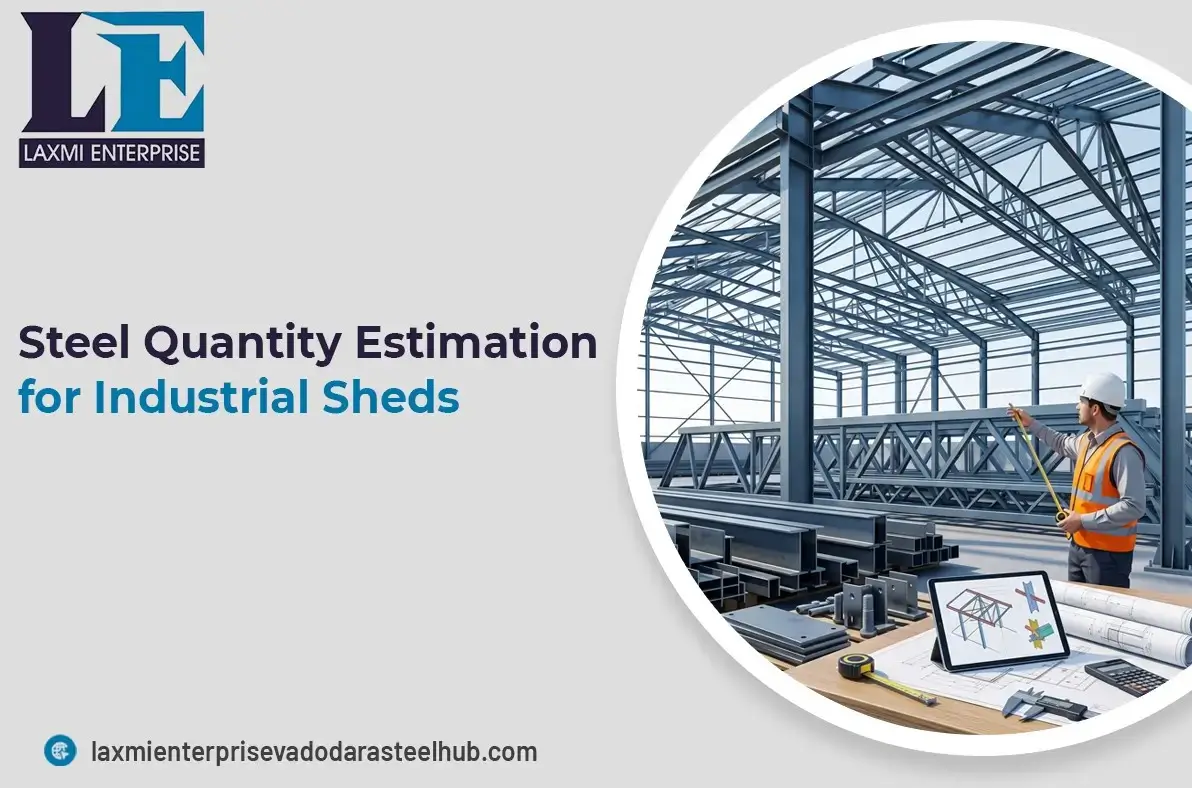
Steel Quantity Estimation for Industrial Sheds: A Practical Guide

We know that planning a shed requires a precise estimate of the steel needed for construction. This helps businesses prepare budgets, compare supplier quotations, schedule material procurement and manage construction costs. However the amount of steel cannot be decided by floor area. Factors such as building span, height, load‑bearing needs and structural design greatly affect the amount of steel required.

If a business is planning a shed, Laxmi Enterprise can be a good choice, for buying the right steel products for their project.

Understanding the steel estimation process helps project owners make procurement decisions, reduce waste and keep better control of construction budgets.

What Is Steel Quantity Estimation?

Steel quantity estimation is the way to figure out how much steel you need to build an industrial shed. Steel quantity estimation is usually expressed in kilograms or metric tonnes.

Steel quantity estimation covers the parts like columns and rafters the secondary parts such as purlins and girts plus bracing, base plates and all the connection pieces. The exact list of steel pieces depends on the building design.

If you are buying MS Steel Vadodara you should separate the steps of steel quantity estimation for budgeting from the steel quantity estimation, for ordering. That final step needs drawings and engineering calculations.

What Information Is Needed Before Estimation?

An accurate estimate starts with an understanding of the shed’s size and how it will be used. We find that the estimate depends on key details, such as:

  • Length, width, and clear span
  • Eave height and roof slope
  • Number of bays and spacing between frames
  • Roofing and wall cladding specifications
  • Wind and seismic conditions
  • Crane and machinery loads
  • Mezzanine floor requirements
  • Site location and other design conditions

These details influence member sizes and the amount of steel required. For example, a storage shed and a manufacturing facility with an overhead crane may require significantly different structural designs, even if their floor areas are similar.

Which Components Contribute to Steel Quantity?

A reliable estimate must include all structural components.

Primary framing, part of the estimate includes columns, rafters, beams and other load‑bearing members that form the framework.

Secondary framing is made of purlins and girts that support roof and wall cladding transfer loads to the structure and is part of the estimate.

Bracing, which is included in the estimate, consists of roof and wall bracing that helps the building resist forces and keep stability.

Connection components, such as base plates, cleats, gusset plates and other connecting elements add to the steel weight and are part of the estimate.

Including these components gives a complete estimate and reduces the risk of ignoring important material requirements.

How Is Steel Quantity Calculated?

A basic method for estimating the weight of identical steel members is:

Steel Weight = Unit weight × Member length × Number of members

For example if a steel section weighs 25 kilograms per metre each member is 10 metres long. 20 Identical members are required, then 25 kg/m × 10 m × 20 = 5,000 kg. The total weight is therefore 5 tonnes. We find that the same calculation can be repeated for members with the weights of each member added to determine the estimated total. Plates and fabricated components require calculations based on their dimensions and thickness. This formula is useful for calculations but the final quantity should be based on approved structural drawings, member schedules and a detailed quantity take‑off.

Can Steel Quantity Be Estimated Per Square Metre?

Yes. During early planning, steel consumption may be expressed as kilograms per square metre of covered area.

Estimated Steel Quantity = Covered area × Indicative steel consumption per m²

However, no single steel consumption figure applies to every industrial shed. Larger spans, greater heights, heavy equipment, and additional floors can increase steel requirements. Simpler structures may need less material, depending on their design and loading conditions.

Therefore, a per-square-metre estimate is useful for initial budgeting but should not replace project-specific engineering calculations.

What Factors Affect Steel Consumption?

Several factors influence the steel quantity:

  • Span: When column‑free spaces are wide the steel quantity may need to be higher to use heavier members.
  • Building Height: If the building is tall the steel quantity might need stronger columns and extra stability.
  • Equipment Loads: Cranes and heavy machines can bump up the steel quantity.
  • Wind and Seismic Loads: The site’s wind and earthquake conditions can change how big the steel quantity must be and how much bracing is needed.
  • Mezzanine Floors: Adding extra floors can add more load so the steel quantity may grow.
  • Roof Loads: The roof, insulation and other installed parts can shift the steel quantity needed.

When you understand these factors you can avoid using estimates that might not match the real steel quantity needed.

How Does Material Selection Affect Estimation?

We find that steel sections must be chosen based on their intended application and the structural requirements they must meet. The dimensions of steel sections, the thickness, the length and the unit weight all decide how much material will be needed. Pipes may also be required for structural or fabrication applications. For example a mild steel round pipe in Vadodara may be considered where the design specifies a round section. Mild steel round pipe dimensions and wall thickness must be included in the quantity calculation.

How Does Steel Quantity Affect Industrial Shed Cost?

Steel is a part of the cost in many industrial shed projects. We think the cost of the materials can be calculated by multiplying the amount of steel needed by the price per kilogram or per ton.

The total cost of the project includes more than the steel. The project also includes the cost of making the steel cutting the steel drilling holes in the steel welding steel pieces together painting the steel moving the steel and putting the steel up.

When looking for MS steel square pipe in Vadodara companies need to think about the details they need, how much they want, how much it will cost to deliver and what they will use it for when looking at different prices.

How Laxmi Enterprise Can Support Steel Procurement

We think that after determining the requirements businesses must plan material sourcing carefully. Laxmi Enterprise should be approached when evaluating steel procurement requirements and suitable products for projects. Comparing specifications and understanding material needs before ordering can support businesses with budgeting and purchasing decisions.

Conclusion

Estimating the amount of steel a shed requires does not rely on the floor area. The span of a shed, the height of a shed, the loading conditions on a shed, the structural layout of a shed and the specific parts used in a shed all influence how steel a shed needs.

Early steel estimates help with budgeting. Early steel estimates are not enough. Detailed engineering work and accurate quantity take‑offs for steel are necessary before buying steel. When businesses plan well and source steel from suppliers such as Laxmi Enterprise, businesses can better control costs, reduce mistakes in steel estimation and manage the construction of sheds efficiently.

Frequently Asked Questions (FAQs)

Steel quantity is calculated by determining the weight of individual structural members and adding the quantities of all specified components.

The floor area helps with budgeting. However the final steel quantity depends on the design, the loads, the span, the height and many other project requirements.

It shows which components are needed and how many of each. This helps with procurement comparing quotations and planning costs.
Categories
MS Sheet

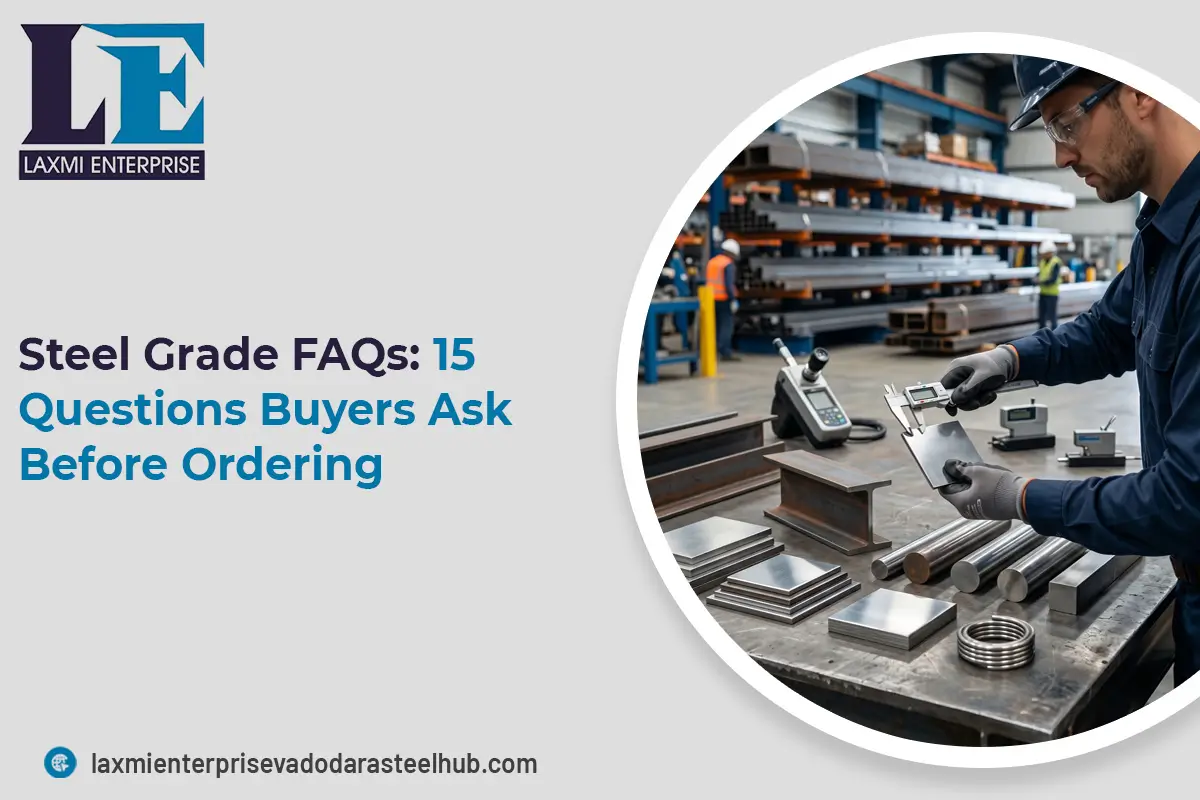
Steel Grade FAQs: 15 Questions Buyers Ask Before Ordering

Choosing the steel grade is a step in any construction or industrial project. Steel grades vary in their chemical makeup, strength, ductility, weldability and how well they fit uses. Picking the steel grade can cause problems in fabrication, waste money or lead to trouble when the steel is in use.

For buyers knowing steel grades helps them check details, compare price quotes and order materials that fit their project needs. Laxmi Enterprise assists buyers in finding the steel products, for construction and industrial use. The following 15 questions explain what to examine before placing a steel order.

15 Frequently Asked Questions About Steel Grades

Steel quantity estimation is the way to figure out how much steel you need to build an industrial shed. Steel quantity estimation is usually expressed in kilograms or metric tonnes.

Steel quantity estimation covers the parts like columns and rafters the secondary parts such as purlins and girts plus bracing, base plates and all the connection pieces. The exact list of steel pieces depends on the building design.

If you are buying MS Steel Vadodara you should separate the steps of steel quantity estimation for budgeting from the steel quantity estimation, for ordering. That final step needs drawings and engineering calculations.

1. What is a Steel Grade?

An accurate estimate starts with an understanding of the shed’s size and how it will be used. We find that the estimate depends on key details, such as:

  • Length, width, and clear span
  • Eave height and roof slope
  • Number of bays and spacing between frames
  • Roofing and wall cladding specifications
  • Wind and seismic conditions
  • Crane and machinery loads
  • Mezzanine floor requirements
  • Site location and other design conditions

These details influence member sizes and the amount of steel required. For example, a storage shed and a manufacturing facility with an overhead crane may require significantly different structural designs, even if their floor areas are similar.

1. What is a Steel Grade?

A steel grade is a label that shows what kind of steel you are dealing with. It tells you about the mix of elements in the steel and how strong the rules it must follow. This information helps buyers and manufacturers understand how the steel will behave. It also helps them decide if the steel grade is the choice for the job they are working on.

2. Why is Choosing the Correct Steel Grade Important?

The correct grade ensures that the material meets the project’s requirements, for strength how long it lasts, how it is made and if it is safe. Picking based on cost can lead to material that doesn’t work, more money spent later or the material breaking too soon.

3. What is Mild Steel?

Mild steel is a low-carbon steel that is widely used for construction for making parts in factories for machine parts for building frames and for general engineering tasks. Mild steel has flexibility and can be welded easily which makes it a good choice, for many everyday structural and fabrication jobs.

4. Is Mild Steel The Same as Carbon Steel?

Mild steel is a type of low-carbon steel. It is used a lot for construction. It is used to make parts in factories. It is used for machine parts. It is used for building frames. It is used for engineering tasks. Mild steel has flexibility. It can be welded easily. This makes it a good choice. It is a choice for many everyday structural jobs. It is a choice for many everyday fabrication jobs.

5. What Are the Common Steel Grades Used in Construction?

Construction projects may use steel grades that are listed in standards such as IS 2062 depending on the application and design. Each grade provides yield strengths and other mechanical properties. The steel grade must match the drawings and the engineers specifications.

6. How Do I Select the Right Steel Grade for My Project?

Begin by identifying the intended application, expected loads, environmental conditions, fabrication method and relevant design standards. Before you finalise the grade consult the project’s engineer or technical team. Laxmi Enterprise can be approached to discuss steel product requirements and material availability.

7. What Is the Difference Between Steel Grade and Steel Size?

Steel grade means the steel’s properties. How it is classified.

Size means the steel’s dimensions, such as thickness, diameter or cross-section.

It is wise to remember that two steel products can have the size but different steel grades.

Both steel grade and size must be checked before ordering.

8. Does a Higher Steel Grade Always Mean Better Quality?

Not always. A stronger grade could work for some uses. It might not give the best mix of price, ability to weld, ability to bend and how easy it is to work with for each project. The best grade is the one that fits the needs of the design.

9. What Documents Should I Check Before Buying Steel?

Depending on the product and project requirements buyers should review the supplier’s quotation, the product specifications, the standard and the material test certificate if needed. These documents confirm the grade, the dimensions and the test results that are important. Make sure the material delivered matches the purchase order exactly.

10. How Can I Verify the Quality of Steel Before Ordering?

Check the grade and dimensional details carefully, ask about the inspection procedures and request supporting documents where needed. When the item arrives look for damage, heavy rust or any differences, in dimensions or marks. For work follow the inspection and testing requirements that the project specifies.

11. What Should Buyers Know About Steel Pipes?

Steel pipes come in sizes, thicknesses and types of materials. The right choice depends on what the job’s. For example if the job is building structures making equipment or moving liquids the steel pipe must match the need. People who want to buy mild steel round pipes in Vadodara should first check the size they need. They should also decide how thick the walls should be, how long the pipe should be and which type of steel is best, for the job. After checking all these things should they place an order.

12. When Should I Choose Square Steel Pipes Instead of Round Pipes?

Square pipes are often used for frames, supports, gates, railings and other built structures because square pipes have sides that make some connections easier. Round pipes are usually chosen for work that needs a shape. The decision to use pipes or round pipes depends on design, load, how the pieces connect and the rules set for the project.

13. How Does Steel Grade Affect the Total Purchase Cost?

Steel pricing can change depending on the type of steel, how big it is, how it’s made, how much you need and what’s happening in the market. A cheaper type of steel might not be the choice if it doesn’t match what the project needs. People who are buying steel should look at offers that’re, for the same type of steel, the same size, the same amount and the same delivery time.

14. What Should I Confirm With a Steel Supplier Before Placing an Order?

Please confirm the grade, dimensions, quantity, applicable standards, documentation, delivery schedule, taxes and payment terms. Ask whether the specified material is available in the required form and length. Working with an MS steel product supplier in Vadodara can help buyers clarify product specifications and procurement requirements.

15. Where Can I Source Suitable Mild Steel Products in Vadodara?

First decide on the products, the size and the quality that your project needs. Look closely at the types of steel you require, the measurements and the level of quality. When checking suppliers, examine how clearly suppliers describe their products, whether the items are in stock, the quality of suppliers’ paperwork, and the prices of suppliers. How suppliers handle shipping.

Those who are looking for Mild Steel in Vadodara should spend time ensuring that the Mild Steel offered matches their building or manufacturing needs. It is important to verify that the Mild Steel material is right for the project.

Laxmi Enterprise is a place to go if you want to discuss your steel product choices and buying requirements. Laxmi Enterprise can help you find the options.

Make an Informed Steel Purchase

Selecting steel involves more than comparing prices. Buyers should verify the grade, dimensions, applicable standards, and documentation before confirming

Categories
MS Sheet

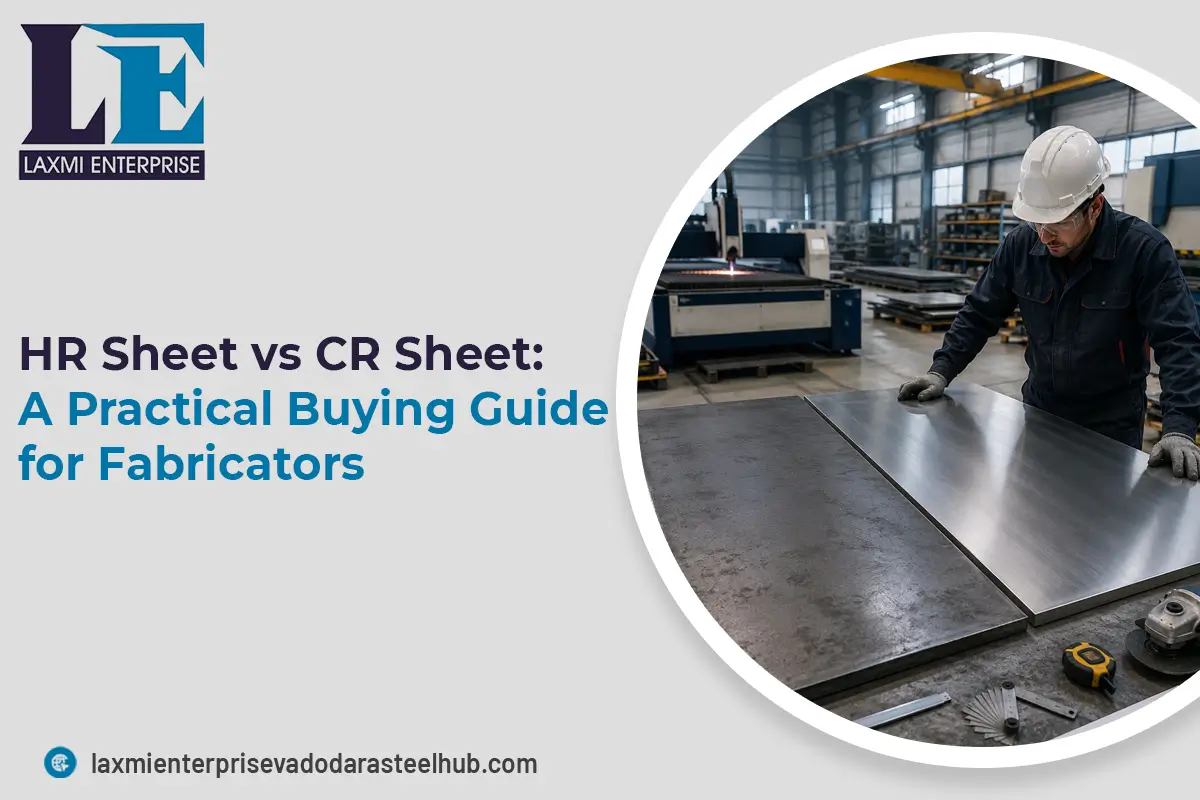
HR Sheet vs CR Sheet: A Practical Buying Guide for Fabricators

Choosing between HR (Hot Rolled) sheet and CR (Cold Rolled) sheet is an important decision for fabricators. Both are steel products, but they differ in how they are produced, their surface finish, dimensional accuracy, and typical applications. The right choice depends on what you are making, how the sheet will be processed, and what finish the final product needs.

What Is an HR Sheet?

HR sheet, or Hot Rolled sheet, is produced by rolling steel at high temperatures. The process makes it suitable for producing thicker sheets and large structural or industrial components. HR sheets are widely used in construction, engineering, fabrication, steel structures, and industrial applications. As an MS sheet supplier in Vadodara, Laxmi Enterprise supplies HR sheets in standard and customised sizes, including options from brands such as TATA, SAIL, JINDAL, and ESSAR. 

What is a CR Sheet?

CR sheet, or Cold Rolled sheet, is processed further at room temperature after hot rolling. This additional processing provides better surface finish and dimensional accuracy. CR sheets are commonly used where appearance, smooth surfaces, and closer dimensional control are important. As a CR sheet supplier in Vadodara, Laxmi Enterprise lists CR sheets for industrial applications and supplies them in rectangular formats.

HR Sheet vs CR Sheet: Key Differences

FactorHR SheetCR Sheet
ManufacturingRolled at high temperatureFurther processed at room temperature
Surface finishRougher, less uniformSmoother and cleaner
Dimensional accuracyGoodGenerally higher
Typical useStructural and heavy fabricationPrecision and appearance-focused applications
CostGenerally more economicalGenerally higher
Best suited forHeavy-duty fabricationComponents requiring better finish and accuracy

Which One Should a Fabricator Choose?

The simplest way to decide is to start with the application rather than the price.

Choose HR Sheet When:

  • You are making structural or heavy-duty components
  • Surface appearance is not the main priority
  • The project requires thicker material
  • Cost efficiency is important
  • The sheet will undergo further fabrication or finishing

HR sheet is particularly practical for general fabrication, industrial structures, and engineering applications.

Choose CR Sheet When:

  • You need a smooth and cleaner surface
  • Dimensional accuracy is important
  • The finished product will remain visible
  • The component requires a better surface for painting or finishing
  • The application demands tighter control over the sheet’s form and finish

CR sheet is commonly selected for applications where surface quality and dimensional consistency matter more than the lower initial material cost.

Check These Details Before Ordering

Before placing an order, confirm:

  • Steel grade
  • Sheet thickness
  • Length and width
  • Required surface finish
  • Application
  • Quantity
  • Required standard or specification
  • Brand or mill preference
  • Material documentation or test certificate, if required

These details help your MS steel supplier in Vadodara recommend the appropriate sheet instead of simply supplying whatever is readily available.

Why Your Steel Supplier Matters

The right material is only useful when you receive it in the correct grade, size, thickness, and specification. A reliable supplier should understand your fabrication requirement and help you select the appropriate product.

About Laxmi Enterprise

Laxmi Enterprise, an MS steel supplier in Vadodara, offers a wide range of mild steel products including TMT bars, beams, channels, angles, pipes, flat bars, sheets, plates and roofing sheets. Send us your list and quantity of MS product requirements and get a quote.

Whether you need HR sheet for heavy fabrication or CR sheet for applications where finish and dimensional accuracy matter, contact Laxmi Enterprise to discuss your material requirements and get the right steel for your project.

Categories
MS Sheet

How to Prevent Corrosion in Mild Steel Structures

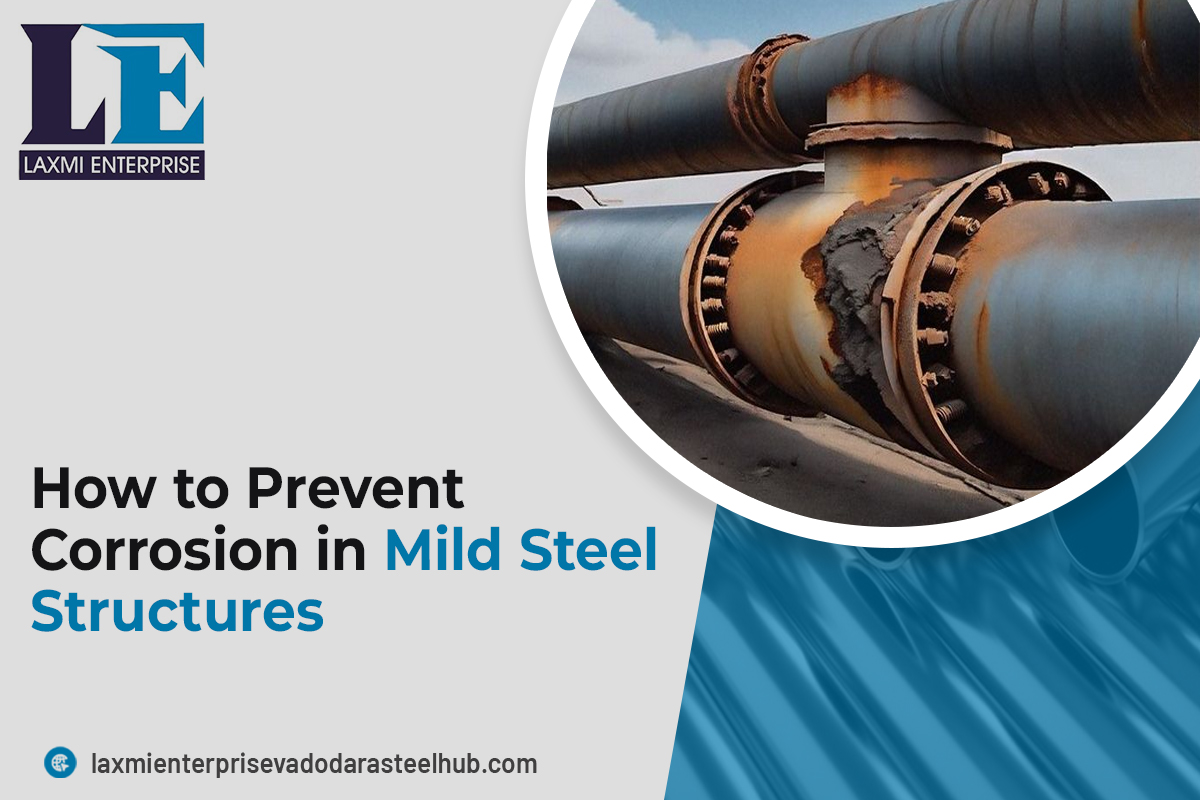
Corrosion is one of the biggest challenges for industries that work with heavy steel plants and machines. Due to environmental factors like chemicals, steam, wind, rain and humidity, the steel undergoes oxidation, causing corrosion. You can safeguard your steel structures in many ways, such as opting for the right materials, applying the necessary treatments, purchasing it from the best vendors and maintaining parameters that keep MS steel from degradation. In this blog, we will dive deep into how to prevent corrosion in Mild steel structures. 

Ways to Prevent Corrosion in Mild Steel

Choosing the Right Material:

Each material has different properties and varying levels of protection against corrosion. Hence, choosing the right material is the most effective way to avoid rusting in MS steel sheet.

#1 Galvanized Steel: This steel has a coating of zinc, which protects it from the outer impacts. This material is mostly used in Industries because it is cost-effective, durable and keeps the oxygen, water and moisture from the steel at an optimum level.

#2 Hot-Rolled Steel: Although hot-rolled steel is known for its strength and malleability, it has a high risk of undergoing oxidation. However, giving proper galvanisation treatment to this steel can reduce the risk. An extra zinc layer will keep it long-lasting and protect the steel.

#3 Galvalume Steel: This steel is well protected by a layer of alloy of zinc and aluminium. This layer makes the steel strongly resistant to corrosion factors, making it best for coastal regions. It also adds a smooth, shining layer, making it aesthetically pleasing.

Also Read: Benefits of Using Colour Coated Profile Roofing Sheets

Where to Buy MS Steel?

Choosing the right steel is very important, for its quality, durability and resistance to corrosion. Always choose Laxmi Enterprise, your most trusted partner in MS steel products. We are the best MS steel supplier in  Vadodara. We offer a full range of MS steel products from MS sheets, pipes, channels, to MS TMT bars. Make sure to check out our whole range of products! Call us to place your order now.

Protective Treatments

#1 Galvanizing: Coating the steel with a layer of zinc helps increase its life, protecting it from corrosive factors. It works as a sacrificial layer as it corrodes first.

#2 Paint Coatings: Using high-quality paints and coatings can help the aesthetic value of steel as well as add a layer of protective layer. It provides a robust layer of protection.

#3 Powder Coatings: This is a popular technique where dry powder is sprayed onto the steel and later cured under high heat. This adds a strong, rigid protective layer onto the steel. The plus point of powder coating is that it is resistant to chipping, scratching and peeling hence it is most preferred for high humidity regions.

Also Check: Roofing Sheet Distributor in Vadodara & Ms Round Tube in Vadodara

Maintenance and Inspection

#1 Regular Inspection: It is very important to perform regular checks around the steel plants with thorough routine checks. Early detection can save money and time. Also, check for blisters, discolouration and rust.

#2 Coating: Reapply the coating to the spots that have worn off the coating. This way, you can restore protection and stop moisture from seeping into the steel.

#3 Clean-ups: Regular and thorough cleaning of the machine can keep the corrosion away. Removing dirt, water and contaminants from the steel can increase its lifetime. Especially in coastal regions, it’s important to wash off saltwater.

Trust Laxmi Enterprise for Top-quality Mild Steel Products

All these measures can fail and result in corrosion and degradation of your material if the steel is not sourced from the best suppliers. At Laxmi Enterprise, we ensure that we source and supply industry-grade, high-quality MS Steel. We stand strong with our name as top MS steel suppliers in Vadodara, with our unwavering dedication to customer satisfaction. Check out our wide range of MS products such as MS pipes, MS sheets, MS channels, MS TMT bars, etc. Call us to place your order! 

Also Check: Role of Steel in Infrastructure

Categories
MS Sheet

MS Plate vs MS Sheet: Key Differences

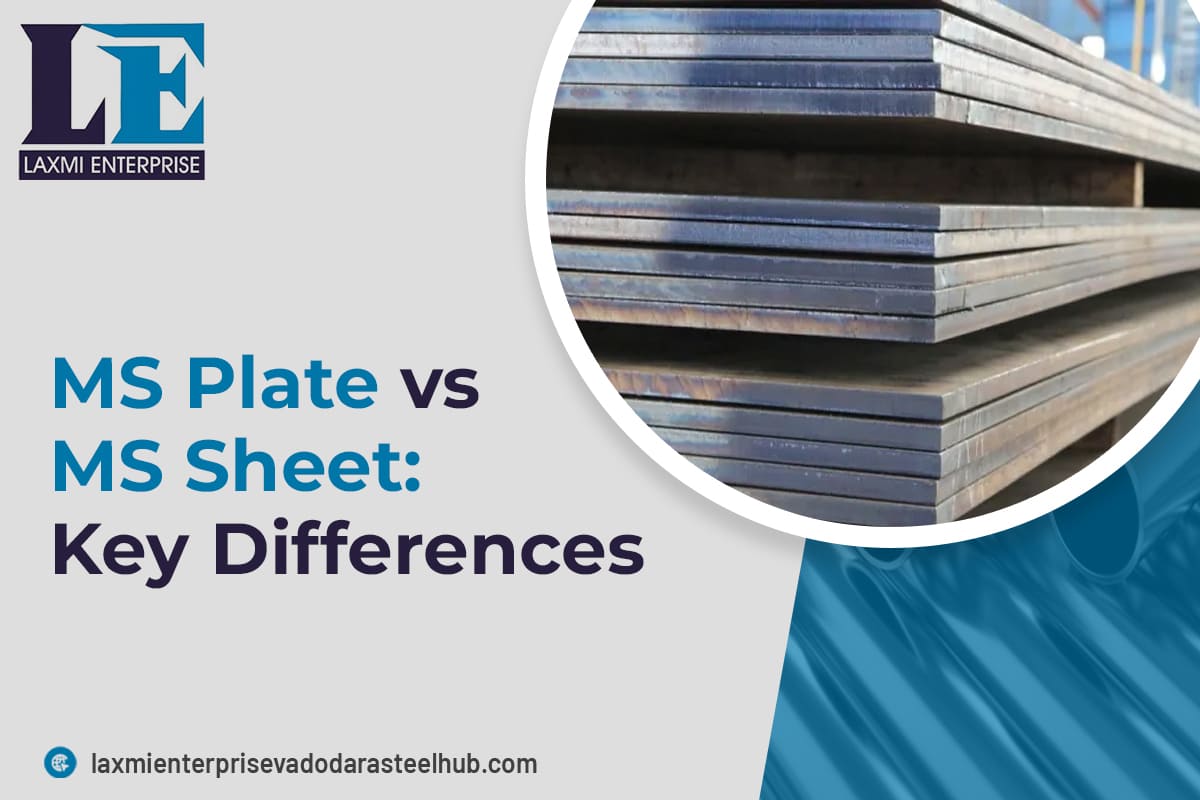
MS plates and MS sheets are two commonly misunderstood steel products. They are made up of the same material but vary in thickness, strength, and durability. They are precisely picked and used for different purposes. They are used in the construction of beams and columns, roofing, flooring, automotive parts, and shipbuilding. In this blog, we will explain to you the key differences between the MS plate and the MS sheet, and also their distinct application. 

What is an MS Plate?

An MS plate is a metallic plate of rectangular shape. These plates are way thicker than sheets. The thickness of the MS plate ranges from 6mm to 150 mm. For their thickness, strength, and durability, these plates are used in all heavy-duty applications such as the construction of roofing, flooring, bridges, machinery, ships, and automobiles. Key features of the MS plate are its thickness, weight-bearing capacity, durability, and rust-resistance. Laxmi Enterprise is the trusted MS plate supplier in Vadodara. We source our steel from certified and trusted vendors and refine it further in our facility. Our staff is well-trained to customise orders according to the customer’s demands. Call us to discuss your order!

What is an MS Sheet?

MS sheets are way thinner than the MS plate. The thickness of the MS sheet ranges from 0.5mm to 6mm. Due to their thinness, MS sheets are very flexible and are utilised to manufacture automobile body panels, metal furniture, and appliances. They are usually packed in metallic rolls and are lightweight. 

Key Differences Between MS Plate and MS Sheet

ParameterMS SheetMS Plate
ThicknessGenerally less than 5 mmGenerally, 5 mm and above
FlexibilityMore flexible and easier to bend or formMore rigid and less flexible
WeightLightweightHeavier due to greater thickness
Usage/ApplicationUsed in automobile bodies, household appliances, roofing, ducting, and furnitureUsed in heavy-duty structures like bridges, shipbuilding, machinery bases, and construction
StrengthLower strength compared to platesHigher strength and load-bearing capacity
Manufacturing ProcessMade by cold rolling (mostly)Made by hot rolling
Surface FinishSmoother and more uniformRelatively rougher surface
Cutting and WeldingEasier to cut and weldRequires more power and precision tools
CostLess expensive per unit due to a thinner sizeMore expensive due to higher material volume

Application of MS Sheets

  • Automotive: Car body panels and other light components.
  • Appliances: Washing machines and refrigerators, etc. 
  • Furniture: Metal tables, chairs, and cabinet doors.  
  • Architectural: Roofing, security doors, and decorative features.  
  • Cookware: Items like knives, steel spatulas, and other cookware. 

Application of MS Plates

  • Construction: Load-bearing beams, columns, warehouses, and bridges. 
  • Shipbuilding: Manufacture of hulls and bulkheads of ships.  
  • Heavy Machinery: Storage tanks, machine parts and heavy equipment.  
  • Industrial: Used in the chemical and petrochemical industry and fertiliser processing plants.
  • Chequered Plates: Safety flooring, stair treads, and walkways. 

Conclusion

MS plates and MS sheets are both crucial components. They both carry unique dimensions and traits. Therefore, they have distinct applications across the whole steel and manufacturing industry. Purchase the highest-quality MS steel plates and sheets from Laxmi Enterprise, a trusted MS steel supplier in Vadodara. We supply the most premium quality of steel and source it from prominent vendors. Our team is trained to handle, process and transport steel products with utmost care. Check out our range of products, including MS sheets, MS beams, MS columns, MS channels, etc. Call us and place your order now! 

laxmi enterprise vadodara steel hub Logo

We make it easy for our customers to order for any mildsteel material like pipe, channel, angle, beam, HR Sheet, CR sheet, TMT bars etc. We provide them according to their requirement at the best quality and cost also.

Get in touch

© 2026 Laxmi Enterprise | All Rights Reserved