ms steel supplier in vadodara

Categories
MS Sheet

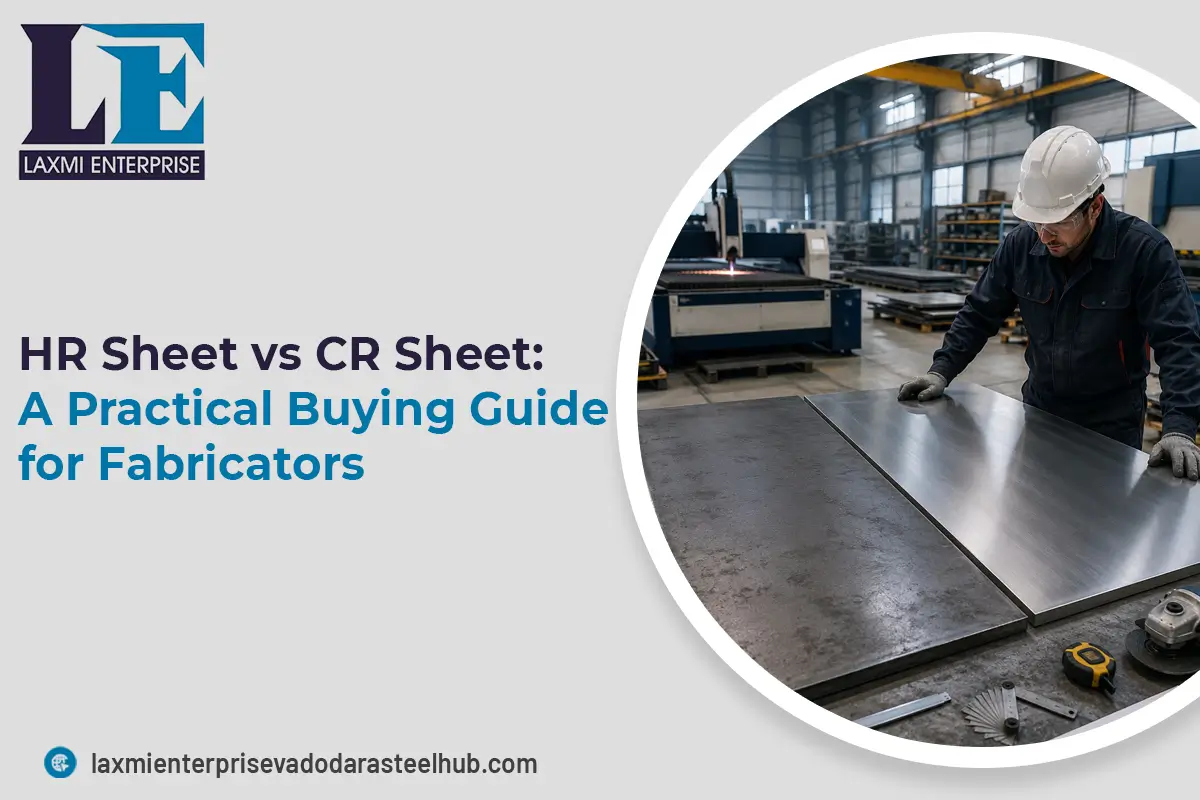
HR Sheet vs CR Sheet: A Practical Buying Guide for Fabricators

Choosing between HR (Hot Rolled) sheet and CR (Cold Rolled) sheet is an important decision for fabricators. Both are steel products, but they differ in how they are produced, their surface finish, dimensional accuracy, and typical applications. The right choice depends on what you are making, how the sheet will be processed, and what finish the final product needs.

What Is an HR Sheet?

HR sheet, or Hot Rolled sheet, is produced by rolling steel at high temperatures. The process makes it suitable for producing thicker sheets and large structural or industrial components. HR sheets are widely used in construction, engineering, fabrication, steel structures, and industrial applications. As an MS sheet supplier in Vadodara, Laxmi Enterprise supplies HR sheets in standard and customised sizes, including options from brands such as TATA, SAIL, JINDAL, and ESSAR. 

What is a CR Sheet?

CR sheet, or Cold Rolled sheet, is processed further at room temperature after hot rolling. This additional processing provides better surface finish and dimensional accuracy. CR sheets are commonly used where appearance, smooth surfaces, and closer dimensional control are important. As a CR sheet supplier in Vadodara, Laxmi Enterprise lists CR sheets for industrial applications and supplies them in rectangular formats.

HR Sheet vs CR Sheet: Key Differences

FactorHR SheetCR Sheet
ManufacturingRolled at high temperatureFurther processed at room temperature
Surface finishRougher, less uniformSmoother and cleaner
Dimensional accuracyGoodGenerally higher
Typical useStructural and heavy fabricationPrecision and appearance-focused applications
CostGenerally more economicalGenerally higher
Best suited forHeavy-duty fabricationComponents requiring better finish and accuracy

Which One Should a Fabricator Choose?

The simplest way to decide is to start with the application rather than the price.

Choose HR Sheet When:

  • You are making structural or heavy-duty components
  • Surface appearance is not the main priority
  • The project requires thicker material
  • Cost efficiency is important
  • The sheet will undergo further fabrication or finishing

HR sheet is particularly practical for general fabrication, industrial structures, and engineering applications.

Choose CR Sheet When:

  • You need a smooth and cleaner surface
  • Dimensional accuracy is important
  • The finished product will remain visible
  • The component requires a better surface for painting or finishing
  • The application demands tighter control over the sheet’s form and finish

CR sheet is commonly selected for applications where surface quality and dimensional consistency matter more than the lower initial material cost.

Check These Details Before Ordering

Before placing an order, confirm:

  • Steel grade
  • Sheet thickness
  • Length and width
  • Required surface finish
  • Application
  • Quantity
  • Required standard or specification
  • Brand or mill preference
  • Material documentation or test certificate, if required

These details help your MS steel supplier in Vadodara recommend the appropriate sheet instead of simply supplying whatever is readily available.

Why Your Steel Supplier Matters

The right material is only useful when you receive it in the correct grade, size, thickness, and specification. A reliable supplier should understand your fabrication requirement and help you select the appropriate product.

About Laxmi Enterprise

Laxmi Enterprise, an MS steel supplier in Vadodara, offers a wide range of mild steel products including TMT bars, beams, channels, angles, pipes, flat bars, sheets, plates and roofing sheets. Send us your list and quantity of MS product requirements and get a quote.

Whether you need HR sheet for heavy fabrication or CR sheet for applications where finish and dimensional accuracy matter, contact Laxmi Enterprise to discuss your material requirements and get the right steel for your project.

Categories
MS Steel

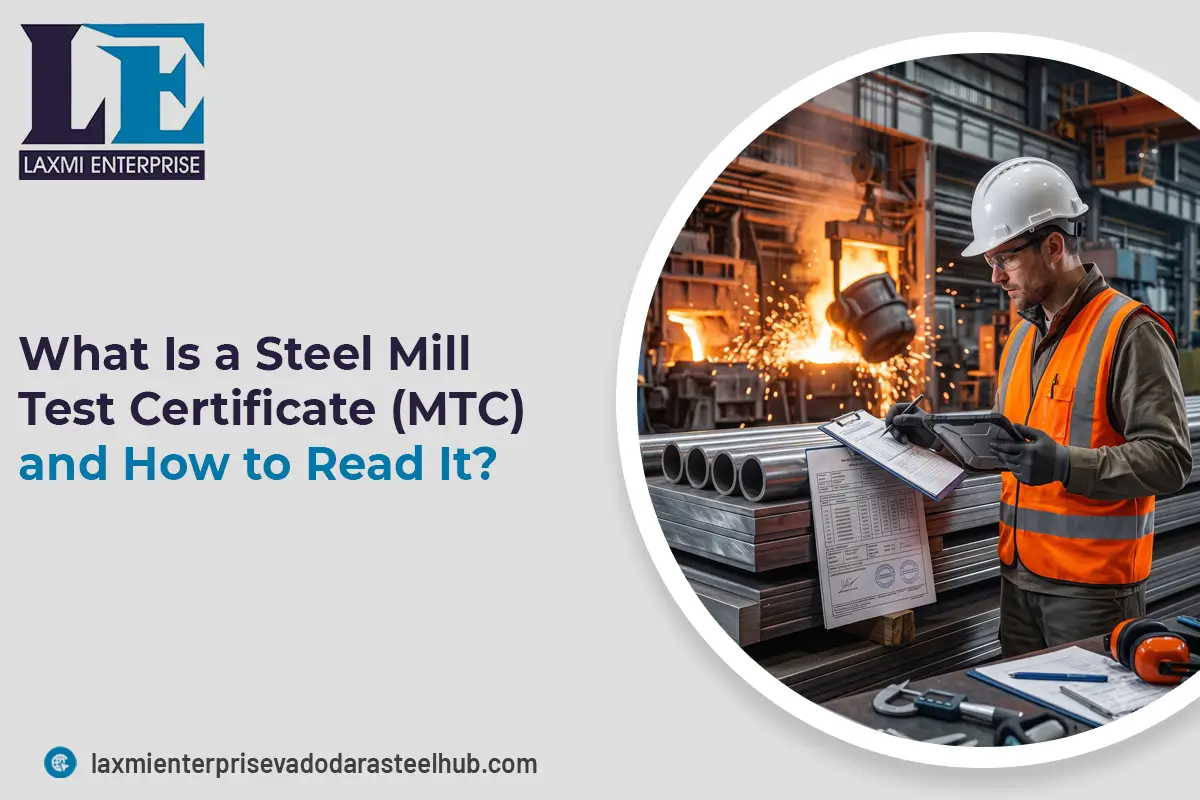
What Is a Steel Mill Test Certificate (MTC) and How to Read It?

When you buy steel, you need to know that it is the right grade, quality, and strength for your project. You cannot confirm this just by looking at the steel. Two plates may look identical but have different chemical compositions and mechanical properties. A Mill Test Certificate (MTC) provides this important information. It records details about the steel, including its grade, chemical composition, mechanical properties, and applicable standards. In this guide, we’ll explain what an MTC is, what information it contains, and how to read it in simple terms.

What Is a Mill Test Certificate (MTC)?

A Mill Test Certificate (MTC) is a quality document issued by the steel manufacturer or mill. It provides details about the steel’s chemical composition, mechanical properties, grade, and applicable standards, confirming that the material meets the required specifications.

It may also be called a Mill Test Report (MTR) or Material Test Certificate. Regardless of the name, its purpose is the same: to verify the quality and specifications of the steel. When buying from an MS Steel Supplier in Vadodara, asking for an MTC can help you confirm that the material supplied matches your project requirements.

Why the Mill Test Certificate Matters

The MTC is important for several reasons:

  • Proof of Quality: It confirms that the steel meets the grade and standard you ordered.
  • Traceability: It links the steel to the specific batch in which it was produced.
  • Safety and Compliance: For construction, pressure vessels, and structural applications, certified steel helps ensure that the required quality and safety standards are met.
  • Protection: It helps reduce the risk of receiving inferior, incorrect, or wrongly labelled material.
  • Record Keeping: MTCs are often required for audits, project documentation, quality checks, and export requirements.

Types of Mill Test Certificates

Under the common standard EN 10204, there are different types of test certificates. The main ones are shown below.

TypeWhat It Means
2.1A statement that the steel meets the order, with no test results included
2.2A test report based on the mill’s general (non-specific) testing
3.1A certificate with test results from the actual material, checked by the mill’s own inspection authority
3.2A certificate validated by both the mill and an independent or third-party inspector

What Information Is on a Mill Test Certificate?

An MTC contains important details that help you identify, verify, and trace the steel. Here is what you will usually find:

  • Manufacturer Details: The name and details of the steel mill that produced the material.
  • Certificate Number and Date: A unique reference number and issue date for records.
  • Product Description: The steel type, grade, dimensions, and quantity supplied.
  • Standard or Specification: The standard the steel meets, such as IS 2062, ASTM, or EN.
  • Heat or Cast Number: A unique batch number that helps trace the steel back to its original production melt.
  • Chemical composition: The percentage of elements such as carbon, manganese, silicon, and other alloying elements.
  • Mechanical Properties: Test results such as yield strength, tensile strength, and elongation.
  • Heat Treatment Condition: Details of any treatment applied to the steel, such as normalized or annealed.
  • Authorized Signature or Stamp: Confirmation from the manufacturer’s quality or inspection department.

Understanding the Chemical Composition

The chemical composition section shows the percentage of different elements present in the steel. Each element affects the steel’s strength, hardness, weldability, and overall performance.

  • Carbon (C): Increases strength and hardness, but too much can make steel more difficult to weld.
  • Manganese (Mn): Improves strength and toughness.
  • Silicon (Si): Helps during steel production and can contribute to strength.
  • Sulphur (S) and Phosphorus (P): These are generally kept at low levels because higher amounts can affect the steel’s quality and performance.

You may also find Carbon Equivalent (CE) on the certificate. It indicates how easily the steel can be welded. Always check that the values listed on the MTC fall within the limits specified by the relevant steel standard.

How to Read a Mill Test Certificate: Step by Step

Checking an MTC may seem complicated at first, but you can follow a few simple steps:

  • Check the Certificate Type: Confirm that the certificate meets your project requirements, such as EN 10204 Type 3.1.
  • Match the Product Details: Make sure the steel grade, size, thickness, and quantity match your order.
  • Check the Standard: Confirm that the material complies with the required standard, such as IS, ASTM, or EN.
  • Check the Heat or Cast Number: This number provides traceability and should match the identification marked on the steel.
  • Review the Chemical Composition: Make sure the listed element percentages fall within the limits specified by the relevant standard.
  • Check the Mechanical Properties: Verify that values such as yield strength, tensile strength, and elongation meet the required specifications.
  • Check the Certification and Approval: Look for the required signature, stamp, or certification from the authorised inspection or quality authority.

Buy Certified Steel from a Trusted Supplier

A Mill Test Certificate gives you confidence that the steel you receive matches the required grade, quality, and specifications. That’s why it is important to buy from a supplier who provides proper documentation with the material.

Laxmi Enterprise, an MS steel product supplier in Vadodara, supplies quality steel for a wide range of applications, along with the necessary material documentation. If you need certified steel or have questions about steel grades, specifications, or MTCs, contact Laxmi Enterprise for reliable supply and support.

Frequently Asked Questions (FAQs)

A Mill Test Certificate (MTC) is a document issued by the steel mill that certifies the chemical composition and mechanical properties of the steel and confirms that it meets the required standard. It is also called a Mill Test Report (MTR) or Material Test Certificate.

A Type 3.1 certificate reports the actual test results for your material, checked by the mill’s own inspection authority. A Type 3.2 certificate is also validated by an independent or third-party inspector, giving an extra level of verification.

The heat or cast number is a batch number that traces the steel back to the exact melt it was produced from. It is important for traceability and should match the markings on the steel.

Start by confirming the grade, size, and standard match your order, then check that the heat number is present and the chemical and mechanical values are within the standard’s limits.

Categories
MS Steel

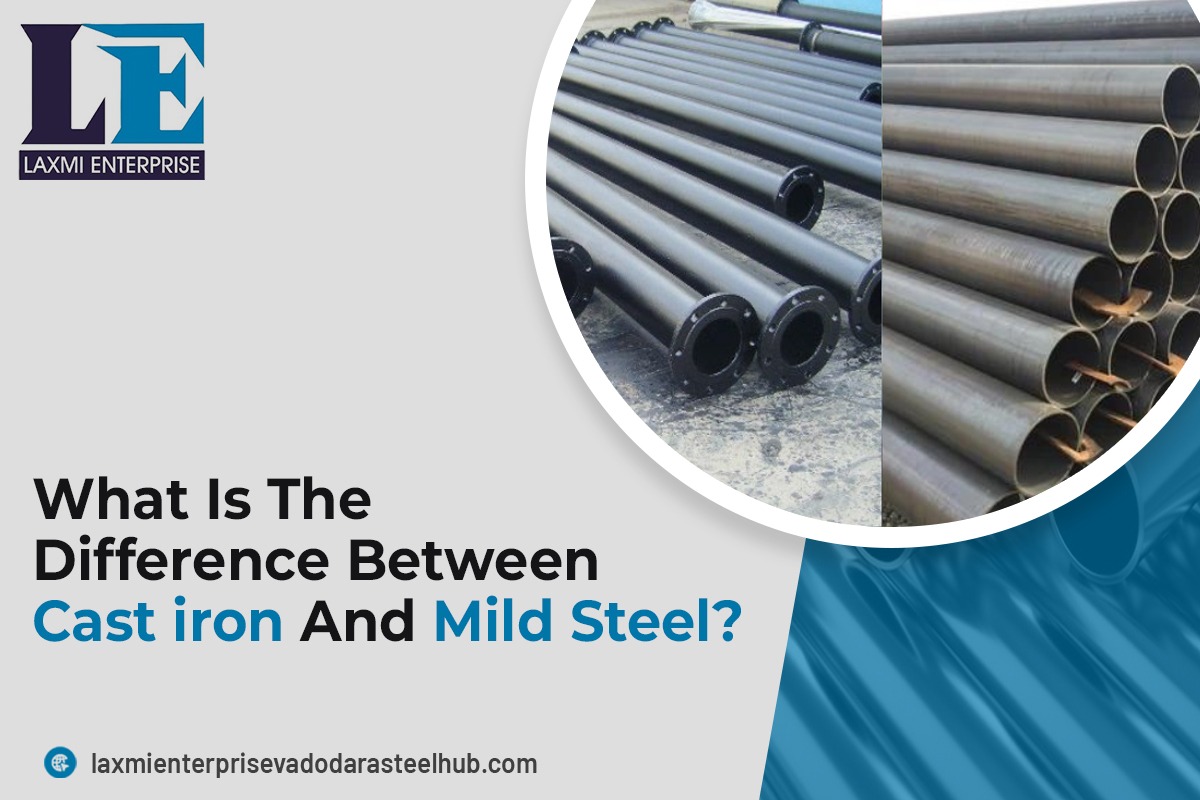
What is the Difference Between Cast Iron and Mild Steel?

Metals are the foundation of the manufacturing industries. Most of the manufacturers use iron and steel because of their qualities, like high tensile strength, durability, and ability to retain luster for a long time. However, some people debate upon the qualities of cast iron, claiming that it is stronger than mild steel. In this blog, we will explore the differences between cast iron and mild steel. 

What is Cast Iron?

Cast iron is formed by smelting the alloy of iron and carbon. The carbon content of this iron is only 2–4%. After that, the ironsmith pours iron into the mold instead of shaping it with a hammer and tools. It also contains silicone, sulfur, phosphorus, and manganese. It possesses several mechanical qualities, including toughness, ductility, hardness, and elasticity. There are various types of grey iron, white iron, malleable iron, ductile iron, and compacted iron graphite. 

What is Mild Steel?

It is a type of steel with an extremely low percentage of carbon content. Typical concentrations of steel found are around 0.05% to 0.25%. Due to the lesser amount of carbon, the steel is more ductile, machinable, and easier to weld. Mild steel also contains high levels of iron and ferrite, making it magnetic.

In the manufacturing sector, mild steel is a common choice for building automobiles, tools, machinery, and weapons. The low concentrations of carbon make this steel more affordable than high-carbon steel; however, it requires a proper coating to ensure longevity. Laxmi Enterprise provides the highest quality of zinc-coated mild-steel bars. As a leading MS steel supplier in Vadodara, we source our mild steel from trusted manufacturers, including MS pipes, MS beams, MS channels, TMT bars, etc. Each one is sourced, expertly customized, and consistently fulfils your needs.

Also Check: Maintenance Tips for Mild Steel

Difference Between Cast Iron and Mild Steel

FeatureCast IronMild Steel
CompositionContains 2–4% carbon, along with silicon and traces of other elementsContains up to 0.25% carbon, with iron as the primary element
StrengthHigh compressive strength but lower tensile strengthHigh tensile strength and good ductility
HardnessHard and brittleSofter and more malleable
Ductility & MalleabilityLow ductility; breaks under sudden impactHigh ductility; can bend and shape easily
Corrosion ResistanceModerate corrosion resistance due to high carbon contentLower corrosion resistance unless coated or treated
MachinabilityEasy to machine but produces brittle chipsGood machinability with continuous chips
WeldabilityPoor weldability due to brittlenessExcellent weldability
Common UsesEngine blocks, pipes, manhole covers, and cookwareautomobile
CostGenerally cheaperSlightly more expensive
AppearanceDull grey with rough textureSmooth surface, silvery-grey

Conclusion

Although cast iron and mild steel appear to be similar, they have a lot of differences. They are both used in manufacturing units for different purposes. Mild steel stands out as an excellent choice of metal, as it is durable, has high tensile strength, is cheaper, has excellent weldability, and is resistant to corrosion. For all your MS steel products, choose Laxmi Enterprise MS steel product supplier in Vadodara. Our products are carefully curated to meet the needs and expectations of our customers. They are tailored to the requirements of the client and the application. Call us to discuss your requirements. 

Also Read: The Role of Mild Steel in the Manufacturing of Furniture

Categories
MS Steel

How is Automation Used in the Steel Industry?

When you think of automation, a very generic idea comes to mind: something working without manual control. Agreeably, automation means the same, but there’s a lot more to it. The complex steps in steel fabrication, such as bending, cutting, polishing, etc, are controlled by computers and software. In this blog, we will explain how automation supports the steel industries and what role it plays in the production process. 

What is Automation?

The word “automation” originally comes from the Greek word “automatos”, which means self-working, and the Latin word “motio”, meaning self-movement. This term got really popular in the 1940s during the sprouting U.S. automobile industry to indicate the handling of parts with minimal human intervention. Automation has since been used in many industries, and now it is an indispensable part of almost all types of industries, from textiles to steel. At, Laxmi Enterprise, the best MS steel product supplier in Vadodara, we use automation in refining our top-quality MS steel sheets, MS channels, MS TMT bars and MS beams. Contact for placing you order now.  

Also Read: Importance of Steel for Economic Growth

Application of Automation in the Steel Industry

#1 Monitoring and Regulating: There are automatic machines that constantly observe the process and regulate parameters like temperature, according to the instructions fed into them.

#2 Quality Control: Sensors are employed to constantly survey the physical and chemical qualities of the product. In case of damage or error, the alterations are quickly made, saving time and money.

#3 Marking: The process of stamping, engraving and printing is usually done by automation, and these credentials are linked to the main database to ensure traceability, accuracy and efficiency.

#4 Packaging: While working with large, unfinished and unwieldy objects such as coils, steel sheets, etc, the robots are used. They reduce the chance of human errors and the risk of injury to humans.

#5 Deburring: Deburring is the process of removing burrs from metallic surfaces. It is a tedious and time-consuming task; hence, automation is used for fast and accurate work.

#6 Welding of a tube and Coil: Welding is also a task not ideal for humans to perform due to health concerns. Therefore, it is performed with automation. Long and straight tubes are effortlessly welded using automation.

Conclusion

Automation has revolutionised the steel industry. With the use of automation, production steps can be fast, accurate, efficient, and industry-grade. The tasks are safely conducted, and the data is stored. Using automation helps us at Laxmi Enterprise, an MS steel supplier in Vadodara, to ensure our products hold high-quality, efficiency, and a top reputation in the steel industry. We supply industrial-grade mild steel products like MS sheets, MS TMT bars, MS beams, MS channels, etc. Call us to discuss your needs and get the best MS products.

Also Visit: U.S. Trade Policy vs Indian Steel — How Exporters Are Navigating Trade Barriers in the U.S. Market

Categories
MS Sheet

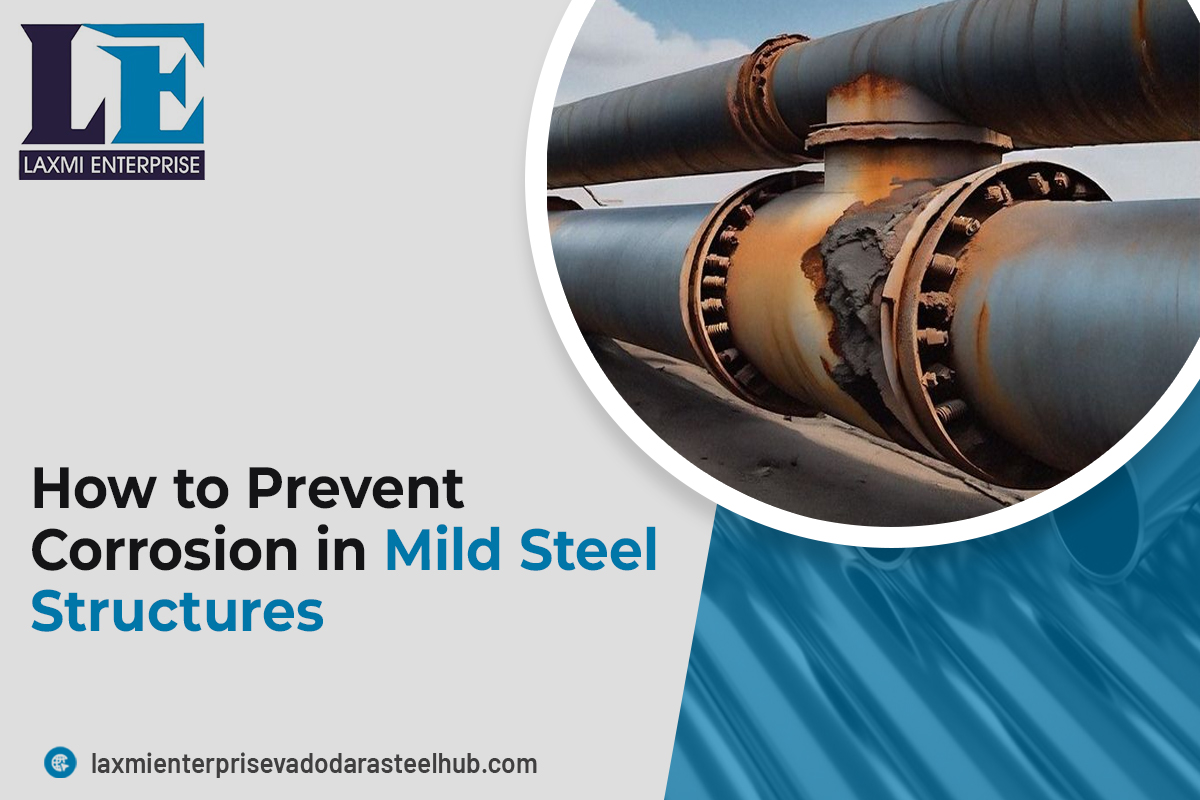
How to Prevent Corrosion in Mild Steel Structures

Corrosion is one of the biggest challenges for industries that work with heavy steel plants and machines. Due to environmental factors like chemicals, steam, wind, rain and humidity, the steel undergoes oxidation, causing corrosion. You can safeguard your steel structures in many ways, such as opting for the right materials, applying the necessary treatments, purchasing it from the best vendors and maintaining parameters that keep MS steel from degradation. In this blog, we will dive deep into how to prevent corrosion in Mild steel structures. 

Ways to Prevent Corrosion in Mild Steel

Choosing the Right Material:

Each material has different properties and varying levels of protection against corrosion. Hence, choosing the right material is the most effective way to avoid rusting in MS steel sheet.

#1 Galvanized Steel: This steel has a coating of zinc, which protects it from the outer impacts. This material is mostly used in Industries because it is cost-effective, durable and keeps the oxygen, water and moisture from the steel at an optimum level.

#2 Hot-Rolled Steel: Although hot-rolled steel is known for its strength and malleability, it has a high risk of undergoing oxidation. However, giving proper galvanisation treatment to this steel can reduce the risk. An extra zinc layer will keep it long-lasting and protect the steel.

#3 Galvalume Steel: This steel is well protected by a layer of alloy of zinc and aluminium. This layer makes the steel strongly resistant to corrosion factors, making it best for coastal regions. It also adds a smooth, shining layer, making it aesthetically pleasing.

Also Read: Benefits of Using Colour Coated Profile Roofing Sheets

Where to Buy MS Steel?

Choosing the right steel is very important, for its quality, durability and resistance to corrosion. Always choose Laxmi Enterprise, your most trusted partner in MS steel products. We are the best MS steel supplier in  Vadodara. We offer a full range of MS steel products from MS sheets, pipes, channels, to MS TMT bars. Make sure to check out our whole range of products! Call us to place your order now.

Protective Treatments

#1 Galvanizing: Coating the steel with a layer of zinc helps increase its life, protecting it from corrosive factors. It works as a sacrificial layer as it corrodes first.

#2 Paint Coatings: Using high-quality paints and coatings can help the aesthetic value of steel as well as add a layer of protective layer. It provides a robust layer of protection.

#3 Powder Coatings: This is a popular technique where dry powder is sprayed onto the steel and later cured under high heat. This adds a strong, rigid protective layer onto the steel. The plus point of powder coating is that it is resistant to chipping, scratching and peeling hence it is most preferred for high humidity regions.

Also Check: Roofing Sheet Distributor in Vadodara & Ms Round Tube in Vadodara

Maintenance and Inspection

#1 Regular Inspection: It is very important to perform regular checks around the steel plants with thorough routine checks. Early detection can save money and time. Also, check for blisters, discolouration and rust.

#2 Coating: Reapply the coating to the spots that have worn off the coating. This way, you can restore protection and stop moisture from seeping into the steel.

#3 Clean-ups: Regular and thorough cleaning of the machine can keep the corrosion away. Removing dirt, water and contaminants from the steel can increase its lifetime. Especially in coastal regions, it’s important to wash off saltwater.

Trust Laxmi Enterprise for Top-quality Mild Steel Products

All these measures can fail and result in corrosion and degradation of your material if the steel is not sourced from the best suppliers. At Laxmi Enterprise, we ensure that we source and supply industry-grade, high-quality MS Steel. We stand strong with our name as top MS steel suppliers in Vadodara, with our unwavering dedication to customer satisfaction. Check out our wide range of MS products such as MS pipes, MS sheets, MS channels, MS TMT bars, etc. Call us to place your order! 

Also Check: Role of Steel in Infrastructure

laxmi enterprise vadodara steel hub Logo

We make it easy for our customers to order for any mildsteel material like pipe, channel, angle, beam, HR Sheet, CR sheet, TMT bars etc. We provide them according to their requirement at the best quality and cost also.

Get in touch

© 2026 Laxmi Enterprise | All Rights Reserved