
laxmi enterprise

Categories
MS Sheet

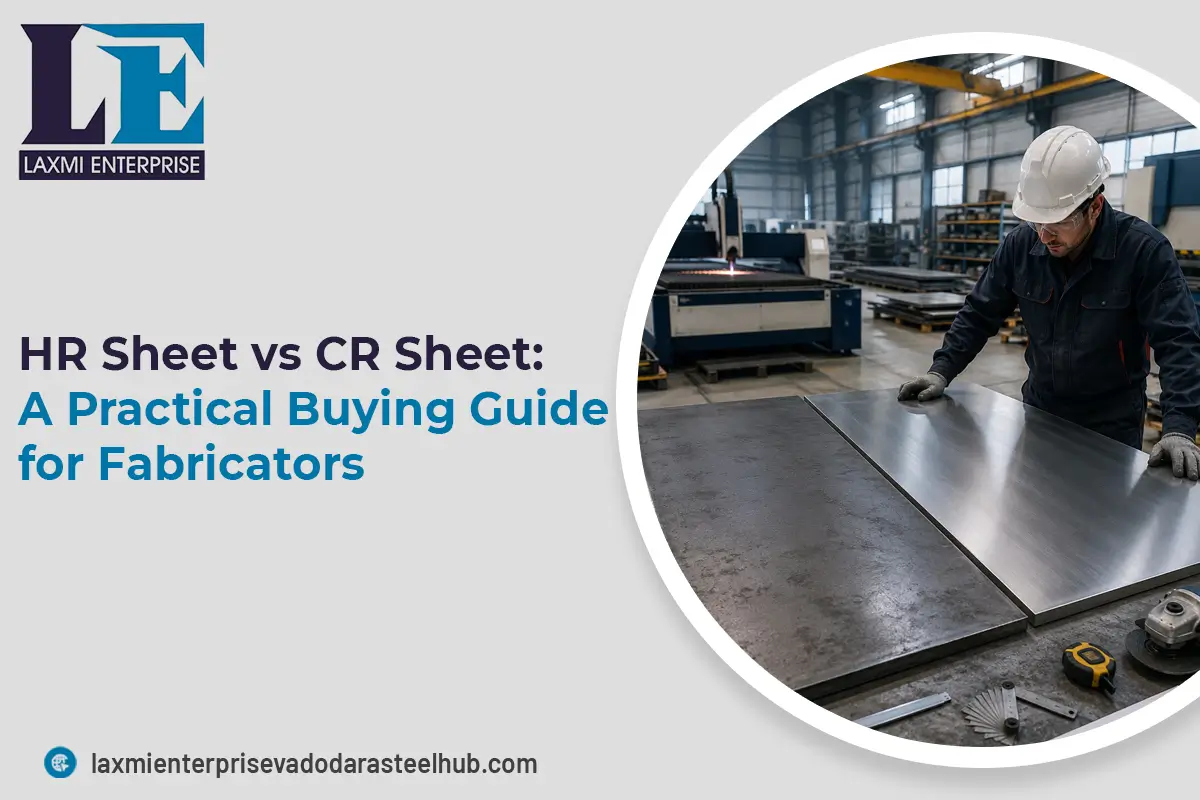
HR Sheet vs CR Sheet: A Practical Buying Guide for Fabricators

Choosing between HR (Hot Rolled) sheet and CR (Cold Rolled) sheet is an important decision for fabricators. Both are steel products, but they differ in how they are produced, their surface finish, dimensional accuracy, and typical applications. The right choice depends on what you are making, how the sheet will be processed, and what finish the final product needs.

What Is an HR Sheet?

HR sheet, or Hot Rolled sheet, is produced by rolling steel at high temperatures. The process makes it suitable for producing thicker sheets and large structural or industrial components. HR sheets are widely used in construction, engineering, fabrication, steel structures, and industrial applications. As an MS sheet supplier in Vadodara, Laxmi Enterprise supplies HR sheets in standard and customised sizes, including options from brands such as TATA, SAIL, JINDAL, and ESSAR. 

What is a CR Sheet?

CR sheet, or Cold Rolled sheet, is processed further at room temperature after hot rolling. This additional processing provides better surface finish and dimensional accuracy. CR sheets are commonly used where appearance, smooth surfaces, and closer dimensional control are important. As a CR sheet supplier in Vadodara, Laxmi Enterprise lists CR sheets for industrial applications and supplies them in rectangular formats.

HR Sheet vs CR Sheet: Key Differences

FactorHR SheetCR Sheet
ManufacturingRolled at high temperatureFurther processed at room temperature
Surface finishRougher, less uniformSmoother and cleaner
Dimensional accuracyGoodGenerally higher
Typical useStructural and heavy fabricationPrecision and appearance-focused applications
CostGenerally more economicalGenerally higher
Best suited forHeavy-duty fabricationComponents requiring better finish and accuracy

Which One Should a Fabricator Choose?

The simplest way to decide is to start with the application rather than the price.

Choose HR Sheet When:

  • You are making structural or heavy-duty components
  • Surface appearance is not the main priority
  • The project requires thicker material
  • Cost efficiency is important
  • The sheet will undergo further fabrication or finishing

HR sheet is particularly practical for general fabrication, industrial structures, and engineering applications.

Choose CR Sheet When:

  • You need a smooth and cleaner surface
  • Dimensional accuracy is important
  • The finished product will remain visible
  • The component requires a better surface for painting or finishing
  • The application demands tighter control over the sheet’s form and finish

CR sheet is commonly selected for applications where surface quality and dimensional consistency matter more than the lower initial material cost.

Check These Details Before Ordering

Before placing an order, confirm:

  • Steel grade
  • Sheet thickness
  • Length and width
  • Required surface finish
  • Application
  • Quantity
  • Required standard or specification
  • Brand or mill preference
  • Material documentation or test certificate, if required

These details help your MS steel supplier in Vadodara recommend the appropriate sheet instead of simply supplying whatever is readily available.

Why Your Steel Supplier Matters

The right material is only useful when you receive it in the correct grade, size, thickness, and specification. A reliable supplier should understand your fabrication requirement and help you select the appropriate product.

About Laxmi Enterprise

Laxmi Enterprise, an MS steel supplier in Vadodara, offers a wide range of mild steel products including TMT bars, beams, channels, angles, pipes, flat bars, sheets, plates and roofing sheets. Send us your list and quantity of MS product requirements and get a quote.

Whether you need HR sheet for heavy fabrication or CR sheet for applications where finish and dimensional accuracy matter, contact Laxmi Enterprise to discuss your material requirements and get the right steel for your project.
Categories
MS Steel

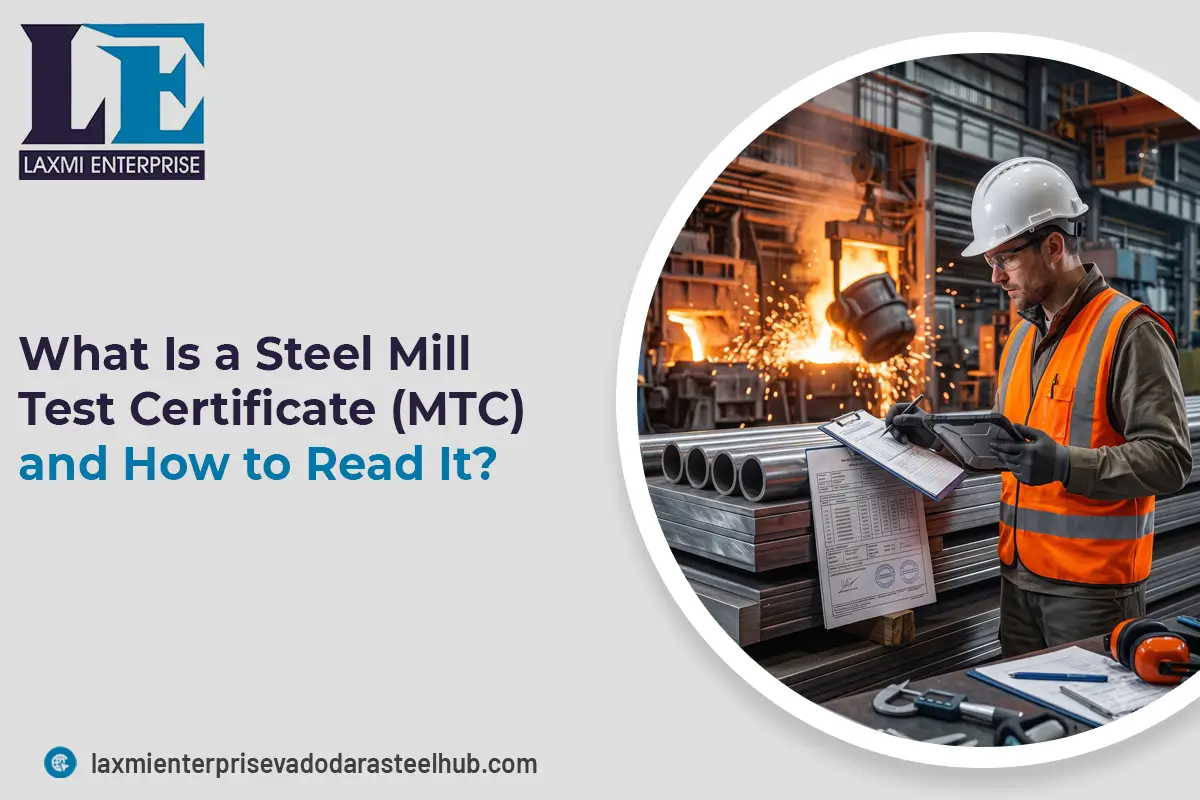
What Is a Steel Mill Test Certificate (MTC) and How to Read It?

When you buy steel, you need to know that it is the right grade, quality, and strength for your project. You cannot confirm this just by looking at the steel. Two plates may look identical but have different chemical compositions and mechanical properties. A Mill Test Certificate (MTC) provides this important information. It records details about the steel, including its grade, chemical composition, mechanical properties, and applicable standards. In this guide, we’ll explain what an MTC is, what information it contains, and how to read it in simple terms.

What Is a Mill Test Certificate (MTC)?

A Mill Test Certificate (MTC) is a quality document issued by the steel manufacturer or mill. It provides details about the steel’s chemical composition, mechanical properties, grade, and applicable standards, confirming that the material meets the required specifications.

It may also be called a Mill Test Report (MTR) or Material Test Certificate. Regardless of the name, its purpose is the same: to verify the quality and specifications of the steel. When buying from an MS Steel Supplier in Vadodara, asking for an MTC can help you confirm that the material supplied matches your project requirements.

Why the Mill Test Certificate Matters

The MTC is important for several reasons:

  • Proof of Quality: It confirms that the steel meets the grade and standard you ordered.
  • Traceability: It links the steel to the specific batch in which it was produced.
  • Safety and Compliance: For construction, pressure vessels, and structural applications, certified steel helps ensure that the required quality and safety standards are met.
  • Protection: It helps reduce the risk of receiving inferior, incorrect, or wrongly labelled material.
  • Record Keeping: MTCs are often required for audits, project documentation, quality checks, and export requirements.

Types of Mill Test Certificates

Under the common standard EN 10204, there are different types of test certificates. The main ones are shown below.

TypeWhat It Means
2.1A statement that the steel meets the order, with no test results included
2.2A test report based on the mill’s general (non-specific) testing
3.1A certificate with test results from the actual material, checked by the mill’s own inspection authority
3.2A certificate validated by both the mill and an independent or third-party inspector

What Information Is on a Mill Test Certificate?

An MTC contains important details that help you identify, verify, and trace the steel. Here is what you will usually find:

  • Manufacturer Details: The name and details of the steel mill that produced the material.
  • Certificate Number and Date: A unique reference number and issue date for records.
  • Product Description: The steel type, grade, dimensions, and quantity supplied.
  • Standard or Specification: The standard the steel meets, such as IS 2062, ASTM, or EN.
  • Heat or Cast Number: A unique batch number that helps trace the steel back to its original production melt.
  • Chemical composition: The percentage of elements such as carbon, manganese, silicon, and other alloying elements.
  • Mechanical Properties: Test results such as yield strength, tensile strength, and elongation.
  • Heat Treatment Condition: Details of any treatment applied to the steel, such as normalized or annealed.
  • Authorized Signature or Stamp: Confirmation from the manufacturer’s quality or inspection department.

Understanding the Chemical Composition

The chemical composition section shows the percentage of different elements present in the steel. Each element affects the steel’s strength, hardness, weldability, and overall performance.

  • Carbon (C): Increases strength and hardness, but too much can make steel more difficult to weld.
  • Manganese (Mn): Improves strength and toughness.
  • Silicon (Si): Helps during steel production and can contribute to strength.
  • Sulphur (S) and Phosphorus (P): These are generally kept at low levels because higher amounts can affect the steel’s quality and performance.

You may also find Carbon Equivalent (CE) on the certificate. It indicates how easily the steel can be welded. Always check that the values listed on the MTC fall within the limits specified by the relevant steel standard.

How to Read a Mill Test Certificate: Step by Step

Checking an MTC may seem complicated at first, but you can follow a few simple steps:

  • Check the Certificate Type: Confirm that the certificate meets your project requirements, such as EN 10204 Type 3.1.
  • Match the Product Details: Make sure the steel grade, size, thickness, and quantity match your order.
  • Check the Standard: Confirm that the material complies with the required standard, such as IS, ASTM, or EN.
  • Check the Heat or Cast Number: This number provides traceability and should match the identification marked on the steel.
  • Review the Chemical Composition: Make sure the listed element percentages fall within the limits specified by the relevant standard.
  • Check the Mechanical Properties: Verify that values such as yield strength, tensile strength, and elongation meet the required specifications.
  • Check the Certification and Approval: Look for the required signature, stamp, or certification from the authorised inspection or quality authority.

Buy Certified Steel from a Trusted Supplier

A Mill Test Certificate gives you confidence that the steel you receive matches the required grade, quality, and specifications. That’s why it is important to buy from a supplier who provides proper documentation with the material.

Laxmi Enterprise, an MS steel product supplier in Vadodara, supplies quality steel for a wide range of applications, along with the necessary material documentation. If you need certified steel or have questions about steel grades, specifications, or MTCs, contact Laxmi Enterprise for reliable supply and support.

Frequently Asked Questions (FAQs)

A Mill Test Certificate (MTC) is a document issued by the steel mill that certifies the chemical composition and mechanical properties of the steel and confirms that it meets the required standard. It is also called a Mill Test Report (MTR) or Material Test Certificate.

A Type 3.1 certificate reports the actual test results for your material, checked by the mill’s own inspection authority. A Type 3.2 certificate is also validated by an independent or third-party inspector, giving an extra level of verification.

The heat or cast number is a batch number that traces the steel back to the exact melt it was produced from. It is important for traceability and should match the markings on the steel.

Start by confirming the grade, size, and standard match your order, then check that the heat number is present and the chemical and mechanical values are within the standard’s limits.

Categories
Roofing Sheets

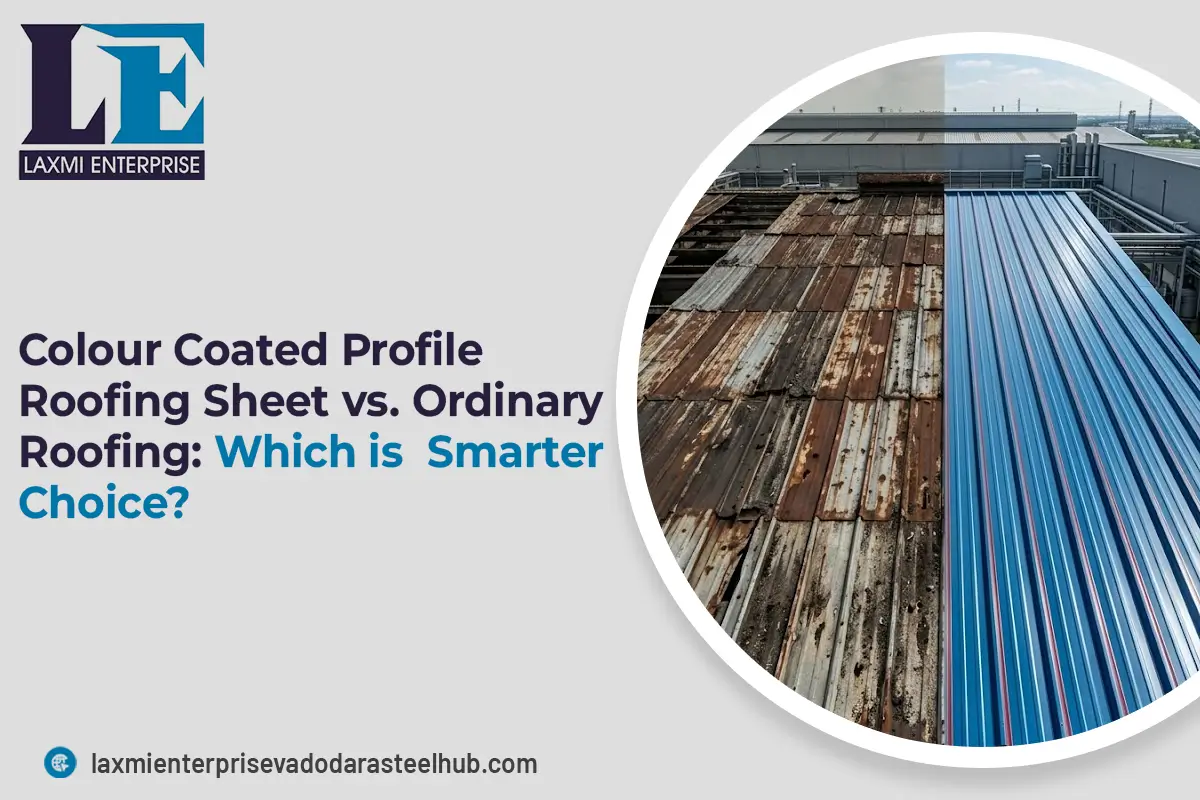
Colour Coated Profile Roofing Sheet vs. Ordinary Roofing: Which is Smarter Choice?

Roofing plays an important role in residential, commercial and industrial structures. The roofing material you choose impacts cost, durability and long-term performance. From colour coated profile roofing sheets and GC sheets to more conventional roofing materials like clay tiles, concrete roofing and fibre cement sheets, the choice is endless. To make a decision, one needs to consider financial, technical and practical aspects. In this blog, we compare colour coated profile roofing sheet vs. ordinary roofing to help you choose the right material for your specific applications.

What are Colour Coated Profile Roofing Sheets?

Colour coated profile roofing sheets are known for their strength, durability and aesthetics. They are galvanized sheets with a protective colour coat that enhances visual appeal and finish quality. Laxmi Enterprise is a top colour coated roofing sheets supplier in Vadodara, offering high-quality colour coated steel roofing solutions for homes, industries and commercial structures.

What are Ordinary Roofing Sheets?

Traditional roofing materials include clay tiles, fibre cement sheets, concrete roofing or asbestos sheets. These roofing systems have been around for years and are heavily reliant on on-site installations. Concrete tiles offer excellent strength but cannot withstand heavy loads. Similarly, tile roofs require timely maintenance and replacement, and asbestos sheets are discouraged due to associated severe health risks. Traditional roofing performance is heavily reliant on workmanship quality and installation. Poor build quality can lead to compromised safety and leakage.

Also Read: Best Roofing Materials

Colour Coated Profile Roofing Sheet vs. Ordinary Roofing: Comparison

  • Structural Performance 

When it comes to ordinary roof systems like concrete tiles, they add substantial load to the foundation. This leads to higher column sizing and costs due to higher material requirements. In contrast, colour coated roofing sheets are lightweight and reduce structural load, leading to lower construction costs. Also, GC sheets in Vadodara (galvanized corrugated sheets) work great in industrial and commercial environments. 

  • Installation Time 

An ordinary roof typically undergoes 3 main installation stages: shuttering, curing and finishing. The installation is heavily dependent on manual labour and time consuming, this time can be delayed due to weather conditions. Colour coated profile roofing sheets are prefabricated and can be installed easily, hence reducing project downtime and labour dependency. 

  • Initial & Long-term Costs

Traditional roof systems may seem cost-effective initially, but over a period of time the expenses associated with repairs and labour add up. Concrete and tile roofs need frequent repairs and replacement as well as maintenance. On the other hand, colour roofing sheets optimize material usage, require less maintenance and are more economical. 

  • Durability & Corrosion Resistance 

Traditional roofing materials can degrade over time, leading to leakage and cracks. On the other hand, colour roofing sheets offer superior corrosion resistance, protecting the sheet from extreme weather conditions. As a trusted roofing sheet supplier in Vadodara, Laxmi Enteprise’s colour coated roof sheets come in various colours that offer consistent performance and durability. 

Choosing the Right Roofing Sheet Material

Choosing the right roofing material starts with understanding the specific requirements of your project. Factors such as durability, performance, installation timelines, and budget all play an important role in the decision-making process. While material costs and installation speed are important considerations, they should not be the sole basis for selecting a roofing solution.

A roofing system should be viewed as a long-term investment rather than just an upfront expense. Evaluating factors such as lifespan, maintenance requirements, weather resistance, and overall value can help ensure better returns over time.

Make the Right Roofing Choice with Laxmi Enterprise

At Laxmi Enterprise, as the top roofing sheet distributor in Vadodara, we offer technical expertise and product guidance to help customers choose the best roofing sheet to match their project needs. Explore our range of roofing products and request a quote today.

Read: 9 Summer Roof Maintenance Tips

laxmi enterprise vadodara steel hub Logo

We make it easy for our customers to order for any mildsteel material like pipe, channel, angle, beam, HR Sheet, CR sheet, TMT bars etc. We provide them according to their requirement at the best quality and cost also.

Get in touch

© 2026 Laxmi Enterprise | All Rights Reserved