Tejas

Categories
TMT Bars

Role of TMT Bars in Road and Bridge Construction

TMT bars are strong and bendable bars used in the construction of several structures like high-rise buildings, foundations, the core of roads, bridges, etc. These high-performance bars are renowned for their ability to bend, provide support, bear load and exhibit high tensile strength. In this article, we discuss the role of MS TMT bars in road and bridge construction applications, highlighting their versatility and performance across diverse uses. 

Overview of MS TMT Bars in Road and Bridge Construction

The strength and service life of roads and bridges depend on the quality of materials used. MS TMT are crucial for the structural integrity of modern infrastructure like roads, flyovers and bridges. MS TMT or thermo-mechanical exhibits high tensile strength, durability and flexibility.  Their flexibility and durability are extremely important, particularly in withstanding seismic activity & constant stress of heavy traffic and extreme weather conditions. Investing in superior-quality MS TMT bars reflects a commitment to long-term infrastructure durability and safety. This is why trust, a renowned MS TMT bars supplier in Vadodara, like Laxmi Enterprise, for high-quality TMT bars sourced from top brands. 

Features of MS TMT Bars

  • Provides high flexibility and
  • load-bearing potential.
  • Highly ductile
  • Fire resistant
  • Earthquake resistant
  • Corrosion-resistant.
  • Environmental damage
  • resistant
  • Cost effective

Also Check: Best Tips to Consider Before Buying Ms TMT Bars

Uses of MS TMT Bars in Road and Bridge Construction

These bars are mainly used in the construction of roads and bridges. Let’s dive deeper into this. 

Bridge Construction with TMT Bars

TMT bars play the most important part in reinforcing bridges, carrying heavy loads and withstanding extreme weather. These bars are an ideal combination of tensile strength, ductility, and flexibility.  TMT bars rolling ensure bridges remain sturdy, safe and support high-traffic loads for many years. Also, they are resistant to rusting and corrosion, making them ideal protection against rain and humidity. Their unique production method, comprising quenching, self-tempering and atmospheric cooling, ensures their longevity.

Road Construction With TMT Bars

TMT bars are also very important in the field of road construction, like in structures such as highways, expressways and culverts. They offer the needed tensile strength, durability, strength, and resistance to loads and stresses created by heavy traffic, seasonal change, etc. TMT bars are high-ductility reinforcement bars with high corrosion resistance and earthquake resistance characteristics, which are perfect to ensure long-term structural integrity and performance of roads and their related infrastructure.

Invest in Top-quality MS TMT Bars for Infrastructural Development

Never compromise the quality of material for your infrastructure projects. Source your steel from Laxmi Enterprise, a top MS steel supplier in Vadodara. We excel in supplying good quality MS Pipes, MS beams, MS channels, MS angles, roofing sheets, MS TMT bars, etc. To enhance performance, safety, reduce maintenance costs and extend the service life of roads and bridges, choose Laxmi Enterprise’s range of MS products. For the best quotes, call us. 

Also Read: TMT Bars vs. Traditional Steel Bars

Categories
MS Pipes

MS Pipes vs. GI Pipes: Key Differences and Application

The MS and GI pipes are popular steel pipes used across different industrial applications. The MS pipe’s full form is mild steel pipe, and GI is galvanized iron pipe. Primarily made from steel, these pipes differ in terms of composition. Mild steel pipes are made of low carbon content, and are coated with paints and varnishes to get the best performance. While GI pipes have a zinc coating that protects them from environmental effects such as rusting. In this blog, we explore the key difference between MS pipes and GI pipes & applications to help you choose the right pipes for your application. 

Key Differences Between MS Pipes and GI Pipes:

MS PipesGI Pipes
Low-carbon contentMade of mild steel coated in zinc
Need varnish or paint to last longZinc coating provides long life
More affordable than GI pipesMore expensive than MS pipes
Used in the construction of buildings and machines, HVAC systemsUsed in plumbing systems and fire safety pipelines
Heavy weightLight weight
Durable and budget-friendlyDurable but needs care and is expensive

Applications of MS Pipes and GI Pipes

MS PipesGI Pipes
Used in structural engineeringInstalling a sewage system
FencingWater pipelines
Water irrigation systemHousing
In an industrial setupOil and gas transportation
AutomotiveElectricity transmission

Which is Better for Your Project, MS Pipes or GI Pipes?

#1 Indoor Dry Environment: Choose MS pipes for indoor dry environment applications like construction, automotive and engineering applications. 

#2 Moisture Conditions: For corrosive risk applications, use GI pipes for their excellent corrosion and rust resistance. 

#3 Structural Load: MS pipes’ tensile strength and heavy-load bearing capabilities make them ideal for structural load applications. 

#4 Plumbing & Irrigation Applications: Zinc-coated MS pipes are renowned for their resistance against corrosive agents and durability to varying temperatures. 

Where to Buy High-quality MS Pipes?

Laxmi Enterprise, an MS pipe wholesaler in Vadodara, provides top-quality MS products. Our comprehensive product portfolio includes MS pipes, MS beams, MS channels, MS angles, MS bars, MS bright bars, MS flat bars, roofing sheets, and MS TMT bars.  Our products are renowned for strength, durability and compliance with industry standards. Order MS steel products today, or call to get a bulk order.

Categories
MS Pipes

Benefits of Using MS Pipes in Structural Engineering

Mild steel pipes are widely used in construction and industrial applications for their flexibility and excellent machinability. Comprised of low-carbon content, MS pipes are easier to work with and exhibit tensile strength, making them ideal for various applications. In this blog, we explore the benefits of using MS pipes in structural engineering, shedding light on how mild steel pipes are a great investment option for your projects. 

Common Applications of MS Pipes in Structural Engineering

  • Construction & Structural Support: MS pipes are widely used in structural building frames, bridges and industrial construction. 
  • HVAC Systems: Used for heating, ventilation and air conditioning systems to carry air, water and gases in buildings. 
  • Plumbing: They are employed in plumbing systems in carrying water, sewage in residential, commercial and industrial establishments.

Also Check: MS Plates’ Advantages For The Construction Sector

Benefits of Using MS Pipes in Structural Engineering

  • Ease of Fabrication
    MS pipes have a low carbon content that makes them easy to cut, drill, weld and bend. This property of mild steel makes it ideal for projects that need tailored sizes of MS pipes. If you want MS pipes in custom sizes, Laxmi Enterprise is MS steel product supplier in Vadodara you can trust.
  • Tensile Strength
    One of the best benefits of using MS pipes is their high tensile strength and durability. They can withstand high pressure and temperature, which makes them suitable for carrying fluids and gases under varying conditions.
  • Resistant to Corrosion & Abrasion
    Mild steel pipes are highly resistant to corrosion and abrasion. They are ideal to carry fluids or gases through extreme conditions. MS pipes can withstand exposure to chemicals, wear & tear and harsh components without compromising structural integrity.
  • Versatility
    These mild steel pipes are highly versatile and can be used in a wide range of applications. They can be cut to desired lengths and welded together, which allows for customization and flexibility in applications.
  • Maintenance of MS Pipes
    Mild steel pipes are very low-maintenance and have a long service life. The best way to prevent corrosion and prolong longevity is to coat the pipes with a layer of zinc or other surface treatment. Regular inspection can help detect any signs of degradation before they become a problem.

Choose Laxmi Enterprise for Top Quality MS Pipes

Laxmi Enterprise mild steel pipes supplier in Vadodara, offering a wide range of MS pipes. We provide MS round pipes, MS square pipes and MS rectangular pipes customized for your project. We priortize quality, customer satisfaction and timely delivery to ensure you get the best quality mild pipes for your project. For the best quotes, call us today. 

Also Read: How Steel Shapes the Future of Renewable Energy Projects

Categories
MS Steel MS Steel Bars steel plates

The Use of Steel in the Agriculture Sector

Steel plays a pivotal role in the agriculture sector. Its exceptional strength, versatility, ductility and durability make it indispensable in the agriculture industry. From equipment, machinery, irrigation systems, building & structures, storage, to fencing, mild steel benefits multiple applications. 

Role of Steel in the Agriculture Sector

Steel is one of the best materials for agriculture, renowned for its durability, affordability, tensile strength and machinability. Steel comes in many types and grades to match your desired performance characteristics for specific applications. Mild steel is widely used in the agricultural sector for machinery and equipment. MS plates are used in manufacturing ploughs, harrows, cultivators, etc. MS pipes are used in irrigation systems, water wells and other applications. Mild steel exhibits excellent corrosion resistance and can withstand extreme weather conditions that making it ideal for diverse agricultural uses.

Are you looking for a reputed MS steel product supplier in Vadodara? Laxmi Enterprise offers a wide range of MS products, including MS sheets, MS round tubes and pipes, MS bars & much more.

Different Uses of Steel in the Agriculture Sector

#1 Agricultural Equipment
Steel, particularly mild steel, is extensively used in the manufacturing of agricultural equipment and machinery. It is used in the production of machinery components, tractor parts, ploughs, harvesters, sprayers, rotavators, seed drills and other pieces of equipment.

#2 Agricultural Infrastructure
Mild steel’s tensile strength, durability & endurance to extreme conditions make it ideal for the construction of agricultural infrastructure. It is used for the construction of storage facilities, barns, greenhouse structures & supporting frames, fencing and irrigation systems. Moreover, MS steel’s high temperature resistance improves the safety of agricultural assets and livestock.

#3 Agricultural Storage
Safety of crops and proper storage are crucial in the agricultural industry. Grain silos and bins are primarily made from steel. They prevent spoilage and safeguard from pests, rodents and moisture. Also, high-resistance steel is used for storage tanks for storing fertilizers, chemicals and fuels to extend shelf life and preserve quality.

Conclusion

Steel is indispensable in the agriculture industry for its strength, durability, versatility and resistance against extreme weather conditions. Laxmi Enterprise takes great pride as an MS steel product supplier in Vadodara, delivering top-notch quality mild steel products for the agriculture sector. Whether you are looking to buy MS bars for equipment or MS TMT bars for infrastructure, we provide the best quality mild steel products at competitive prices. For the best quotes, call us. 

Also Read: The Future of Steel Manufacturing: Trends and Emerging Technologies

Categories
TMT Bars

How MS TMT Bars Improve Earthquake Resistance in Modern Buildings

Mild steel TMT bars or Thermo-Mechanically Treated bars play an important role in modern buildings and construction projects.  These robust earthquake-resistant TMT bars are recognized for their high tensile strength, durability and exceptional properties for building integrity, especially in areas prone to earthquakes. In seismic conditions, MS TMT bars use their tensile strength and excellent ductility to withstand & dissipate energy from seismic waves, preserving the structural integrity of modern buildings. 

MS Earthquake-Resistant TMT Bars Outstanding Seismic Performance

Earthquake-resistant TMT bars are high-strength reinforcement bars used in the construction of various structures. These bars exhibit excellent performance against seismic forces to reduce structural damage during natural disasters. MS TMT bars are manufactured under specialised controlled cooling and reheating of bars, which impart high tensile strength and flexibility to withstand the impact of seismic forces. Laxmi Enterprise takes pride in being the leading MS TMT bars supplier in India that meets and exceeds industry standards. We provide MS TMT in grade Fe 415, Fe 500, Fe 550 and more. 

Also Check: What Are the Weights of TMT Bars?

How MS TMT Bars Improve Earthquake Resistance in Modern Buildings

Key strength factors of earthquake-resistant TMT bars: 

  • High Yield Strength: The yield strength of mild steel ensures it stays intact even under extreme stress, preventing structural failure during earthquakes. 
  • Elongation & Flexibility: High elongation MS TMT bars prevent brittle failure, reducing the possibility of sudden structural collapse. Also, the increased flexibility allows the structure to withstand seismic forces, maintaining its integrity. 
  • Superior Ductility: Excellent ductility of MS TMT bars sustains deformation and withstands unexpected tremors in high seismic zones. 
  • Seismic Energy Absorption: Mild steel TMT bars absorb and distribute seismic energy, minimizing impact and maintaining stability and safety. 

Buy Mild Steel TMT Bars for Earthquake-Resistant Construction

In seismic zones, choosing the right MS TMT bars is crucial. Whether you are a civil engineer or contractor, investing in high-quality MS TMT bars is important for safe and long-lasting construction. Laxmi Enterprise offers TMT bar wholesale in Vadodara for the best protection for your construction projects. Contact us to source MS TMT bars. 

Also Read: TMT Bars vs. Traditional Steel Bars

Categories
MS Pipes

Unveiling the Advantages of MS Pipes for Industrial Applications

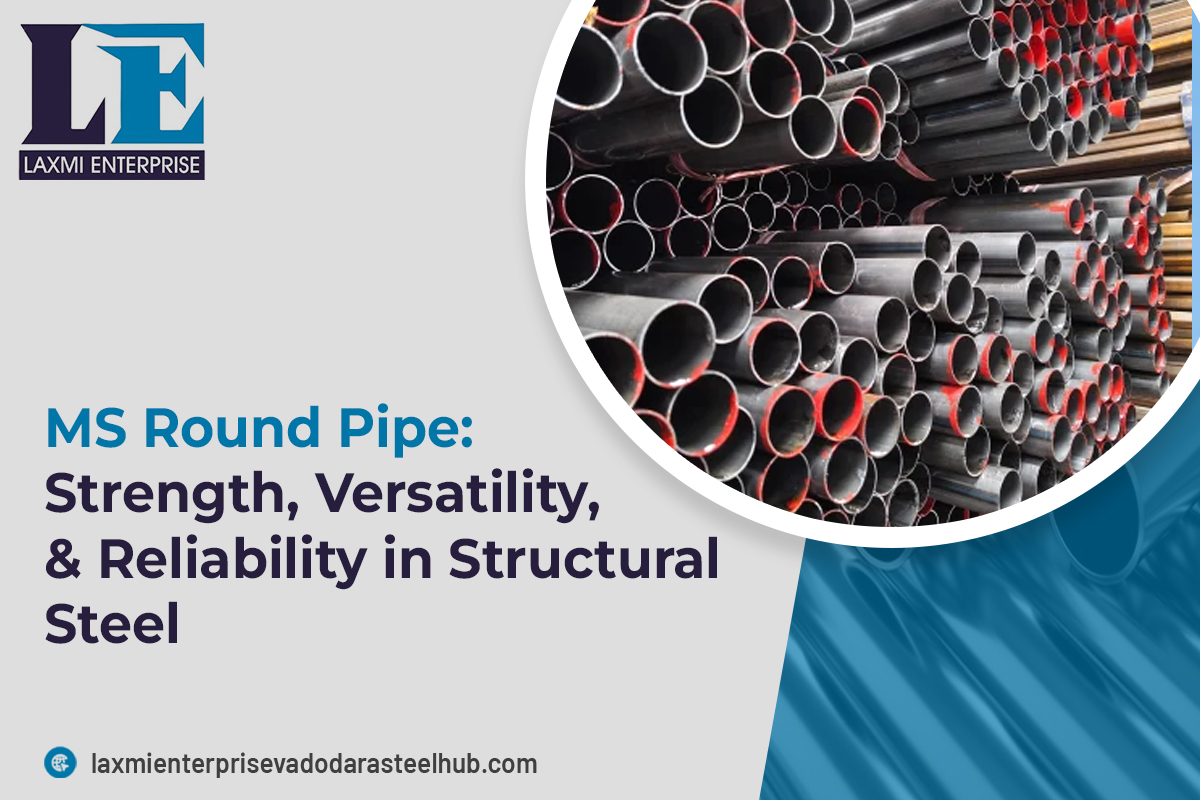
Mild steel pipes are instrumental in various industrial applications. They are highly resistant to wear & tear and can withstand high-pressure & temperature, making them ideal to carry fluids and gases. MS pipes are widely used in domestic construction frames, scaffolding, support structures and other applications where long-lasting infrastructure that withstands harsh environments is needed. 

Industrial Applications of MS Pipes

  • Construction Industry: MS pipes are used in the construction of scaffolding, support structures and other applications for their affordability, weldability and strength. 
  • Oil & Gas Industry: One of the most popular MS pipes for industrial applications is in the oil and gas industry. These MS round pipes are used to carry crude oil, natural gas and other fluids. 
  • Chemical Processing Industry: The advantages of MS pipes are seen the the chemical processing industry. They are used to transport chemicals and other substances, as these MS pipes are resistant to corrosion and abrasion, making them ideal for use in the chemical industry. 

Advantages of MS Pipes for Industrial Applications

Ductility

Mild steel is highly ductile and, due to its low-carbon content, it can withstand strain up to 20% before failure. The superior ductility allows for improved bendability and weldability, making them versatile as well as suitable for earthquake-prone areas. 

Strength-to-Weight Ratio

This is the measurement of the strength-to-weight ratio of pipes, determining the efficiency of load-bearing by removing the mass. MS pipes have a tensile strength ranging from 400 to 500 MPa and a density of 7,850 kg/m3, which is low in terms of withstanding high loads with minimal weight. This makes them ideal for plumbing, construction and irrigation. 

Laxmi Enterprise is the most trusted MS pipe supplier in Vadodara, offering different types of MS pipes, including MS round pipes, MS square pipes, and MS rectangular pipes for various industrial and manufacturing applications. For a detailed MS pipes weight size chart, get in touch with us.

Corrosion Resistant

At Laxmi Enterprise, we offer options for protective coatings like galvanization and zinc coating to enhance corrosion resistance and withstand environmental elements more effectively. 

Weldability & Machinability

Mild steel pipes exhibit excellent weldability and machinability properties. Their low-carbon content allows for ease of fabrication without impacting the structural integrity. This property makes MS pipes ideal in the automotive industry, where exhaust pipes and roll cages are required. 

MS pipes play an important role in industries like construction, chemical processing, agriculture, oil & gas and other industries. Laxmi Enterprise offers MS pipe wholesale in Vadodara at competitive prices, delivered throughout India. For price details of MS pipes, call us.

Categories
MS Steel

Differences Between ASTM, IS, and EN Standards for Mild Steel

There are various standards set by different organizations and institutions for mild steel. Every country has their own standards led by concerned authorities. ASTM, IS and EN are the most popular international standards that assure safety, quality and reliability. In this blog we understand the difference between ASTM, IS and EN standards for mild steel to help you make an informed decision for your project.

ASTM Standards for Mild Steel

ASTM International (American Society for Testing Material) is a globally recognized standard organization that sets technical standards for materials. The ASTM A36 is commonly used for mild steel and hot-rolled steel. These types of steel standard are applied to different mild steel grades in various forms including MS rectangular bars, MS square bars, MS round bars and shapes like angles, I-beams and H-beams. 

IS Standards for Mild Steel

The Indian Standards (IS) specify the physical requirements of mild steel. The commonly available types of mild steel grades are the IS 2026 Grade A and Grade B. The IS standards mention the manufacturing requirements, freedom from defects, nominal sizes and mass, tolerances, physical requirements and tests undertaken. 

EN Standards for Mild Steel

The EN Standards (European Standards) are mild steel. The EN standards emphasize composition and mechanical properties like weldability, ductility, corrosion resistance, forging and tensile strength.

Key Differences Between ASTM, IS, and EN Standards for Mild Steel

The ASTM, IS and EN standards are set for mild steel each specifying the technical requirements. 

Scope & Focus:

ASTM Mild Steel Grades: The ASTM mild steel standard grades focus on a wide range of mild steel grades each designed for specific applications. The most common grade is A36, recognized for its excellent strength and formability. The other common grade is A283 that is ideal for low-pressure mild steel uses. 

EN Mild Steel Grades: The European Standards categorize mild steel grades as S235JR, S275JR and S355J2. Each of these mild steel standards has different strengths and ductility suitable for structural uses. 

IS Standard Mild Steel Grades: The Indian Standards for MS steel are Mild Steel Grade I and Mild Steel Grade II each with different strength, flexibility, hardness and toughness. 

Strength Comparison:

ASTM Strength: Following is the yield strength of ASTM grade mild steel:

  1. ASTM A36: Tensile strength ranging between 58,000 to 80,000 psi with a minimum yield strength of 36,000 psi. 
  2. ASTM A283: The Type A has a strength of 45,000 to 80,000 psi with a minimum yield strength of 24,000 psi. 
  3. ASTM A516: This has a tensile strength from 55,000 to 75,000 psi with a minimum yield strength of 24,000 psi.

EN Strength:  The EN 10025 S235JR offers a tensile strength of 52,000 to 74,000 psi and a minimum yield strength of 34,000 psi. 

IS Strength: The IS standard mild steel has a tensile strength ranging from 58,000 to 80,000 psi. 

Difference in Scope of Applications

It is crucial to choose the right mild steel for your specific applications. Mild steel of ASTM and EN standards are ideal for construction projects, automotive components, pressure vessels, equipment, etc. IS standard-grade mild steel is suitable for infrastructure, construction and general fabrication applications. 

It’s essential to understand the difference between ASTM, IS and EN to help you choose the right grade for your specific applications. Laxmi Enterprise offer MS steel Vadodara in different grades that complies with industry standards. For custom length and finishes, call us. 

Categories
MS Steel

Mild Steel: Know the Advantages & Disadvantages

Mild steel is a versatile material used across many applications. MS steel is renowned for exceptional strength, machinability and cost-effectiveness making it important in modern construction and manufacturing. In this blog, we discuss the advantages and disadvantages of mild steel to help understand for which applications MS steel is suitable. 

What is MS Steel?

Mild steel is a low-carbon steel comprising 0.05% to 0.25% carbon. The low carbon content in MS steel is what makes it unique and imparts differentiating qualities. It is an economical choice for large-scale applications without compromising on structural integrity. MS steel exhibits incredible malleability and weldability that allows it to give it the desired shape for intricate designs. 

Mild Steel Applications

MS steel’s unique quality and affordability make it a versatile material used across different industries. 

  • Construction: One of the popular uses of mild steel is in the construction industry. It is used to make frames and components for bridges, buildings and other structures. 
  • Pipelines: MS pipes are used for carrying fluids and gases for their excellent strength and ductility. 
  • Automotive: Many components like body panels, frames and chassis of automobiles like cars, bikes and trucks are made from mild steel. 
  • Machinery & Equipment: Mild steel is used in the manufacturing of tools, machinery and industrial equipment. 
  • Railways: Many train components like carriages and tracks are made of mild steel for their exceptional resistance to corrosion & strength. 

Advantages of Mild Steel

Versatility

One of the primary benefits of mild steel is its versatility. It can be easily cut, shaped and welded in the desired shape. This unique quality and its ability to be combined with other materials allows for composite structures. 

Weldability

The low-carbon content allows for ease of weldability and fabrication. It is highly ducitle that allows it to be cut, bent and shaped into various forms without cracking or chipping. This property makes it suitable for industries that allow for intricate shapes and designs. 

Strength-to-weight Ratio

MS steel offers the perfect balance between weight and strength, making it ideal for weight-bearing loads. It offers adequate strength for structural applications without increasing the weight of the structure. 

Affordability

The mild steel composition typically between 0.05% to 0.25% makes it a cost-effective than other types of steel. Using MS steel can lead to considerable savings in large-scale construction projects without compromising on structural integrity. 

Disadvantages of Mild Steel

Dimensional Consistency

There is a possibility that MS steel can warp after cooling leading to dimensional inaccuracies. This is why you need to buy MS steel from trusted suppliers. Laxmi Enterprise is a well-known MS steel supplier Vadodara that sources MS products from trusted and reputed manufacturers. Choose our MS products for accurate dimension, performance and top-notch quality. 

Limited Aesthetics

MS steel may not be aesthetically appealing compared to other materials like stainless steel and aluminium. Though, when it comes to performance MS steel offers excellent strength, resistance to corrosion and ease of fabrication. 

Limited Heat Resistance

Mild steel can lose its strength and structure when exposed to higher temperatures. This makes it unsuitable for automotive engine parts or furnaces. 

Buy MS Steel for Your Project

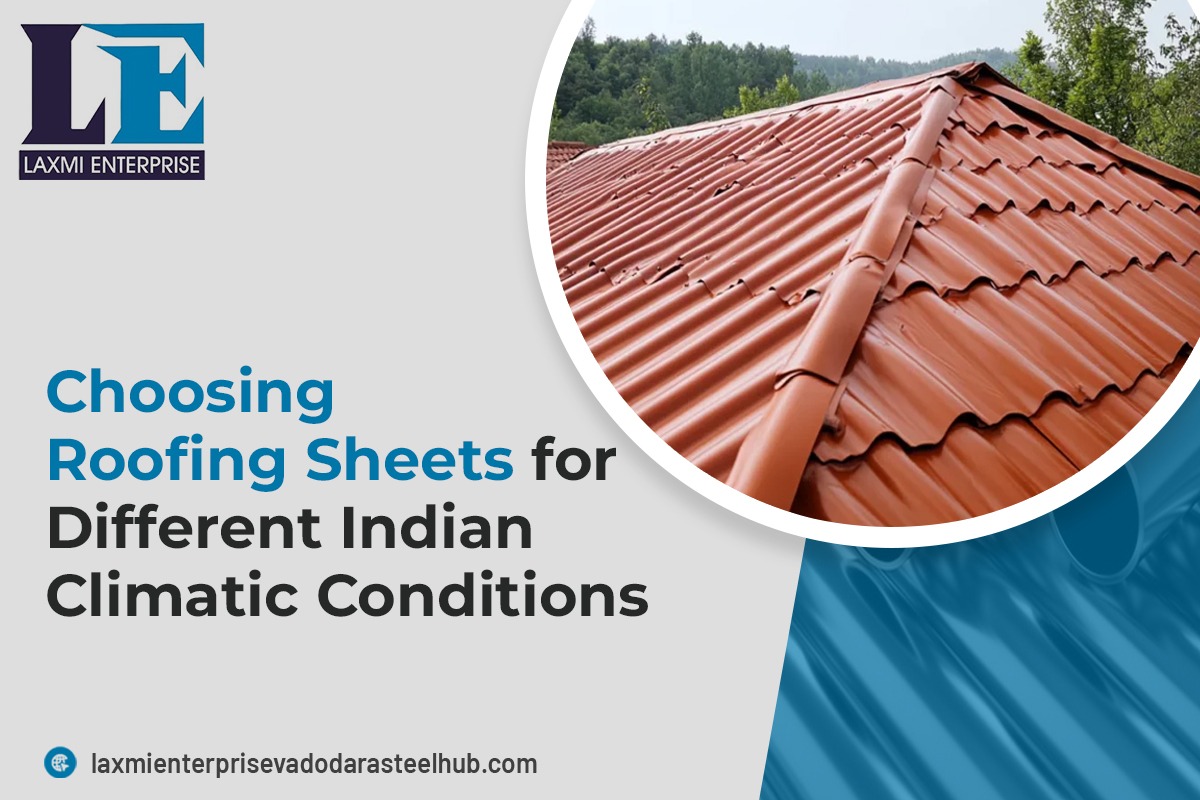
Looking to buy MS steel products for your construction project? Laxmi Enterprise offers a wide range of MS products, from MS pipes, MS bars, MS angles, MS TMT bars, roofing sheets and more! To place orders or custom dimensions, call us. 

Categories
MS Steel

Mild Steel in Automotive Industry

Steel is indispensable in producing various vehicle and engine components in the automotive industry. Different types of steel are used in automotive manufacturing, from car frames, wheel rims, bushing, bearings, and other spare parts. Mild steel in the automotive industry has a range of applications due to its superior mechanical properties, machinability, and cost-effectiveness. In the blog, we explore the role of mild steel in the automotive industry, highlighting its popularity in recent times and versatility in manufacturing engineering parts. 

Role of Mild Steel in Automotive Industry

MS steel is a popular type of steel used typically for automotive body panels and structural components. Its low-carbon content, ductility, and tensile strength make it ideal for car manufacturer’s requirements for flexibility and malleability. Looking to buy MS steel product in Vadodara? Laxmi Enterprise offers a comprehensive range of mild steel products, including MS pipes, MS angles, MS TMT bars, MS bars, etc. To place orders, call us. 

Applications of Mild Steel in Automotive Industry

Automobile Structural Parts

MS steel is widely used for structural components; this includes the overall structure, such as body frame, roof, doors, etc.  These automotive components need to withstand heavy loads & impact and, hence, need to be sturdy and strong. MS steel exhibits excellent tensile strength and processing properties that meet the stringent requirements of structural parts. Moreover, mild steel is low-cost, which makes it an ideal material for car structural components. 

Chassis Components

These are the components that are under and around the vehicle, such as the braking system, suspension, steering system, exhaust manifold, etc. Chassis components need to withstand impact stress and corrosion elements. To protect them from corrosive elements, mild steel is often treated with a zinc coating. This process involves applying a layer of zinc to the steel, which significantly improves its corrosion and wear resistance, making it suitable for these critical components. 

Engine Components

Mild steel is extensively used in the manufacturing of automotive engine components. The engine determines the vehicle’s fuel efficiency and power. These components are exposed to high-temperature and pressure, so they need to be able to withstand high fatigue and heat resistance. MS steel is heat treated to enhance its endurance and resistance to meet the stringent requirements of engine parts. 

Other Automotive Components

Low-carbon content MS steel is also used in a variety of automotive components, both interior and exterior. It is suitable for manufacturing suspension parts, control arms, clutch housing, fasteners, bolts, covers, and other metal materials. These components play a crucial role in the vehicle’s performance and safety, and mild steel’s excellent mechanical properties make it an ideal material for their manufacturing. 

With its high strength, compatibility with polymers, and excellent mechanical properties, MS steel is indispensable in automotive industry. Laxmi Enterprise is a leading MS steel Vadodara supplier and distributor sourced from top brands and manufacturers. To learn more about our MS products or place bulk orders, request quotes today. 

Categories
MS Steel

Difference Between Bright Steel & Mild Steel

Steel is the lifeline of the modern economy, playing an indispensable role in manufacturing, construction, and other industries. Bright steel and mild steel stand out for their versatility and extensive usage across diverse industries. But how are they different, and which is better? In this blog, we explore the difference between bright steel and mild steel to help you make an informed decision. 

Difference between Bright Steel and Mild Steel: An Overview

What is Mild Steel?

Mild Steel (MS) is a versatile, low-carbon steel comprised of nearly 0.05 to 0.25% carbon. It is a cost-effective material with excellent mechanical properties and high resistance against corrosion and rust. MS steel’s low-carbon content imparts superior malleability, weldability, and durability, making it a reliable choice for a wide range of applications.

What is Bright Steel?

Bright steel is a carbon steel alloy with surface conditions enhanced with further processing. The bright steel is processed in cold reduction mills where the steel material is cooled at room temperature, followed by temper rolling. This process gives steel a clean & smooth finish and more accurate dimensions, making it an ideal choice for applications that demand high precision. 

Bright Steel Vs Mild Steel

Surface Appearance: Mild steel has a rough surface due to its hold-rolling process treatment; it is suitable for applications where appearance is not crucial. Bright steel has a cleaner and smoother surface, making it ideal for applications that need high precision and a smooth finish. 

Applications: MS beams are ideal for constructing structural components, pipelines, tubes, automotive parts, and other engineering & fabrication applications. While bright steel is suitable for applications where strength and precision are required, like machinery & equipment parts, metal furniture, tools, fasteners, etc. Looking for reliable mild steel beam suppliers in Vadodara for top-notch MS beams for your projects? Check our Laxmi Enterprise’s wide range of MS products. 

Strength & Hardness: MS steel products exhibit excellent strength and malleability, improving machinability and weldability. On the other hand, bright steel products demonstrate exceptional strength and hardness due to the cold-working process, making them the go-to choice for high-precision parts that require high strength and can withstand heavy-duty applications.

Mild steel and bright steel are extensively used across various industries for diverse applications. The main difference between bright steel and mild steel is their surface finish, precision, and strength. MS steel is cost-effective, versatile, and exhibits high strength, making it suitable for construction and fabrication, whereas bright is ideal for applications that require high precision and cleaner finishes. At Laxmi Enterprise, we are the leading MS steel supplier in Vadodara, offering expert guidance and top-quality products for your project. For best quotes, call us. 

We make it easy for our customers to order for any mildsteel material like pipe, channel, angle, beam, HR Sheet, CR sheet, TMT bars etc. We provide them according to their requirement at the best quality and cost also.

Get in touch

© 2024 Laxmi Enterprise | All Rights Reserved