MS Steel

Categories
MS Steel

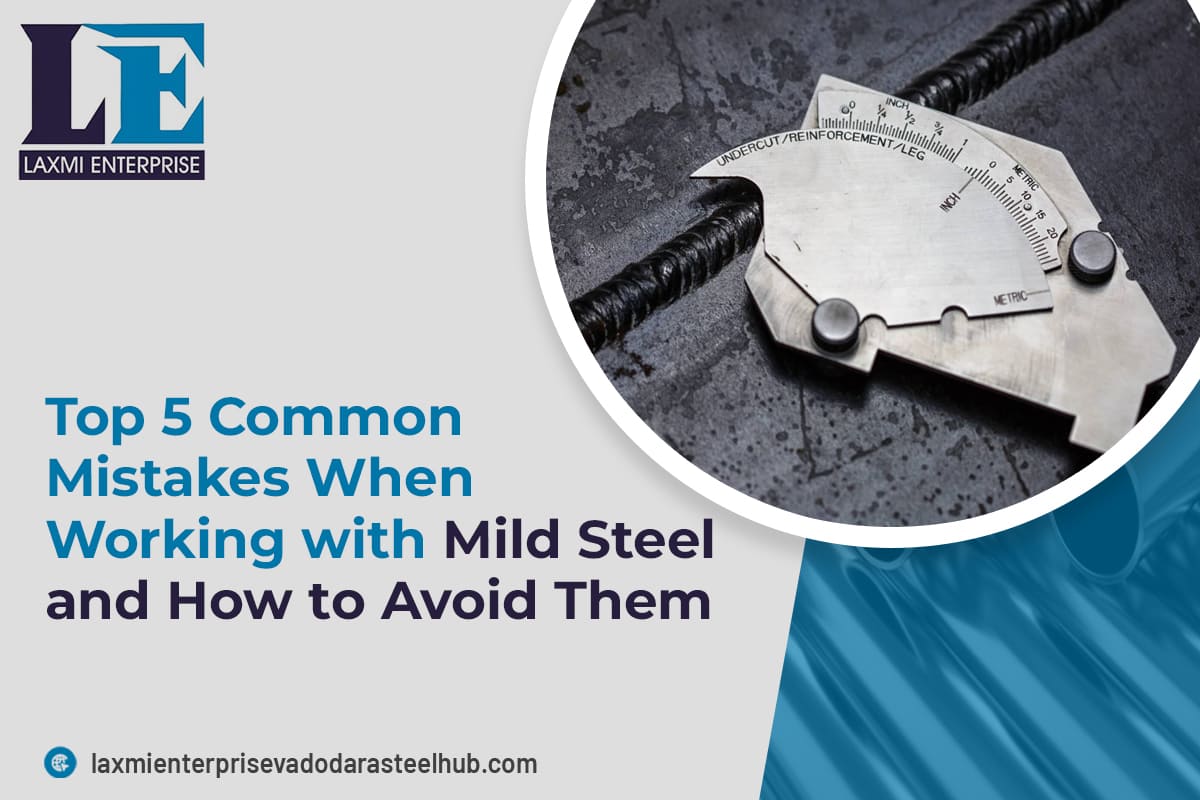
Top 5 Common Mistakes When Working with Mild Steel and How to Avoid Them

Mild steel is a popular choice for industrialists in manufacturing steel articles and machines.  It is widely used in fabrication due to its unparalleled flexibility, strength, and affordability. MS steel is used across various industries, including construction, furniture, plumbing, transport, and infrastructure. Although it is very easy to work with MS steel pipes, MS sheets, MS beams, etc, they require adequate conditions and prerequisites to work with. For desired results, focus on the crucial points about the top 5 common mistakes when working with mild steel and how to avoid them. 

Overview: MS Steel

MS steel stands for mild steel, a type of steel with low carbon content (0.05% to 0.25%). It has many attractive features, such as high formability, easy weldability, and machinability, making it a versatile material for various applications. It has low carbon content; therefore, it can be easily welded and bent without cracking. The word “mild” may mislead people into thinking it is a weak type of steel, but it has high tensile strength and resists corrosion to a high extent. 

These qualities help in providing support and rigidity to the structure. Therefore, MS steel has applications in the automotive industry, construction, fabrication, and machinery, among other sectors. Looking to purchase MS steel products for your application? Contact the most trusted MS steel product supplier in Vadodara, Laxmi Enterprise. We source our steel from certified vendors that conduct stringent quality checks on their products and then supply it to our clients with all the customisations mentioned. Interested? Give us a call to discuss further. 

Top 5 Common Mistakes When Working with Mild Steel and How to Avoid Them

  • Choosing the Wrong Variant: The MS steel products come in various shapes, sizes, and thicknesses. It depends on the application purpose to decide among all the varying types. For example, your MS plates are thick and stronger, but the MS sheets are much thinner and weaker than the MS plates. Therefore, you need to deeply assess the qualities before purchasing and avoid choosing the wrong variant.
  • Not Protecting Mild Steel From Corrosion: This measure is crucial when working with outdoor applications of MS steel, such as MS beams, MS channels, MS pipes, etc. Environmental impacts can have strong effects on the steel and erode it over time. To prevent corrosion, apply protective coatings like zinc or powder coating. 
  • Improper Storage and Handling: To avoid warping, bending, and rusting of your steel products, store them properly. Keep them in a dry, moisture-free place. While transporting big pipes and beams, arrange a big vehicle to prevent bending.   
  • Incorrect Cutting and Bending Techniques: If the cutting is not performed by professionals, it may lead to uneven parts and damaged material. Therefore, make sure to use a suitable steel cutting method like CNC cutting, laser cutting, hot bending, cool bending, etc.   
  • Used Improper Welding Technique: Welding is a crucial step in steel fabrication. Here, the two metal pieces are joined together to maintain strength. However, wrong welding techniques can leave the metal cracked and weak. To avoid this result, use the method based on thickness and type of mild steel. Always clean the steel surface before welding, as dirt and dust can lead to weaker joints.

Conclusion

Mild steel is a versatile metal and can be used in numerous industries for varying purposes. From furniture, toys, utensils, to large machines, everything can be made using mild steel. To ensure top-quality, purchase mild steel articles from Laxmi Enterprise, a renowned and trusted supplier of MS steel in Vadodara.  We source our steel from verified vendors and refine it at our facility. We ensure that our products are long-lasting, high-performing, and durable. Our range consists of MS sheets, MS beams, MS bars, MS TMT bars, MS channels, etc. Call us to place an order now!

Read More:–  Benefits of Using Colour Coated Sheets for Your Roofing!

Categories
MS Steel

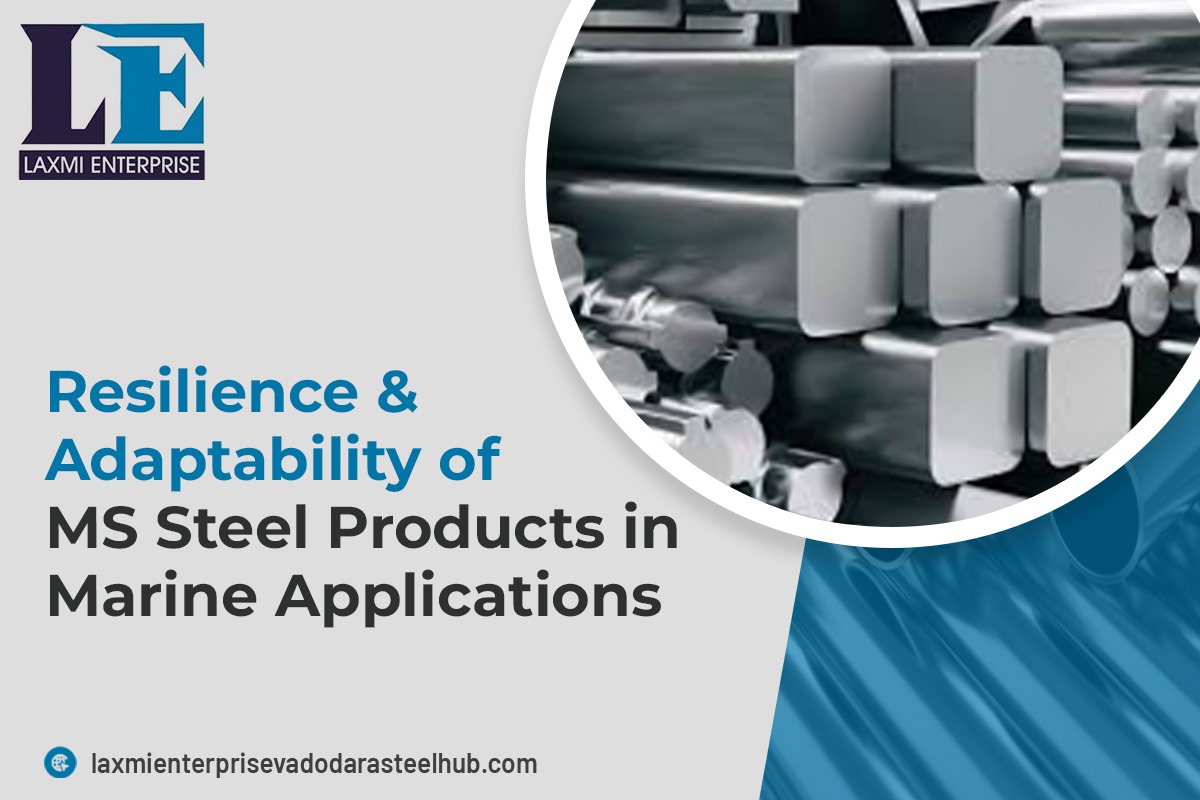
Resilience & Adaptability of MS Steel Products in Marine Applications

Structures in marine environments must withstand extreme conditions, ensuring longevity and performance. Among the materials, mild steel plays an important role in the construction of marine structures, including ship building, offshore platforms, docks, piers and repair & maintenance activities. In this blog, we explore the mild steel applications in marine engineering, highlighting the versatility of MS steel products in marine applications.

Role of Mild Steel in the Marine Engineering Industry

Mild steel (MS) is used to produce light, strong and durable structures in marine settings. MS steel can be fabricated into a variety of shapes as per the specific requirements of the project. Some of the common MS steel products in marine applications are:

  • Ms Angles
  • Ms Pipes
  • Ms Channels
  • Ms Plates
  • Ms Tubes
  • Ms Beams
  • Ms Tmt Bars, Etc

These mild steel products are engineered to withstand extended exposure to the marine environment. At Laxmi Enterprise, we understand the requirements of demanding marine applications. As an MS steel product supplier in Vadodara, all our products are available with zinc galvinzation to enhance the corrosion-resistant properties and withstand harsh marine conditions. Whether it’s ship exhaust pipes, offshore pontoons or support frames, our MS products are synonymous with high-quality, durability and cost-effectiveness.

Mild Steel Applications in Marine Engineering

MS steel offers excellent versatility, strength and performance in challenging marine applications. It is one of the most popular materials offering various advantages in different applications.

  • Shipbuilding: One of the main applications of mild steel in the marine industry is shipbuilding. Mild steel’s high tensile strength and structural integrity make it an ideal material for the construction of hull, superstructure and other crucial components. As a mild steel flat bar supplier in Vadodara, we deliver MS flat bars for building ships and barges. Its flat bars exhibit excellent durability and corrosion resistance, contributing to the extended service life of these vessels.
  • Marine Structures: Various marine components and equipment, like anchors, propellers, ship exhaust pipes, and winches, are made from high-quality steel. Its exceptional corrosion resistance and ability to withstand extreme conditions make mild steel suitable for marine structures.
  • Offshore Platforms: Offshore platforms are crucial for extracting oil and gas. This industry heavily relies on steel for the construction of complex infrastructure like towering legs, ladders and platforms. Mild steel provides the structural foundation to withstand extreme offshore conditions.
  • Ship Repairs & Maintenance: Apart from construction, MS steel is also used for ship repair and maintenance. Its excellent machinability and weldability make mild steel ideal for repairing damaged ship parts and components, ensuring safety and performance.

Choose Laxmi Enterprise for MS steel Products in Marine Applications

Laxmi Enterprise offers a complete range of mild products with zinc galvanization options. From MS bars, MS TMT bars, and MS channels to MS pipe wholesale in Vadodara, our products are tailored specifically for your applications. Sourced from trusted manufacturers, we ensure our MS steel products in marine applications meet industry standards, tolerance dimensions, and support various industries. Contact us for the best quotes.

Check:- How Steel Shapes the Future of Renewable Energy Projects?

Categories
MS Steel

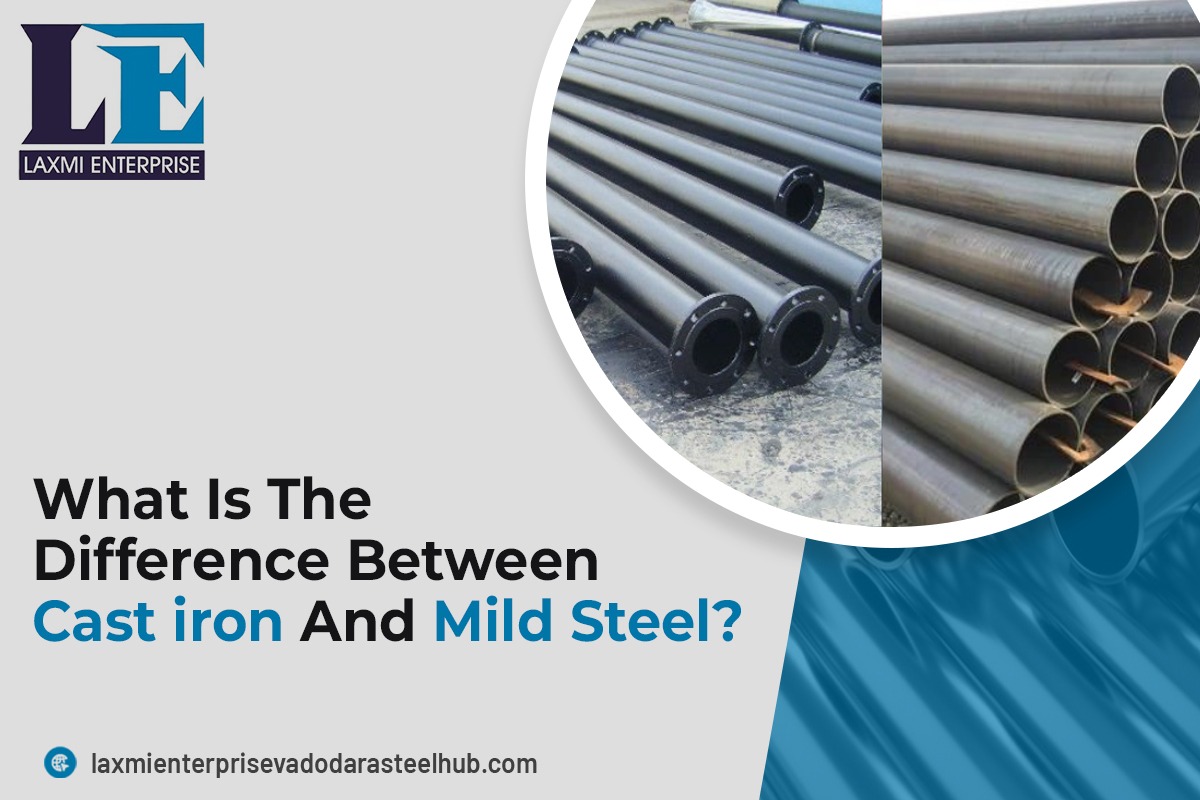
What is the Difference Between Cast Iron and Mild Steel?

Metals are the foundation of the manufacturing industries. Most of the manufacturers use iron and steel because of their qualities, like high tensile strength, durability, and ability to retain luster for a long time. However, some people debate upon the qualities of cast iron, claiming that it is stronger than mild steel. In this blog, we will explore the differences between cast iron and mild steel. 

What is Cast Iron?

Cast iron is formed by smelting the alloy of iron and carbon. The carbon content of this iron is only 2–4%. After that, the ironsmith pours iron into the mold instead of shaping it with a hammer and tools. It also contains silicone, sulfur, phosphorus, and manganese. It possesses several mechanical qualities, including toughness, ductility, hardness, and elasticity. There are various types of grey iron, white iron, malleable iron, ductile iron, and compacted iron graphite. 

What is Mild Steel?

It is a type of steel with an extremely low percentage of carbon content. Typical concentrations of steel found are around 0.05% to 0.25%. Due to the lesser amount of carbon, the steel is more ductile, machinable, and easier to weld. Mild steel also contains high levels of iron and ferrite, making it magnetic.

In the manufacturing sector, mild steel is a common choice for building automobiles, tools, machinery, and weapons. The low concentrations of carbon make this steel more affordable than high-carbon steel; however, it requires a proper coating to ensure longevity. Laxmi Enterprise provides the highest quality of zinc-coated mild-steel bars. As a leading MS steel supplier in Vadodara, we source our mild steel from trusted manufacturers, including MS pipes, MS beams, MS channels, TMT bars, etc. Each one is sourced, expertly customized, and consistently fulfils your needs.

Also Check: Maintenance Tips for Mild Steel

Difference Between Cast Iron and Mild Steel

FeatureCast IronMild Steel
CompositionContains 2–4% carbon, along with silicon and traces of other elementsContains up to 0.25% carbon, with iron as the primary element
StrengthHigh compressive strength but lower tensile strengthHigh tensile strength and good ductility
HardnessHard and brittleSofter and more malleable
Ductility & MalleabilityLow ductility; breaks under sudden impactHigh ductility; can bend and shape easily
Corrosion ResistanceModerate corrosion resistance due to high carbon contentLower corrosion resistance unless coated or treated
MachinabilityEasy to machine but produces brittle chipsGood machinability with continuous chips
WeldabilityPoor weldability due to brittlenessExcellent weldability
Common UsesEngine blocks, pipes, manhole covers, and cookwareautomobile
CostGenerally cheaperSlightly more expensive
AppearanceDull grey with rough textureSmooth surface, silvery-grey

Conclusion

Although cast iron and mild steel appear to be similar, they have a lot of differences. They are both used in manufacturing units for different purposes. Mild steel stands out as an excellent choice of metal, as it is durable, has high tensile strength, is cheaper, has excellent weldability, and is resistant to corrosion. For all your MS steel products, choose Laxmi Enterprise MS steel product supplier in Vadodara. Our products are carefully curated to meet the needs and expectations of our customers. They are tailored to the requirements of the client and the application. Call us to discuss your requirements. 

Also Read: The Role of Mild Steel in the Manufacturing of Furniture

Categories
MS Steel

How is Automation Used in the Steel Industry?

When you think of automation, a very generic idea comes to mind: something working without manual control. Agreeably, automation means the same, but there’s a lot more to it. The complex steps in steel fabrication, such as bending, cutting, polishing, etc, are controlled by computers and software. In this blog, we will explain how automation supports the steel industries and what role it plays in the production process. 

What is Automation?

The word “automation” originally comes from the Greek word “automatos”, which means self-working, and the Latin word “motio”, meaning self-movement. This term got really popular in the 1940s during the sprouting U.S. automobile industry to indicate the handling of parts with minimal human intervention. Automation has since been used in many industries, and now it is an indispensable part of almost all types of industries, from textiles to steel. At, Laxmi Enterprise, the best MS steel product supplier in Vadodara, we use automation in refining our top-quality MS steel sheets, MS channels, MS TMT bars and MS beams. Contact for placing you order now.  

Also Read: Importance of Steel for Economic Growth

Application of Automation in the Steel Industry

#1 Monitoring and Regulating: There are automatic machines that constantly observe the process and regulate parameters like temperature, according to the instructions fed into them.

#2 Quality Control: Sensors are employed to constantly survey the physical and chemical qualities of the product. In case of damage or error, the alterations are quickly made, saving time and money.

#3 Marking: The process of stamping, engraving and printing is usually done by automation, and these credentials are linked to the main database to ensure traceability, accuracy and efficiency.

#4 Packaging: While working with large, unfinished and unwieldy objects such as coils, steel sheets, etc, the robots are used. They reduce the chance of human errors and the risk of injury to humans.

#5 Deburring: Deburring is the process of removing burrs from metallic surfaces. It is a tedious and time-consuming task; hence, automation is used for fast and accurate work.

#6 Welding of a tube and Coil: Welding is also a task not ideal for humans to perform due to health concerns. Therefore, it is performed with automation. Long and straight tubes are effortlessly welded using automation.

Conclusion

Automation has revolutionised the steel industry. With the use of automation, production steps can be fast, accurate, efficient, and industry-grade. The tasks are safely conducted, and the data is stored. Using automation helps us at Laxmi Enterprise, an MS steel supplier in Vadodara, to ensure our products hold high-quality, efficiency, and a top reputation in the steel industry. We supply industrial-grade mild steel products like MS sheets, MS TMT bars, MS beams, MS channels, etc. Call us to discuss your needs and get the best MS products.

Also Visit: U.S. Trade Policy vs Indian Steel — How Exporters Are Navigating Trade Barriers in the U.S. Market

Categories
MS Steel MS Steel Bars steel plates

The Use of Steel in the Agriculture Sector

Steel plays a pivotal role in the agriculture sector. Its exceptional strength, versatility, ductility and durability make it indispensable in the agriculture industry. From equipment, machinery, irrigation systems, building & structures, storage, to fencing, mild steel benefits multiple applications. 

Role of Steel in the Agriculture Sector

Steel is one of the best materials for agriculture, renowned for its durability, affordability, tensile strength and machinability. Steel comes in many types and grades to match your desired performance characteristics for specific applications. Mild steel is widely used in the agricultural sector for machinery and equipment. MS plates are used in manufacturing ploughs, harrows, cultivators, etc. MS pipes are used in irrigation systems, water wells and other applications. Mild steel exhibits excellent corrosion resistance and can withstand extreme weather conditions that making it ideal for diverse agricultural uses.

Are you looking for a reputed MS steel product supplier in Vadodara? Laxmi Enterprise offers a wide range of MS products, including MS sheets, MS round tubes and pipes, MS bars & much more.

Different Uses of Steel in the Agriculture Sector

#1 Agricultural Equipment
Steel, particularly mild steel, is extensively used in the manufacturing of agricultural equipment and machinery. It is used in the production of machinery components, tractor parts, ploughs, harvesters, sprayers, rotavators, seed drills and other pieces of equipment.

#2 Agricultural Infrastructure
Mild steel’s tensile strength, durability & endurance to extreme conditions make it ideal for the construction of agricultural infrastructure. It is used for the construction of storage facilities, barns, greenhouse structures & supporting frames, fencing and irrigation systems. Moreover, MS steel’s high temperature resistance improves the safety of agricultural assets and livestock.

#3 Agricultural Storage
Safety of crops and proper storage are crucial in the agricultural industry. Grain silos and bins are primarily made from steel. They prevent spoilage and safeguard from pests, rodents and moisture. Also, high-resistance steel is used for storage tanks for storing fertilizers, chemicals and fuels to extend shelf life and preserve quality.

Conclusion

Steel is indispensable in the agriculture industry for its strength, durability, versatility and resistance against extreme weather conditions. Laxmi Enterprise takes great pride as an MS steel product supplier in Vadodara, delivering top-notch quality mild steel products for the agriculture sector. Whether you are looking to buy MS bars for equipment or MS TMT bars for infrastructure, we provide the best quality mild steel products at competitive prices. For the best quotes, call us. 

Also Read: The Future of Steel Manufacturing: Trends and Emerging Technologies

Categories
MS Steel

Differences Between ASTM, IS, and EN Standards for Mild Steel

There are various standards set by different organizations and institutions for mild steel. Every country has their own standards led by concerned authorities. ASTM, IS and EN are the most popular international standards that assure safety, quality and reliability. In this blog we understand the difference between ASTM, IS and EN standards for mild steel to help you make an informed decision for your project.

ASTM Standards for Mild Steel

ASTM International (American Society for Testing Material) is a globally recognized standard organization that sets technical standards for materials. The ASTM A36 is commonly used for mild steel and hot-rolled steel. These types of steel standard are applied to different mild steel grades in various forms including MS rectangular bars, MS square bars, MS round bars and shapes like angles, I-beams and H-beams. 

IS Standards for Mild Steel

The Indian Standards (IS) specify the physical requirements of mild steel. The commonly available types of mild steel grades are the IS 2026 Grade A and Grade B. The IS standards mention the manufacturing requirements, freedom from defects, nominal sizes and mass, tolerances, physical requirements and tests undertaken. 

EN Standards for Mild Steel

The EN Standards (European Standards) are mild steel. The EN standards emphasize composition and mechanical properties like weldability, ductility, corrosion resistance, forging and tensile strength.

Key Differences Between ASTM, IS, and EN Standards for Mild Steel

The ASTM, IS and EN standards are set for mild steel each specifying the technical requirements. 

Scope & Focus:

ASTM Mild Steel Grades: The ASTM mild steel standard grades focus on a wide range of mild steel grades each designed for specific applications. The most common grade is A36, recognized for its excellent strength and formability. The other common grade is A283 that is ideal for low-pressure mild steel uses. 

EN Mild Steel Grades: The European Standards categorize mild steel grades as S235JR, S275JR and S355J2. Each of these mild steel standards has different strengths and ductility suitable for structural uses. 

IS Standard Mild Steel Grades: The Indian Standards for MS steel are Mild Steel Grade I and Mild Steel Grade II each with different strength, flexibility, hardness and toughness. 

Strength Comparison:

ASTM Strength: Following is the yield strength of ASTM grade mild steel:

  1. ASTM A36: Tensile strength ranging between 58,000 to 80,000 psi with a minimum yield strength of 36,000 psi. 
  2. ASTM A283: The Type A has a strength of 45,000 to 80,000 psi with a minimum yield strength of 24,000 psi. 
  3. ASTM A516: This has a tensile strength from 55,000 to 75,000 psi with a minimum yield strength of 24,000 psi.

EN Strength:  The EN 10025 S235JR offers a tensile strength of 52,000 to 74,000 psi and a minimum yield strength of 34,000 psi. 

IS Strength: The IS standard mild steel has a tensile strength ranging from 58,000 to 80,000 psi. 

Difference in Scope of Applications

It is crucial to choose the right mild steel for your specific applications. Mild steel of ASTM and EN standards are ideal for construction projects, automotive components, pressure vessels, equipment, etc. IS standard-grade mild steel is suitable for infrastructure, construction and general fabrication applications. 

It’s essential to understand the difference between ASTM, IS and EN to help you choose the right grade for your specific applications. Laxmi Enterprise offer MS steel Vadodara in different grades that complies with industry standards. For custom length and finishes, call us. 

Categories
MS Steel

Mild Steel: Know the Advantages & Disadvantages

Mild steel is a versatile material used across many applications. MS steel is renowned for exceptional strength, machinability and cost-effectiveness making it important in modern construction and manufacturing. In this blog, we discuss the advantages and disadvantages of mild steel to help understand for which applications MS steel is suitable. 

What is MS Steel?

Mild steel is a low-carbon steel comprising 0.05% to 0.25% carbon. The low carbon content in MS steel is what makes it unique and imparts differentiating qualities. It is an economical choice for large-scale applications without compromising on structural integrity. MS steel exhibits incredible malleability and weldability that allows it to give it the desired shape for intricate designs. 

Mild Steel Applications

MS steel’s unique quality and affordability make it a versatile material used across different industries. 

  • Construction: One of the popular uses of mild steel is in the construction industry. It is used to make frames and components for bridges, buildings and other structures. 
  • Pipelines: MS pipes are used for carrying fluids and gases for their excellent strength and ductility. 
  • Automotive: Many components like body panels, frames and chassis of automobiles like cars, bikes and trucks are made from mild steel. 
  • Machinery & Equipment: Mild steel is used in the manufacturing of tools, machinery and industrial equipment. 
  • Railways: Many train components like carriages and tracks are made of mild steel for their exceptional resistance to corrosion & strength. 

Advantages of Mild Steel

Versatility

One of the primary benefits of mild steel is its versatility. It can be easily cut, shaped and welded in the desired shape. This unique quality and its ability to be combined with other materials allows for composite structures. 

Weldability

The low-carbon content allows for ease of weldability and fabrication. It is highly ducitle that allows it to be cut, bent and shaped into various forms without cracking or chipping. This property makes it suitable for industries that allow for intricate shapes and designs. 

Strength-to-weight Ratio

MS steel offers the perfect balance between weight and strength, making it ideal for weight-bearing loads. It offers adequate strength for structural applications without increasing the weight of the structure. 

Affordability

The mild steel composition typically between 0.05% to 0.25% makes it a cost-effective than other types of steel. Using MS steel can lead to considerable savings in large-scale construction projects without compromising on structural integrity. 

Disadvantages of Mild Steel

Dimensional Consistency

There is a possibility that MS steel can warp after cooling leading to dimensional inaccuracies. This is why you need to buy MS steel from trusted suppliers. Laxmi Enterprise is a well-known MS steel supplier Vadodara that sources MS products from trusted and reputed manufacturers. Choose our MS products for accurate dimension, performance and top-notch quality. 

Limited Aesthetics

MS steel may not be aesthetically appealing compared to other materials like stainless steel and aluminium. Though, when it comes to performance MS steel offers excellent strength, resistance to corrosion and ease of fabrication. 

Limited Heat Resistance

Mild steel can lose its strength and structure when exposed to higher temperatures. This makes it unsuitable for automotive engine parts or furnaces. 

Buy MS Steel for Your Project

Looking to buy MS steel products for your construction project? Laxmi Enterprise offers a wide range of MS products, from MS pipes, MS bars, MS angles, MS TMT bars, roofing sheets and more! To place orders or custom dimensions, call us. 

Categories
MS Steel

Mild Steel in Automotive Industry

Steel is indispensable in producing various vehicle and engine components in the automotive industry. Different types of steel are used in automotive manufacturing, from car frames, wheel rims, bushing, bearings, and other spare parts. Mild steel in the automotive industry has a range of applications due to its superior mechanical properties, machinability, and cost-effectiveness. In the blog, we explore the role of mild steel in the automotive industry, highlighting its popularity in recent times and versatility in manufacturing engineering parts. 

Role of Mild Steel in Automotive Industry

MS steel is a popular type of steel used typically for automotive body panels and structural components. Its low-carbon content, ductility, and tensile strength make it ideal for car manufacturer’s requirements for flexibility and malleability. Looking to buy MS steel product in Vadodara? Laxmi Enterprise offers a comprehensive range of mild steel products, including MS pipes, MS angles, MS TMT bars, MS bars, etc. To place orders, call us. 

Applications of Mild Steel in Automotive Industry

Automobile Structural Parts

MS steel is widely used for structural components; this includes the overall structure, such as body frame, roof, doors, etc.  These automotive components need to withstand heavy loads & impact and, hence, need to be sturdy and strong. MS steel exhibits excellent tensile strength and processing properties that meet the stringent requirements of structural parts. Moreover, mild steel is low-cost, which makes it an ideal material for car structural components. 

Chassis Components

These are the components that are under and around the vehicle, such as the braking system, suspension, steering system, exhaust manifold, etc. Chassis components need to withstand impact stress and corrosion elements. To protect them from corrosive elements, mild steel is often treated with a zinc coating. This process involves applying a layer of zinc to the steel, which significantly improves its corrosion and wear resistance, making it suitable for these critical components. 

Engine Components

Mild steel is extensively used in the manufacturing of automotive engine components. The engine determines the vehicle’s fuel efficiency and power. These components are exposed to high-temperature and pressure, so they need to be able to withstand high fatigue and heat resistance. MS steel is heat treated to enhance its endurance and resistance to meet the stringent requirements of engine parts. 

Other Automotive Components

Low-carbon content MS steel is also used in a variety of automotive components, both interior and exterior. It is suitable for manufacturing suspension parts, control arms, clutch housing, fasteners, bolts, covers, and other metal materials. These components play a crucial role in the vehicle’s performance and safety, and mild steel’s excellent mechanical properties make it an ideal material for their manufacturing. 

With its high strength, compatibility with polymers, and excellent mechanical properties, MS steel is indispensable in automotive industry. Laxmi Enterprise is a leading MS steel Vadodara supplier and distributor sourced from top brands and manufacturers. To learn more about our MS products or place bulk orders, request quotes today. 

Categories
MS Steel

Difference Between Bright Steel & Mild Steel

Steel is the lifeline of the modern economy, playing an indispensable role in manufacturing, construction, and other industries. Bright steel and mild steel stand out for their versatility and extensive usage across diverse industries. But how are they different, and which is better? In this blog, we explore the difference between bright steel and mild steel to help you make an informed decision. 

Difference between Bright Steel and Mild Steel: An Overview

What is Mild Steel?

Mild Steel (MS) is a versatile, low-carbon steel comprised of nearly 0.05 to 0.25% carbon. It is a cost-effective material with excellent mechanical properties and high resistance against corrosion and rust. MS steel’s low-carbon content imparts superior malleability, weldability, and durability, making it a reliable choice for a wide range of applications.

What is Bright Steel?

Bright steel is a carbon steel alloy with surface conditions enhanced with further processing. The bright steel is processed in cold reduction mills where the steel material is cooled at room temperature, followed by temper rolling. This process gives steel a clean & smooth finish and more accurate dimensions, making it an ideal choice for applications that demand high precision. 

Bright Steel Vs Mild Steel

Surface Appearance: Mild steel has a rough surface due to its hold-rolling process treatment; it is suitable for applications where appearance is not crucial. Bright steel has a cleaner and smoother surface, making it ideal for applications that need high precision and a smooth finish. 

Applications: MS beams are ideal for constructing structural components, pipelines, tubes, automotive parts, and other engineering & fabrication applications. While bright steel is suitable for applications where strength and precision are required, like machinery & equipment parts, metal furniture, tools, fasteners, etc. Looking for reliable mild steel beam suppliers in Vadodara for top-notch MS beams for your projects? Check our Laxmi Enterprise’s wide range of MS products. 

Strength & Hardness: MS steel products exhibit excellent strength and malleability, improving machinability and weldability. On the other hand, bright steel products demonstrate exceptional strength and hardness due to the cold-working process, making them the go-to choice for high-precision parts that require high strength and can withstand heavy-duty applications.

Mild steel and bright steel are extensively used across various industries for diverse applications. The main difference between bright steel and mild steel is their surface finish, precision, and strength. MS steel is cost-effective, versatile, and exhibits high strength, making it suitable for construction and fabrication, whereas bright is ideal for applications that require high precision and cleaner finishes. At Laxmi Enterprise, we are the leading MS steel supplier in Vadodara, offering expert guidance and top-quality products for your project. For best quotes, call us. 

Categories
MS Steel

Importance of Steel for Economic Growth

Infrastructure is a key indicator of a country’s economic position on a global scale. Steel plays a pivotal role in the infrastructure and development of a nation. It is crucial in building new roads, railway lines, buildings, and bridges, as well as laying new pipelines for gas, water and sanitation. India’s rapid economic growth is fueled significantly by steel. In this blog, we explore the importance of steel in India’s economic growth, innovation and development. 

Role of Steel in Indian Economic

The role of steel in the Indian economy has been impressive. The steel sector has been at the forefront of industrial progress and continues to be at the top of most used metals. India is the second-largest producer of crude steel. This growth is primarily due to the domestic availability of raw materials like iron ore and cost-effective labour. The steel manufacturing industry has made diverse contributions to the nation’s economy by supplying high-quality different types of steel, including mild steel, stainless steel, structural steel & others for infrastructural projects. Steel industries also support other sectors, boost exports and are significant employers, directly and indirectly. 

Key Factors of Steel Manufacturing Industry Driving Economic Growth

Infrastructure Development

Steel is considered the backbone of the Indian economy. It is an essential material for creating robust and long-lasting infrastructural projects. Laxmi Enterprise is a trusted MS steel supplier in Vadodara. We have been at the forefront of supplying top-notch mild steel products for diverse infrastructural projects, contributing towards building the nation.

Rapid Urbanization

The automotive and manufacturing industry relies heavily on steel for their projects. Steel’s flexibility, efficiency and tensile strength make it an ideal material for developers and builders for the construction of modern & high-functional structures to cater to growing urbanization.

Automotive & Manufacturing

These sectors are top consumers of steel in India. For instance, in vehicle manufacturing, steel is used for the chassis, body, and engine components due to its strength and durability. In industrial equipment and machinery production, steel is used for structural components and moving parts. The demand for high-quality steel is constantly increasing, which is why we offer swift services and competitive prices for MS steel products in Vadodara at Laxmi Enterprise. The marine industry uses, offshore platforms, port infrastructure and marine equipment.

Oil & Gas Industry

Another significant factor contributing towards the economy is steel for oil and gas industry. It is crucial for the construction of power plants, refining equipment and heavy machinery. At Laxmi Enterprise, we supply durable and reliable mild steel products like MS TMT bars, MS pipes, MS angles, MS angles and other products sourced from top steel manufacturers.

Employment Generation

The steel industry is a major employer in India. The industry generates a large pool of employment opportunities, both directly and indirectly. This, in turn, boosts economic stability and high demand for raw materials needed by other industries, such as steel used in the oil and gas industry, mining and manufacturing.

The steel industry has emerged as a major contributor to the economy while fueling the country’s growth and development. Laxmi Enterprise, a trusted steel pipe suppliers in Vadodara, delivers top-notch MS products at competitive prices to cater to diverse industries’ requirements. With our comprehensive range of mild steel products, we are committed to meeting the growing demand for high-quality steel in India. Check our products and request quotes to experience our quality and service. 

We make it easy for our customers to order for any mildsteel material like pipe, channel, angle, beam, HR Sheet, CR sheet, TMT bars etc. We provide them according to their requirement at the best quality and cost also.

Get in touch

© 2024 Laxmi Enterprise | All Rights Reserved