Tejas

Categories
steel plates

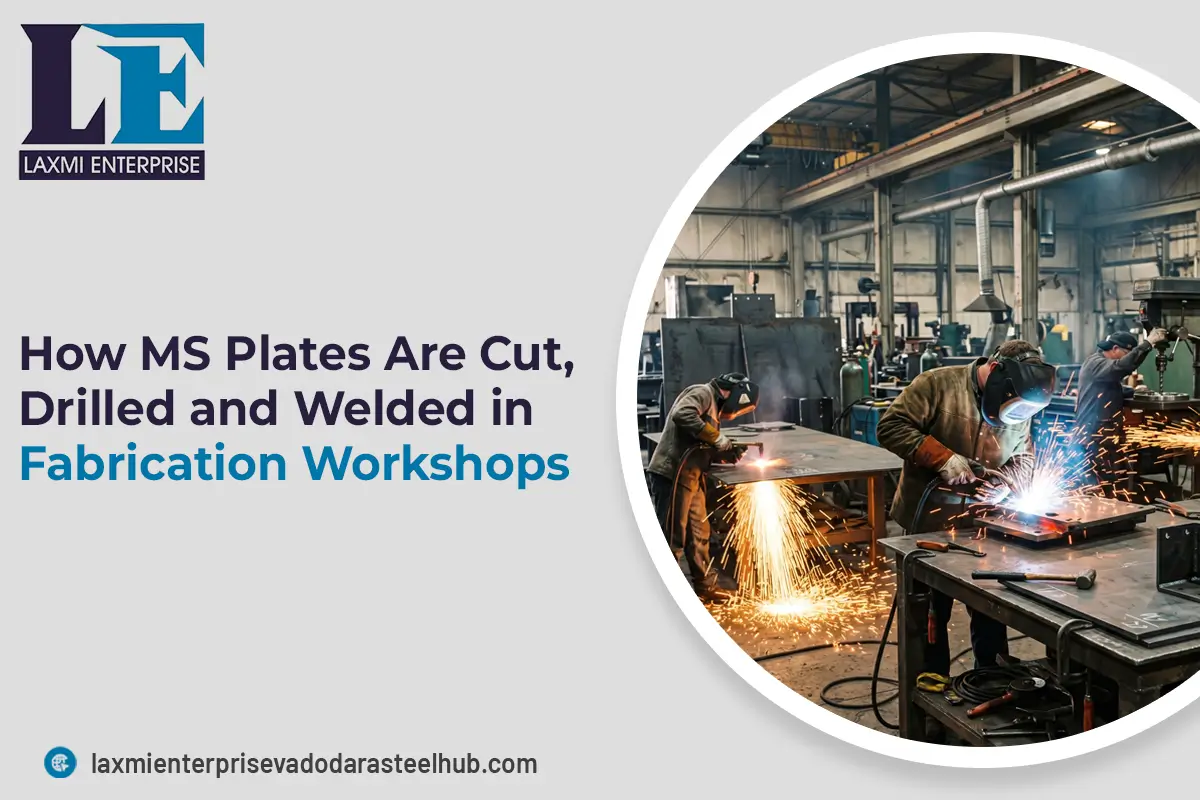
How MS Plates Are Cut, Drilled and Welded in Fabrication Workshops

Mild steel plates are one of the most versatile raw materials in fabrication. Whether it’s a machine base, a storage tank, a structural gusset, or a heavy-duty conveyor frame, MS plates form the backbone of hundreds of industrial and construction applications. But the raw plate that arrives from the rolling mill is only the beginning. What happens in the fabrication workshop, how the plate is cut to shape, drilled for fasteners, and joined to other components, determines whether the finished structure performs for decades or fails prematurely.

With this guide, we at Laxmi Enterprise, a leading MS steel supplier in Vadodara, walk you through each of those three stages in practical detail: the tools, the techniques, and the things that actually matter on the shop floor.

Read: MS Plate vs MS Sheet: Key Differences

3 Stages of Cutting MS Plates: From Raw Sheets to Precise Shapes

Stage 1: Cutting

Cutting is almost always the first operation. A fabricator needs to take a standard plate, typically supplied in 2500 × 1250 mm or 3000 × 1500 mm sheets, and reduce it to the geometry required by the job. The choice of cutting method depends on plate thickness, required edge quality, volume, and whether the cut profile is straight or complex. 

One factor fabricators often underestimate is the heat-affected zone (HAZ), the region of metal adjacent to a thermal cut where the microstructure has been altered by rapid heating and cooling. In thicker plates or higher-carbon steels, this zone can become harder and more brittle than the parent metal. For structurally critical joints, HAZ-affected edges should be ground or machined back before welding to restore ductility. 

Stage 2: Drilling

Holes in MS plates serve three primary purposes in fabrication: bolt connections, pipe or cable pass-throughs, and weight reduction in non-critical zones. In structural work, the accuracy of hole placement is critical. A bolt hole that’s 2 mm out of position can make it impossible to align mating components, wasting a plate that may have cost thousands of rupees.

Stage 3: Welding

Welding is where cut and drilled components become a structure. For MS plates, the four most commonly encountered welding processes in Indian fabrication workshops are shielded weld arc welding, gas metal arc welding, gas tungsten arc welding and submerged arc welding.

MS Plates Grades and How They Affect Fabrication

  • IS 2062 E250: General structural use. Lowest carbon content, most weldable, most forgiving in fabrication. The default choice for brackets, frames, and general structural work.
  • IS 2062 E350: Higher yield strength. Used where load demands are greater, such as crane girders, heavy frames, and pressure-bearing structures. Requires slightly more care in welding (pre-heat above ~20 mm).
  • IS 2062 E410: High-strength structural grade. For demanding applications like bridges and heavy equipment. Needs proper welding procedure specification (WPS) and qualified welders.
  • Chequered HR Plate: Hot-rolled chequered plates with a raised pattern for grip, like walkways, platforms, and floors. Fabricated by the same processes, the pattern face must be considered in clamping and fit-up.

Need MS Plates for Your Fabrication Project?

Laxmi Enterprise is a leading mild steel plate supplier in Vadodara, offering a full range of MS plates of thickness, grades and sizes. To request quotes, call us today.
Read: Different Types and Applications of Chequered Plates

Categories
MS Steel

What Is BIS Certification for Steel Products – Why It Matters for Buyers

India’s construction and manufacturing industries consume millions of tonnes of steel every year. But not all steel sold in the market is created equal. Behind the shiny surface, there can be significant variation in tensile strength, chemical composition, weldability, and durability. For buyers, whether you’re a contractor, builder, manufacturer, or procurement officer, understanding BIS certification can be the single most important purchasing decision you make. With this blog, we at Laxmi Enterprise emphasize the importance of BIS certification and why buyers should consider it when buying steel products.

What is BIS Certification?

When a steel product carries the ISI Mark, the gold-and-blue stamp of BIS approval, it signals that the manufacturer has been audited, their production process verified, and their product samples independently tested. The certification isn’t a one-time event. BIS conducts surprise inspections and periodic testing to ensure continuous compliance.

The ISI Mark on steel is governed under the BIS Act, 2016, and for many critical steel products, obtaining this certification isn’t optional; it is mandatory by law under the Steel and Steel Products (Quality Control) Order issued by the Government of India. At Laxmi Enterprise, as a trusted MS steel product supplier in Vadodara, our products are sourced from top brands, ensuring quality and performance.

Which Steel Products Require BIS Certification?

BIS certification covers a wide range of steel products used across construction, infrastructure, and manufacturing. Here are the most commonly required IS codes:

  • IS 1786: High Strength Deformed (HSD) / TMT Steel Bars, used in reinforced concrete construction.
  • IS 2062: Structural Steel (Hot Rolled)  for bridges, buildings, and industrial structures.
  • IS 1239: Mild Steel Tubes for water, gas, and general engineering pipes.
  • IS 3589: Steel Pipes  for water supply and sewerage applications
  • IS 1875: Carbon Steel Billets, Blooms & Slabs for re-rolling
  • IS 4923: Hollow Steel Sections, square and rectangular, for general engineering

These standards define chemical composition (carbon, manganese, sulphur, phosphorus content), mechanical properties (yield strength, tensile strength, elongation), and dimensional tolerances, all of which directly affect how the steel performs under load, heat, seismic stress, and over decades of use.

Why BIS Certification for Steel Products Matters for Buyers?

  • Guaranteed Structural Safety: BIS-certified steel meets minimum yield and tensile strength requirements verified by accredited labs. Substandard steel often sold at a discount may pass a visual check but fail catastrophically under seismic load or sustained weight. For any RCC structure, this is non-negotiable.
  • Legal Compliance & Project Approvals: Government infrastructure projects, RERA-registered buildings, and most commercial projects require proof of BIS-certified materials. Using non-certified steel can invalidate occupancy certificates, delay project approvals, and expose developers to legal liability. 
  • Protection Against Counterfeits & Substandard Supply: The Indian market has a well-documented problem with spurious steel bars that are labelled with popular brand names or IS codes but never go through certification. Buying from BIS-licensed manufacturers or an authorised MS steel supplier in Vadodara is the only way to ensure you’re not paying brand prices for substandard metal.
  • Long-Term Cost Savings: Uncertified steel often has inconsistent carbon content that leads to brittleness, poor weld quality, and accelerated corrosion. The cost of rectification, re-work, or structural failure dwarfs any upfront savings on cheaper material. BIS-certified steel is an investment in longevity.

Also Check: What Are the Weights of TMT Bars?

How to Verify BIS Certification When Buying Steel

As a buyer, whether it is buying TMT bar wholesale in Vadodara or structural steel, here is a simple verification process you can follow: 

  • Check the IS Mark on the Product: Genuine BIS-certified steel bars carry the ISI Mark stamped or rolled onto the product along with the IS number and the manufacturer’s licence number.
  • Ask for the BIS Licence Number: Every BIS-certified manufacturer has a unique licence number. Request it from your dealer and verify it directly on the BIS website at bis.gov.in.
  • Request the Test Certificate/mill Test Report: For large purchases, reputable manufacturers and dealers provide mill test reports (MTRs) for each batch, showing chemical and mechanical test results against the IS code requirements.
  • Buy from an Authorised Dealer or Brand-authorized Hub: Authorised TMT bars wholesale dealers in Vadodara have agreements with BIS-licensed manufacturers and maintain documentation for all products sold. This is your strongest protection against counterfeits in the supply chain.
  • Consider Third-party Testing for Critical Projects: For large infrastructure or high-rise projects, you can send samples to an NABL-accredited lab independently. The cost is trivial compared to the risk exposure on a large project.

Read: How MS TMT Bars Improve Earthquake Resistance in Modern Buildings

Buy BIS Certified Mild Steel from Laxmi Enterprise

In a market where steel quality can vary dramatically, BIS certification is not a technicality; it is the foundation of trust between a manufacturer, a dealer, and a buyer. It is the proof that what you’re building today will stand tomorrow.

Whether you’re constructing a home in Vadodara, setting up an industrial facility, or managing a large infrastructure project across Gujarat, insisting on BIS-certified steel from licensed manufacturers is the single most impactful quality decision you can make.

At Laxmi Enterprise, every product, whether it is MS channels, MS pipes, MS angles or TMT bars we supply carries a valid BIS certification. We maintain full documentation trails, offer mill test reports on request, and work exclusively with licensed manufacturers. Because we believe that quality isn’t a premium feature, it’s the baseline your structure deserves. To request quotes, call us today.
Also Read: TMT Bars vs. Traditional Steel Bars

Categories
MS Steel

How to Prevent Rust on MS Steel: 7 Proven Methods for Long-Lasting Protection

MS Steel is a widely used steel across industries due to its strength, durability and versatility. However one of the major setbacks for this steel type is its vulnerability to rust. MS Steel, when exposed to moisture and oxygen, begins to corrode, which leads to structural weakness, and reduced lifespan.

Whether you’re sourcing materials from an MS steel product supplier in Vadodara or managing on-site fabrication, understanding how to prevent rust on mild steel is critical for durability. 

7 Methods to Protection Rust on MS Steel

#1 Apply Protective Coatings

One of the most widely used methods for steel painting and coating is applying protective layers that block moisture and air.

  • Use high-quality corrosion resistant paint for steel
  • Apply multiple coating layers for durability
  • Consider powder coating for long-term protection

Many fabricators working with an ms angle supplier in Vadodara prefer coated materials to reduce maintenance and improve lifespan.

#2 Galvanization (Zinc Coating)

Zinc Coating for MS Steel involves coating MS steel with a layer of zinc, which protects the base metal from corrosion. Even if the surface gets scratched, zinc acts as a sacrificial layer and prevents rust formation.

This method is widely used in construction, fencing, and outdoor structures due to its long-lasting protection. When comparing galvanizing vs painting steel, galvanization offers longer protection in harsh environments, while painting provides flexibility and aesthetic appeal.

#3 Use Rust-Resistant Primers

Before applying paint, using a high-quality anti-corrosion primer significantly enhances protection. Primers improve adhesion and provide an additional layer that blocks moisture.

Zinc-rich primers are ideal for anti rust treatment for steel, especially in high-moisture conditions. 

Choose Laxmi Enterprise for premium MS steel products in Vadodara and ensure strength, durability, and reliability for your projects.

#4 Keep the Surface Clean and Dry

Moisture, dirt, and chemicals accelerate corrosion. Regular cleaning is one of the simplest mild steel maintenance tips that can significantly reduce rust formation. 

  • Wipe surfaces to remove water or condensation
  • Clean dirt, grease, and salt deposits
  • Ensure proper storage in dry conditions

This is particularly important for MS pipe rust prevention, where internal and external exposure can lead to corrosion. A reliable mild steel pipes supplier in Vadodara usually recommends proper storage and handling to avoid early corrosion.

#5 Use Corrosion Inhibitors

Corrosion inhibitors are chemicals that slow down or prevent rust formation. They are commonly used in industrial environments where steel is exposed to harsh conditions.

These inhibitors are effective for enhancing MS steel corrosion protection in critical applications.

Read: Corrosion-Resistant Steel vs. Regular Steel: Key Differences

#6 Ensure Proper Design and Drainage

Poor design can lead to water accumulation, which increases the risk of corrosion. Structural design plays a key role in preventing rust.

  • Avoid sharp corners where water can collect
  • Ensure proper drainage systems
  • Design structures to allow airflow and quick drying

This is especially important when considering how to protect MS angle from rust in structural frameworks.

#7 Regular Inspection and Maintenance

Routine inspection helps identify early signs of rust and prevents further damage. Addressing small issues early can save significant repair costs.

  • Check for scratches, chips, or coating damage
  • Reapply coatings when necessary
  • Repair affected areas immediately

Preventive maintenance is key to long-lasting steel performance.

Conclusion

Rust is a common challenge, but with the right strategies, it can be effectively controlled. From zinc coating for MS steel to proper steel painting and coating, each method contributes to long-lasting protection.

By following these proven techniques and sourcing materials from trusted suppliers, you can significantly improve the lifespan, safety, and performance of MS steel structures.

Read: Top Mild Steel Products to Use in Indian Construction Projects in 2026

Categories
MS Steel

MS Steel in Pre-Engineered Buildings (PEB): Which Products Are Used & Why

Pre-Engineered Buildings (PEB) have become a popular choice for modern construction due to their speed, cost efficiency, and structural flexibility. These buildings are commonly used for warehouses, factories, industrial sheds, commercial spaces, and large infrastructure projects. One of the key reasons behind the strength and durability of PEB structures is the use of high-quality MS (Mild Steel) structural components. From mild steel angles and beams to TMT bars and pipes, these products are widely used in PEB construction because they provide excellent strength, ease of fabrication, and long-term durability, making them ideal for large-span structures and heavy-load applications. 

Why MS Steel Is Used in Pre-Engineered Buildings

MS steel is preferred in PEB construction because of several important advantages.

  1. High Strength With Good Flexibility: Mild steel offers high strength and excellent flexibility, allowing structures to withstand heavy loads and environmental stresses.
  2. Machinability: It is easy to fabricate, weld, and assemble, which speeds up construction timelines
  3. High Quality Results: MS steel components can be manufactured with precision, ensuring consistent quality and structural stability.

Because of these benefits of mild steel, contractors often rely on reliable suppliers such as Laxmi Enterprise MS steel product supplier in Vadodara to source structural steel components for PEB projects.

Common MS Steel Products Used in PEB Structures

PEB systems use different types of steel components to create strong and stable frameworks.

#1 TMT Bars for Reinforcement

TMT bars are widely used in the foundation and reinforcement structures of pre-engineered buildings. They provide tensile strength and structural support, ensuring the building can withstand heavy loads and external forces. Builders often procure materials through TMT bar wholesale in Vadodara suppliers to ensure consistent quality and bulk availability for large projects.

#2 MS Channels for Structural Framework

MS channels are essential in PEB construction as they are used for framework support, bracing systems, and structural alignment. Their “C” shape provides strong load-bearing capability while maintaining structural stability. Contractors working on industrial projects frequently source ISMC MS channel in Vadodara for framework fabrication and structural reinforcement.

#3 Mild Steel Pipes for Structural Support

Mild steel pipes are commonly used in PEB structures for support columns, trusses, and piping frameworks. They provide excellent durability and are suitable for both structural and utility applications. Many builders prefer sourcing these materials from a reliable mild steel pipes supplier in Vadodara to ensure durability and long service life.

Conclusion

Pre-Engineered Buildings rely heavily on high-quality mild steel components to achieve strength, durability, and cost efficiency. Structural elements such as TMT bars, MS channels, and mild steel pipes play a crucial role in ensuring the stability and longevity of these buildings

Partner with Laxmi Enterprise for Quality MS Steel Products

Laxmi Enterprise is a trusted MS steel product supplier in Vadodara, providing a wide range of structural steel materials for construction, fabrication, and industrial projects. The company supplies premium-quality steel products, including TMT bars, MS channels, angles, pipes, bars, colour-coated sheets, roofing sheets and other products suitable for modern construction requirements. Whether you need materials for PEB structures, building frameworks, or fabrication work, Laxmi Enterprise offers the highest quality mild steel products tailored to your project needs. To discuss your project needs, call us today

Read: Checklist for First-Time Buyers of MS Steel Products

Categories
MS Channel

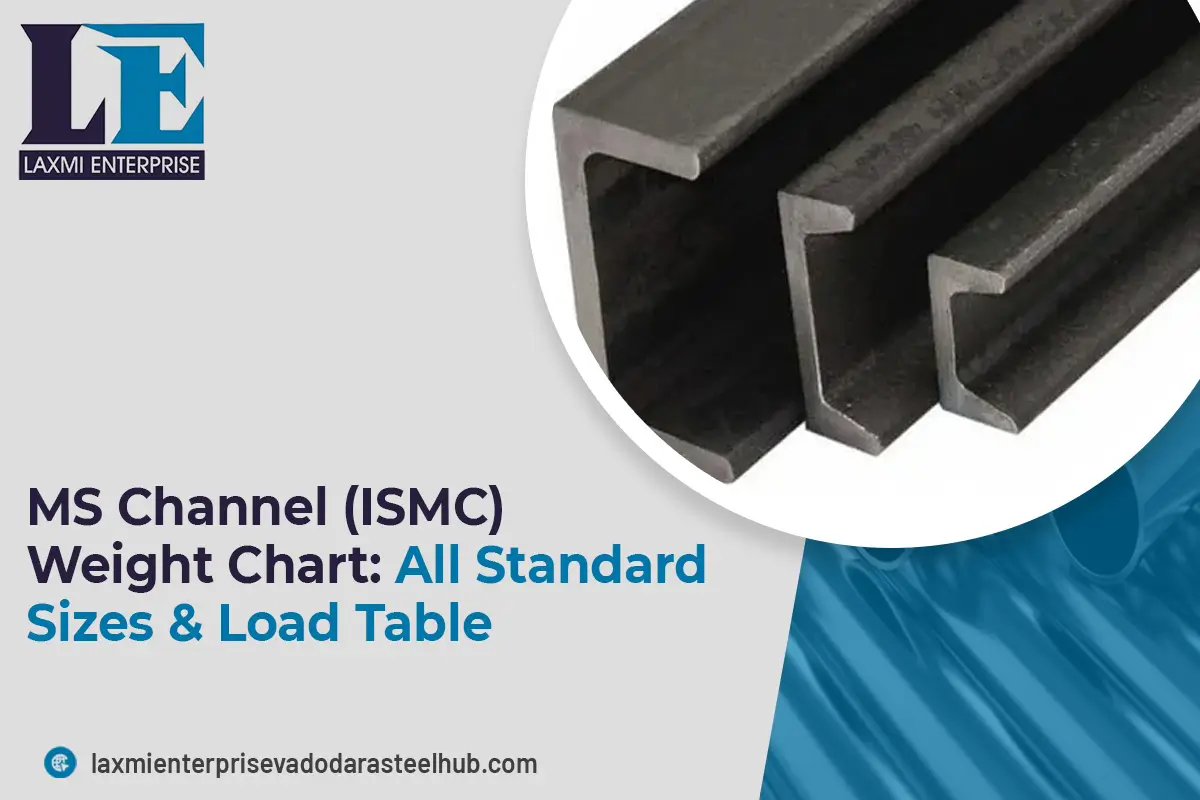
MS Channel (ISMC) Weight Chart: All Standard Sizes & Load Table

MS Channels, also known as ISMC (Indian Standard Mild Steel Channels), are widely used structural steel components in construction and industrial applications. They are designed in a “C” shape and provide strong structural support for beams, frames, and other load-bearing structures. Engineers, fabricators, and contractors often refer to MS channel weight charts to determine the correct size and weight required for structural designs. Knowing the exact weight per meter helps in estimating material requirements, transportation costs, and load capacity in construction projects. In this guide, we share the MS channel weight chart, load table and other important details. 

What is Indian Standard Medium Channel?

Indian Standard Medium Channel (ISMC) is a structural section made from mild steel and is shaped like the letter ‘C’. These C-shaped channels are widely used in fabrication, construction, framing and other applications. 

MS Channels typically consist of:

  • Web: Vertical section that carries the load
  • Flanges: The horizontal extensions that provide structural stability 
  • Thickness: Determines strength & load capacity 

Contractors and engineers rely on MS channel suppliers in Vadodara for high-quality ISMC channels tailored specifically for their applications.

MS Channel Specifications

Material: Mild steel

Shape: C-shaped

Dimension: 75mm to 300mm

Unit Length: 5.5 to 6/12/20 meters (customizable)

Weight: Varies depending on size

Finish: Main & Hot rolled 

Full Form of Channel/Beam/Angle Sections Indian Standards

ISMB: Indian Standard Medium Weight Beam

ISMC:  Indian Standard Medium Weight Channel

ISJB: Indian Standard Junior Beams

ISLB: Indian Standard Light Weight Beams

ISMB: Indian Standard Wide Flange Beams

Standard MS Channel Sizes

MS channels are available in different sizes and thicknesses, depending on structural requirements. The size of the channels is often identified by their depth (height of the web) in millimetres. 

Some of the commonly used ISMC channels are:

  • ISMC 75
  • ISMC 100
  • ISMC 125
  • ISMC 150
  • ISMC 175
  • ISMC 200
  • ISMC 250
  • ISMC 300
  • ISMC 350
  • ISMC 400

Each size has a specific weight per meter and load capacity, which is important for structural design. 

MS Channel (ISMC) Weight Chart

Below is a standard ISMC MS channel weight chart used in construction and fabrication projects.

ISMC SizeDepth (mm)Flange (mm)Web thickness (mm)Weight (Kg/m)
ISMC 7575404.87.14
ISMC 100100505.09.56
ISMC 125125655.313.10
ISMC 150150755.716.80
ISMC 175175756.019.60
ISMC 200200756.522.30
ISMC 250250827.530.60
ISMC 300300907.836.30
ISMC 3503501008.542.10
ISMC 4004001008.850.10

This weight chart helps engineers quickly determine the weight per meter of ISMC channel, which is essential for calculating the total material requirement for their specific projects. 

MS Channel Load Weight Bearing Capacity

The load bearing capacity of MS channel depends on a few factors, including:

  • Channel size and thickness
  • Material grade
  • Length of the channel
  • Structural design and support conditions

Large channels with thicker web and flanges can support heavier loads. Most structural engineers use design calculations and structural analysis to determine precise load capacity for a specific application. When selecting channels for construction or fabrication, it is important to work with an experienced MS Steel Supplier in Vadodara, like Laxmi Enterprise, to ensure the material meets required standards and quality specifications.

How to Calculate MS Channel Weight

The weight of an MS channel can be calculated using the following formula:

Weight (in kgs) = Weight per meter x Length 

For instance, if you are using ISMC 150, which weights approx 16.8 kg per meter, and the length is 6 meters, in such case, the total weight would be:

16.8 x 6 = 100.8 kgs

How to Choose the Right MS Channel

Choosing the correct MS channel size depends on several factors, including:

  • Structural Load Requirements: Heavier loads require larger channels with greater thickness and strength.
  • Application Type: Different projects require different channel sizes depending on whether they are used for structural support, fabrication, or reinforcement.
  • Material Quality: Always ensure the material comes from trusted MS steel Vadodara suppliers to maintain structural safety and durability. 
  • Project Budget: Weight and size directly affect cost, so selecting the right size ensures efficient use of materials.

Why Choose Laxmi Enterprise for High-quality MS Channels

When sourcing structural steel, quality and reliability are essential. Laxmi Enterprise is a trusted MS rolling channel supplier in Vadodara, providing high-quality mild steel products for fabrication, construction and other industrial applications. We supply a wide range of ISMC MS channel in Vadodara with standard sizes and quality assurance. Whether you require MS channels for construction, structural frameworks, or fabrication work, Laxmi Enterprise ensures consistent quality and dependable supply. For the best quotes, call us today. 

Frequently Asked Questions (FAQs)

ISMC stands for Indian Standard Mild Steel Channel, which refers to standardized mild steel channels used in structural construction and fabrication.

MS channel weight is calculated using the weight per meter specified in the ISMC chart multiplied by the total length of the channel.

MS channels are used in construction frameworks, machinery structures, bridges, fabrication works, and industrial buildings.

You can purchase high-quality steel channels from a reliable MS Steel Supplier in Vadodara, such as Laxmi Enterprise, which supplies standard ISMC channels for construction and fabrication needs.

Categories
MS Angle

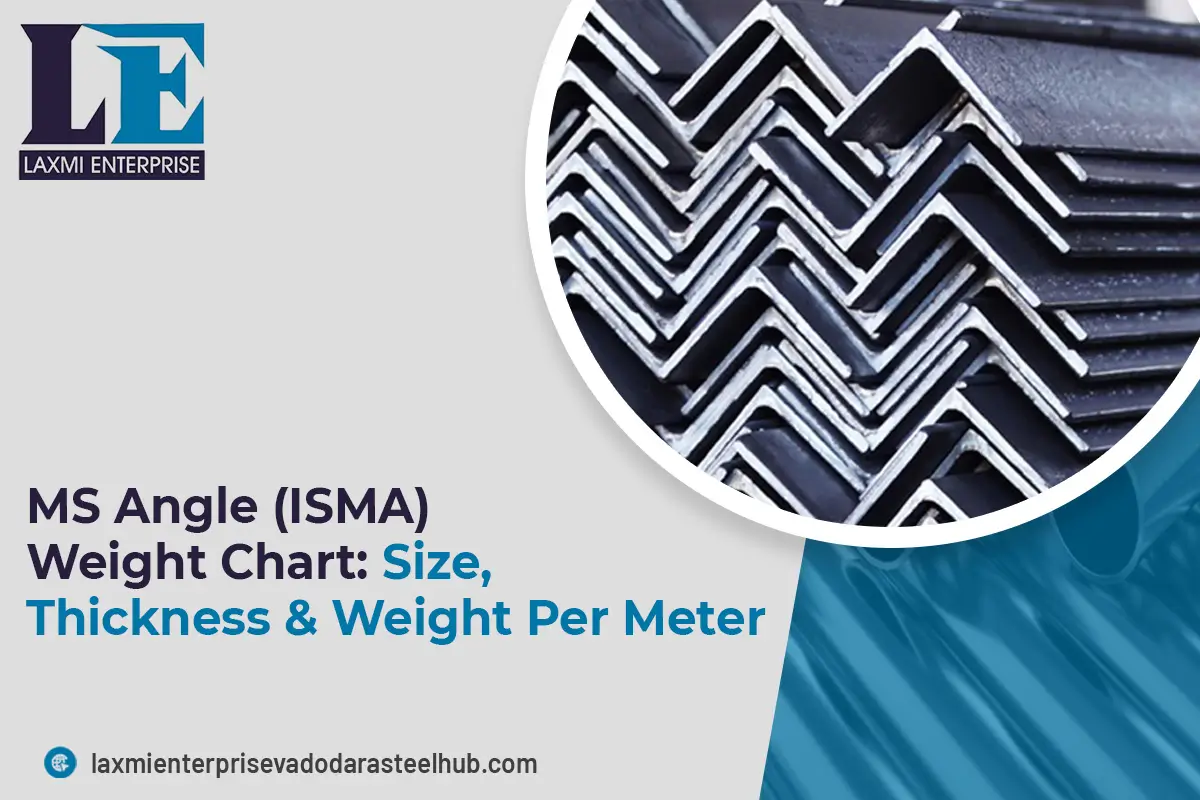
MS Angle (ISMA) Weight Chart: Size, Thickness & Weight Per Meter

ISA (Indian Standard Angle) are widely used in construction, engineering and fabrication projects. Their simple L-shaped cross-section provides excellent strength and support, making them suitable for a wide range of structural applications. Engineers, contractors and fabricators rely on MS angle weight charts to determine the exact size, thickness and weight per meter required for construction projects.

These charts help estimate material quantities, calculate structural loads, and plan transportation and fabrication requirements. We, at Laxmi Enterprise, provide a complete ISMA MS angle weight chart, including standard sizes, thickness specifications, and weight per meter to help professionals select the right steel angle for their projects.

What is Indian Standard Medium Angle?

Indian Standard Medium Angle is a structural steel section made of mild steel and shaped like the letter ‘L’. It consists of two perpendicular legs that provide strength and stability when used in structural frameworks.  The MS steel product supplier in Vadodara provides these materials for construction and engineering projects, following standard dimensions and weight specifications. 

ms angle

Indian Standard Medium Angle Specifications

Material: Mild steel 

Shape: L/V shape 

Dimension: 19x19x2 & above

Unit Length: 20 ft

Standard MS Angle Sizes

These MS angles are available in various sizes depending on the length of the legs and thickness. The size of the angle is typically expressed as length × length × thickness (in millimetres). Some of the commonly used ISMA sizes are:

  • 19 x 19 x 2 mm
  • 20 × 20 × 3 mm
  • 25 × 25 × 3 mm
  • 30 × 30 × 3 mm
  • 40 × 40 × 5 mm
  • 50 × 50 × 5 mm
  • 65 × 65 × 6 mm
  • 75 × 75 × 6 mm
  • 90 × 90 × 8 mm
  • 100 × 100 × 8 mm

MS Angle (ISMA) Weight Chart

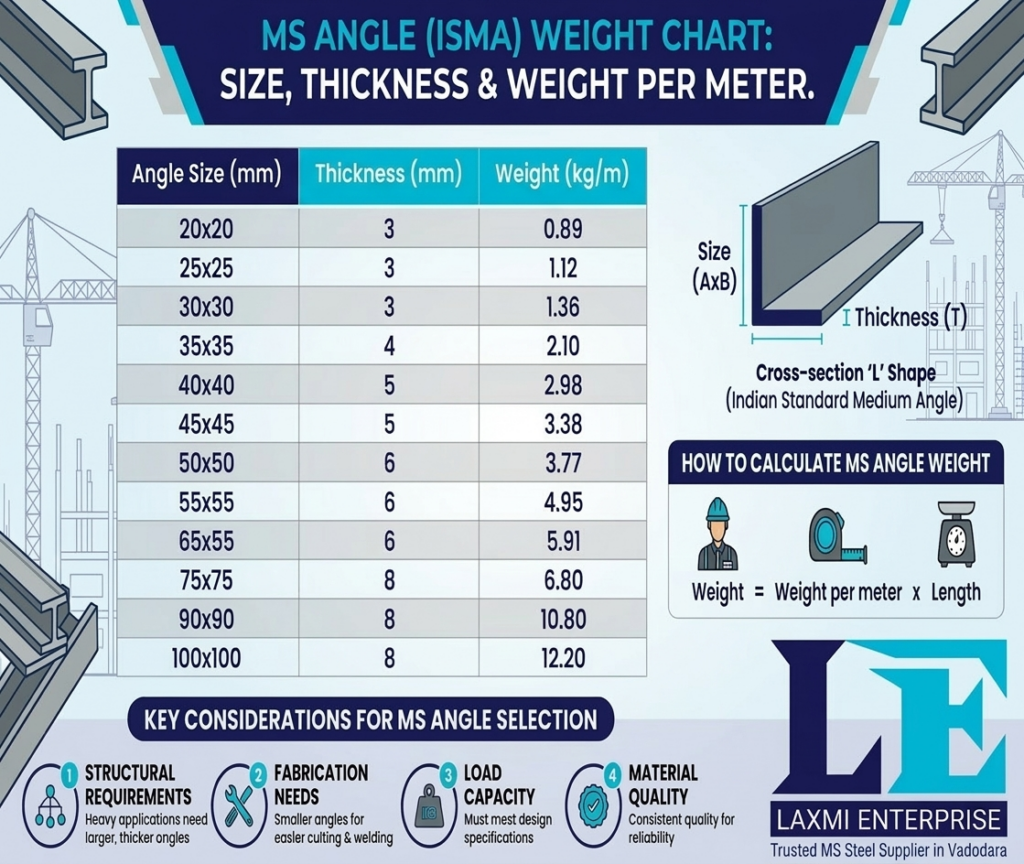
Below is a standard ISMA MS angle weight chart showing commonly used sizes, thickness, and weight per meter.

Angle Size (mm)Thickness (mm)Weight (kg/m)
20X2030.89
25X2531.12
30X3031.36
35X3542.10
40X4052.98
45X4553.38
50X5053.77
55X5564.95
65X6565.91
75X7566.80
90X90810.80
100X100812.20

This chart provides a quick reference for engineers to determine the weight per meter of MS angles, which is essential for structural calculations and material planning.

MS Angle Dimensions and Thickness

The performance of the MS angle in structural applications depends on various factors, including:

  • Leg Length: The length of each leg determines the size of the angle and the structural strength it provides.
  • Thickness: The thickness of the steel affects both weight and load-bearing capacity. Thicker angles are used in heavy structural applications.
  • Weight Per Meter: Weight per meter helps calculate the total weight required for construction or fabrication projects.

By referring to the ISMA weight chart, engineers can choose the correct steel angle size that meets structural design requirements.

How to Calculate MS Angle Weight

The weight of MS angle can be calculated using the following formula:

Weight= Weight per meter x length 

For instance, if the weight of a 50 × 50 × 5 mm angle is approximately 3.77 kg per meter, and the required length is 6 meters, the total weight would be:

3.77 × 6 = 22.62 kg

How to Choose the Right MS Angle

MS Angle Weight Calculator
Weight: 0.00 kg

To select the right MS angle, take into consideration the following factors:

  • Structural Requirements: Heavy structural applications require larger angles with greater thickness.
  • Fabrication Needs: Fabrication projects may require smaller angles that are easier to cut and weld.
  • Load Capacity: Angles used in load-bearing structures must meet the required strength specifications.
  • Material Quality: Always purchase steel froma  trusted MS angle supplier in Vadodara to ensure consistent quality and structural reliability. 

Conclusion

Understanding the MS angle weight chart allows you to accurately estimate loads, budget and ensure structural safety & integrity. When sourcing structural steel, choosing a reliable supplier is just as important as selecting the correct size and specification. Laxmi Enterprise, a trusted MS Steel Vadodara supplier, provides high-quality MS angles suitable for a wide range of applications in construction and engineering. We supply MS angles from top steel brands such as SAIL, JINDAL, and VIZAG, ensuring superior strength, durability, and consistent quality. To discuss your mild steel requirements, call us today. 

Read: Best Time to Buy Steel

Frequently Asked Questions (FAQs)

ISMA stands for Indian Standard Mild Steel Angle, which refers to standardized mild steel angles used in structural and construction applications.

MS angle weight is calculated using the weight per meter specified in the ISMA chart multiplied by the total length of the angle.

MS angles are used in construction frameworks, fabrication structures, machinery supports, bridges, and industrial buildings.

You can purchase high-quality MS Steel Vadodara from trusted suppliers like Laxmi Enterprise. To discuss your project, call us today. 

Categories
MS Steel

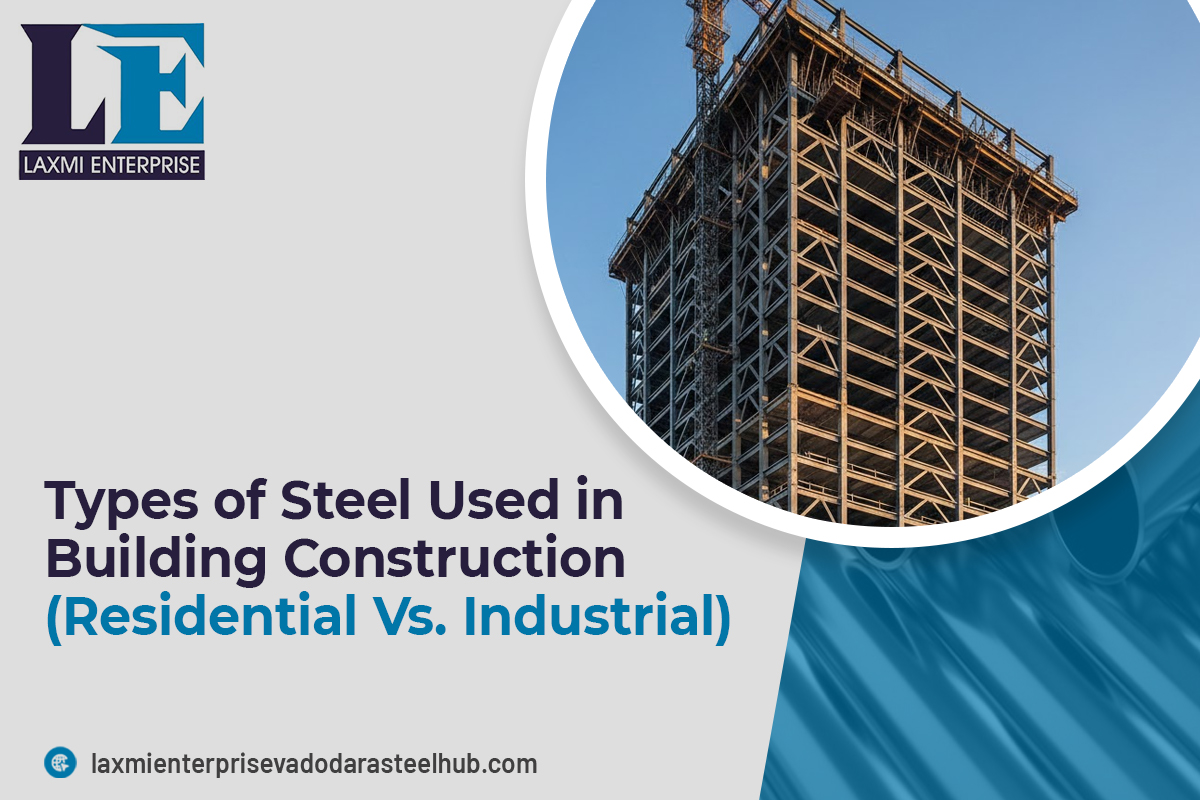
Types of Steel Used in Building Construction (Residential Vs. Industrial)

Steel is the backbone of modern construction. From small residential homes to massive industrial factories, different types of steel are used depending on strength, durability, and load requirements. Understanding the difference between residential and industrial steel helps builders, contractors, and property owners make smarter material choices. So let’s get started! 

Why Steel Is Essential in Construction

Steel is widely used because of its:

  • High tensile strength
  • Durability and long lifespan
  • Resistance to fire and environmental stress
  • Flexibility in design
  • Cost-effectiveness over time

However, not all steel is the same. The type used in a residential house differs significantly from what is required in industrial buildings.

Steel Used in Residential Construction

Residential buildings typically include houses, apartments, villas, and small commercial spaces. These structures require steel that provides strength while maintaining cost efficiency.

#1 TMT Bars (Thermo-Mechanically Treated Bars)

TMT bars are the most common steel product used in residential construction. They are mainly used for reinforcement in:

  • Foundations
  • Columns
  • Slabs
  • Beams

TMT bars offer high strength and flexibility, which helps buildings withstand earthquakes and structural stress. For homes and small buildings, medium-grade TMT bars are generally sufficient. If you are planning a project, working with a trusted TMT bar supplier in Vadodara, like Laxmi Enterprise, ensures you get quality-certified materials suited for both residential and industrial needs. Choosing the right supplier is just as important as choosing the right steel.

#2 Mild Steel (MS) Sections

Mild steel is commonly used in:

  • Window grills
  • Gates
  • Stair railings
  • Small structural supports

MS sections are easy to fabricate and weld, making them ideal for residential construction.

#3 MS Channels and Angles

Structural elements like ISMC MS channel in Vadodara are widely used in small framing structures, roof supports, and lintel beams. These channels provide additional support without adding excessive weight to the structure.

Steel Used in Industrial Construction

Industrial construction includes factories, warehouses, power plants, refineries, and large commercial complexes. These structures require heavy-duty steel capable of handling high loads and stress.

#1 Structural Steel Beams

Industrial buildings rely heavily on I-beams and H-beams for load-bearing frameworks. These beams support:

  • Large roof spans
  • Heavy machinery loads
  • Multi-level platforms

Working with experienced steel beam suppliers in Vadodara, like Laxmi Enterprise, ensures access to properly graded and tested beams for industrial safety standards.

#2 Heavy-Duty TMT Bars

Unlike residential buildings, industrial structures often require higher-grade TMT bars for:

  • Thick foundations
  • Machinery platforms
  • High-load columns

These bars provide superior tensile strength and durability.

#3 MS Plates and Heavy Sections

Industrial construction also uses:

  • Thick MS plates
  • Heavy channels
  • Structural steel columns

These materials support large-scale operations and dynamic loads that residential buildings typically do not experience.

Residential vs Industrial Steel: Key Differences

table

Industrial steel must meet stricter safety and engineering standards due to the higher risk and load factors involved.

How to Choose the Right Steel for Your Project

When selecting steel, consider:

  1. Load Requirements: Residential projects require moderate strength, while industrial projects demand high load-bearing capacity.
  2. Budget: Industrial-grade steel is more expensive due to higher thickness and strength.
  3. Building Type: A warehouse requires different structural support compared to a home.
  4. Compliance with Standards: Always ensure steel meets IS standards for quality assurance.

Understanding the types of steel used in building construction helps ensure structural safety and durability. Residential projects require cost-effective and moderate-strength steel, while industrial projects demand heavy-duty structural materials capable of handling extreme loads. For high-quality mild steel products tailored to both residential and industrial projects, trust Laxmi Enterprise- the best MS Steel Supplier in Vadodara. We supply premium TMT bars, MS channels, structural steel beams, and more – all meeting industry standards. Contact us today for bulk orders and expert consultation.

Read: Top Mild Steel Products to Use in Indian Construction Projects in 2026

Frequently Asked Questions (FAQs)

TMT bars and mild steel sections are most commonly used for residential construction.

Industrial buildings carry heavier loads and machinery, requiring higher-grade structural steel.

It is not recommended, as residential steel may not meet industrial load and safety requirements.

MS channels are used for framing, structural support, and roof reinforcement.

Always purchase from trusted suppliers who provide IS-certified materials.

Yes, TMT bars are essential for reinforcing concrete in foundations and slabs.

Categories
MS Steel

What is IS 2062 Steel Grades? Meaning & Applications

Steel plays a vital role in modern construction and fabrication, but not all steel is the same. One of the most commonly used structural steel standards in India is IS 2062. If you are involved in construction, engineering, or fabrication, understanding IS 2062 steel grades helps you select the right material for strength, durability, and safety. 

What is IS 2062 Steel?

IS 2062 is an Indian Standard specification for hot-rolled medium and high tensile structural steel. It defines the chemical composition and mechanical properties required for structural steel used in construction and engineering.

In simple terms, IS 2062 ensures that the steel you use has:

  • Proper strength
  • Controlled chemical composition
  • Reliable performance under load
  • Consistent quality

This standard is widely used for structural mild steel products such as beams, plates, angles, channels, and flats. For construction firms, it is crucial to use top-quality steel for their projects. Businesses looking for reliable structural materials often depend on a trusted MS steel product supplier in Vadodara to ensure quality-certified steel that meets IS standards. Laxmi Enterprise is known for supplying premium-grade structural steel suitable for residential, commercial, and industrial applications.


Is IS 2062 Mild Steel?

Yes, IS 2062 is considered a structural mild steel standard. Mild steel typically contains a low percentage of carbon, making it:

  • Easy to weld
  • Easy to fabricate
  • Ductile and flexible
  • Cost-effective

Because of these properties, IS 2062 grade steel is ideal for structural frameworks, bridges, buildings, and machinery platforms.

Common IS 2062 Steel Grades Explained

IS 2062 steel comes in different grades based on strength levels. The most common grades include:

#1 IS 2062 E250 (Fe 410)

  • Yield Strength: 250 MPa
  • Used in general structural applications
  • Suitable for residential buildings and light industrial structures

This is one of the most widely used grades in construction.

#2 IS 2062 E350 (Fe 490)

  • Higher yield strength than E250
  • Used in heavy structural projects
  • Ideal for industrial sheds and load-bearing frameworks

This grade offers better resistance to stress and heavy loads.

#3 IS 2062 E410 / E450

  • High tensile strength
  • Used in heavy-duty industrial construction
  • Suitable for bridges, large infrastructure, and heavy fabrication

These grades are selected where maximum structural strength is required.

Chemical Composition of IS 2062 Steel

The strength and performance of IS 2062 steel depend on its chemical composition. It typically contains:

  • Carbon (C) – Provides strength
  • Manganese (Mn) – Improves toughness
  • Silicon (Si) – Enhances durability
  • Sulphur (S) & Phosphorus (P) – Controlled within limits for quality

Low carbon content ensures that the steel remains weldable and easy to fabricate.

Applications of IS 2062 Steel

IS 2062 steel is widely used across multiple industries due to its versatility.

#1 Building Construction

  • Structural frames
  • Columns and beams
  • Platforms
  • Roof supports

Many contractors prefer sourcing MS Steel Vadodara materials from reliable suppliers to ensure compliance with structural standards.

#2 Industrial Sheds & Warehouses

Industrial buildings require strong steel capable of supporting heavy machinery and large spans. Grades like E350 are commonly used in these applications.

#3 Fabrication & Engineering Projects

IS 2062 steel is also used in:

  • Machinery components
  • Fabricated structures
  • MS plates and flats
  • Equipment bases

Builders often rely on a dependable mild steel flat bar supplier in Vadodara like Laxmi Enterprise  to source quality flat bars used in fabrication work.

#4 Bridges and Infrastructure

Higher grades like E410 and E450 are used in:

  • Bridges
  • Flyovers
  • Large infrastructure projects

These applications require steel that meets strict strength and safety standards.

Why Choosing the Right Grade Matters

Selecting the correct IS 2062 grade ensures:

  • Structural safety
  • Long-term durability
  • Cost efficiency
  • Compliance with engineering standards

Using the wrong grade can lead to structural failure or increased maintenance costs. That’s why consulting experienced suppliers and engineers is essential before finalizing material selection.

Conclusion

IS 2062 steel grades play a critical role in ensuring structural strength and safety in construction and industrial projects. As a structural mild steel standard, it offers reliability, durability, and flexibility for a wide range of applications. Understanding the differences between grades like E250, E350, and E410 helps you make informed decisions for your project. At Laxmi Enterprise, Vadodara, we specialize in supplying high-quality IS 2062 structural steel products for residential, commercial, and industrial projects. From MS beams and channels to plates and flat bars, we provide materials that meet industry standards and performance expectations. Contact Laxmi Enterprise today for bulk orders and expert consultation.

Read: Mild Steel HSN Codes Explained & GST Rate in India

Frequently Asked Questions (FAQs)

IS 2062 is an Indian Standard specification for structural mild steel used in construction and engineering.

Yes, grades like E250 are commonly used in residential buildings.

E350 has higher yield strength and is used for heavier structural applications compared to E250.

Yes, due to its low carbon content, it offers good weldability.

It is used in buildings, bridges, industrial sheds, platforms, and fabrication projects.

Selection depends on load requirements, structural design, and project type. Consult your engineer or supplier for guidance.

Categories
MS Pipes

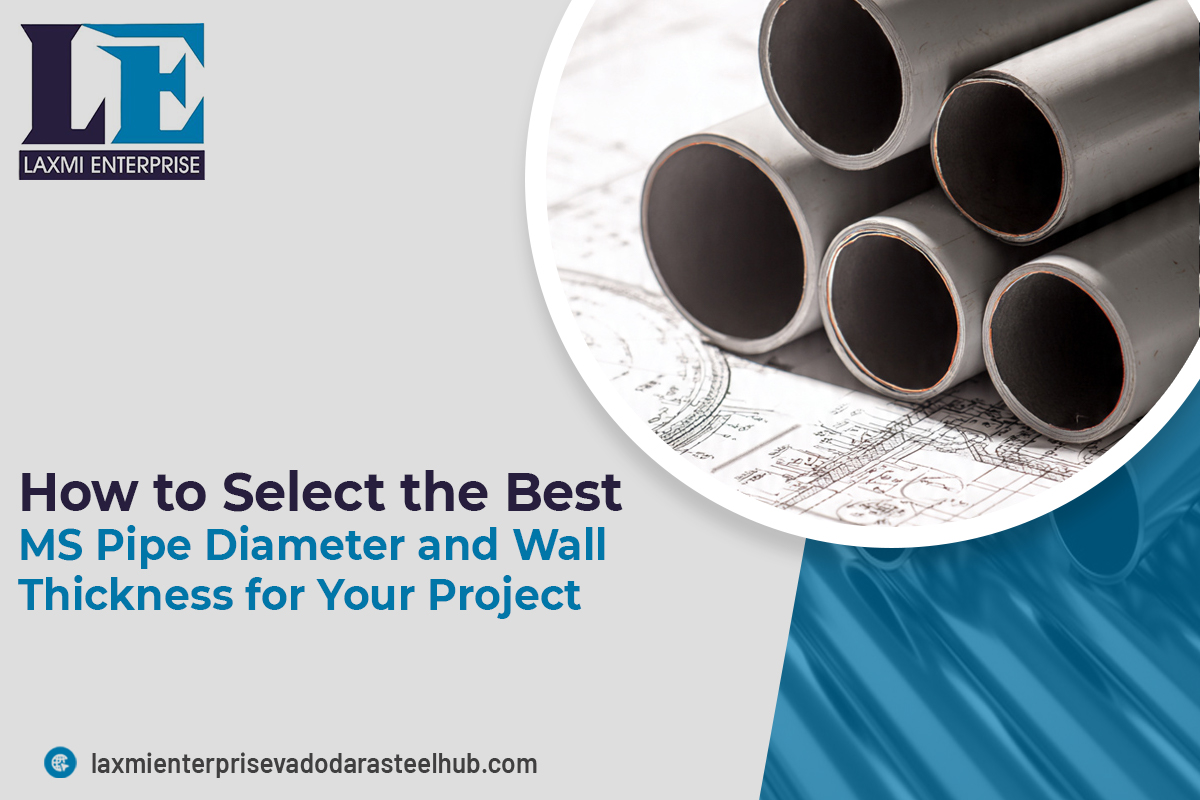
How to Select the Best MS Pipe Diameter and Wall Thickness for Your Project

Choosing the right MS pipe for your project is not just about picking a random size. The correct diameter and wall thickness directly affect strength, durability, cost, and safety. Whether you are working on plumbing, fabrication, construction, or industrial installations, selecting the proper pipe specifications ensures long-term performance and reliability. In this guide, we’ll break down how to choose the best MS pipe diameter and wall thickness based on your specific use case.

Understanding MS Pipe Diameter

The diameter of an MS pipe determines how much fluid it can carry or how much load it can support. There are two important terms you should know:

  • Outer Diameter (OD): The total external width of the pipe.
  • Inner Diameter (ID): The internal space where fluid flows.

For plumbing or water supply systems, a larger inner diameter allows better flow and reduces pressure loss. If the diameter is too small, it may restrict flow and increase system strain. For structural applications like railings, sheds, scaffolding, or frames, diameter plays a key role in load-bearing capacity. Larger diameters generally offer better resistance to bending and stress.  Consulting a reliable MS steel product supplier in Vadodara, like Laxmi Enterprise  can help you choose the correct mild steel pipe grade and diameter for your specific application.

Before choosing the diameter, ask yourself:

  • What is the purpose of the pipe?
  • Will it carry liquid, gas, or serve as structural support?
  • What level of load or pressure will it handle?

Read: Types of MS Pipes for Plumbing and Construction

How to Select the Best MS Pipe Diameter and Wall Thickness for Your Project?

Choosing the Right Wall Thickness

Wall thickness determines the strength and durability of the pipe. Thicker walls provide higher resistance to pressure and mechanical stress, but they also increase weight and cost.

MS pipes are commonly available in different classes under the IS standards:

  • Class A (Light): Suitable for low-pressure applications such as basic plumbing.
  • Class B (Medium): Ideal for general construction and moderate-pressure uses.
  • Class C (Heavy): Designed for high-pressure and heavy-duty industrial applications.

For example:

  • Light frameworks or indoor plumbing can use thinner walls.
  • Industrial pipelines or structural columns require thicker walls for added safety.

Always balance performance with budget. Over-specifying thickness increases costs unnecessarily, while under-specifying can lead to safety risks.

Consider the Application Type

Different applications demand different specifications:

1. Plumbing & Water Supply

Choose a diameter based on the expected flow rate. Medium wall thickness (Class B) is commonly preferred.

2. Structural & Fabrication

For gates, grills, sheds, and supports, both diameter and thickness must match the expected load.

3. Industrial Use

For high-pressure systems, thicker walls and proper grade selection are critical.

Working with an experienced mild steel pipes supplier in Vadodara ensures you receive guidance based on your project’s exact requirements.

Check Quality Standards

Always ensure that MS pipes comply with recognized standards such as IS 1239 or IS 3589. Pipes that meet these standards provide consistent thickness, accurate dimensions, and reliable strength.

If you are purchasing in bulk, sourcing from a trusted MS pipe wholesale in Vadodara helps maintain uniform quality across the project while keeping costs competitive.

Selecting the best MS pipe diameter and wall thickness is about understanding your project’s needs and matching them with the correct specifications. When chosen correctly, MS pipes deliver strength, efficiency, and long-lasting performance.  At Laxmi Enterprise, Vadodara, we provide high-quality MS pipes in various sizes, thicknesses, and grades to suit construction, fabrication, and industrial needs. Whether you need bulk supply, customized sizes, or expert guidance, our team ensures you get the right material at the right price. Call us today to discuss your requirements.

Read: Right MS Pipe for Your Projects

Frequently Asked Questions (FAQs)

MS pipes come in various thicknesses depending on Class A, B, or C. Thickness typically ranges from light-duty to heavy-duty as per IS standards.

Inner Diameter (ID) = Outer Diameter (OD) − 2 × Wall Thickness.

Class B is commonly used for plumbing due to its balanced strength and cost.

Thin pipes are suitable for light structures but not for heavy load-bearing applications.

Wall thickness affects pressure capacity, strength, and durability of the pipe.

Choose based on load requirements, flow rate, and application type. Larger diameters support better flow and structural strength.

Categories
MS Steel

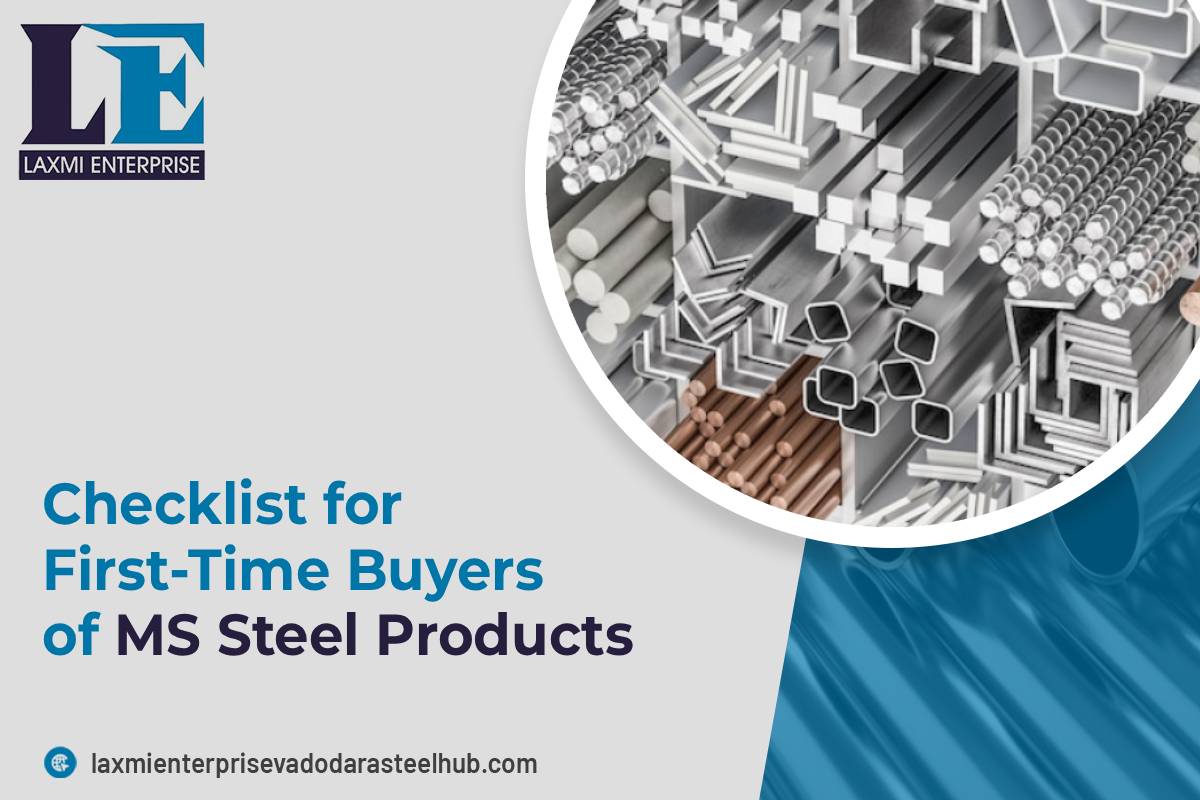
Checklist for First-Time Buyers of MS Steel Products

Mild steel is one of the most widely used metals in modern construction, fabrication, and manufacturing. It offers reliability, strength, and affordability makes it ideal for roofing, frameworks, heavy-duty machinery, and architectural structures. However, for such tasks, the user needs to understand how to choose the right type of MS steel application-specific products. This checklist for first-time buyers of MS steel products can save time and money while ensuring vital long-term performance. 

Overview of Mild Steel

Mild steel is a popular low-carbon alloy with a very small percentage of carbon, of around 0.5% to 0.25%. Laxmi Enterprise is a reputed and renowned supplier of MS steel product in Vadodara. We have a broad range of MS products: MS channels, MS bars, MS TMT bars, MS pipes, MS sheets, etc. You can purchase these products at very affordable rates. Give us a call.  There are many benefits associated with mild steel, such as 

  • The low percentage of carbon makes it highly malleable and strong.  
  • It is also considerably cheaper, easy to work with, easy to cut, shape, weld, and drill. 
  • It can be hot-rolled, cold-rolled, or galvanised based on the application and purpose. 
  • It is compatible with most of the coatings, such as paints, powder, zinc, and extends the lifespan in the external environment. 

Chemical Properties of Mild Steel

Properties 

Significance 

Base Composition

Primarily iron with carbon as the main strengthening element

Alloying Elements

Small amounts of manganese, silicon, sulphur, and phosphorus

Purpose of Additives

Improve toughness, deoxidation, machinability, and workability

Density

~7.85 g/cm³

Melting Point

1,425°C – 1,530°C

Mechanical Strength

Good tensile and fatigue strength under static and dynamic loads

Machinability

Excellent; easy to cut, drill, bend, and shape

Weldability & Forming

Thermally stable and well-suited for welding and high-temperature forming

Magnetic Properties

Magnetic and electrically conductive

Common Applications

Motor housings, fixtures, electrical, and industrial components

Carbon Content

Low carbon prevents brittleness and cracking during fabrication

Corrosion Resistance

Poor; requires painting, plating, or galvanising for outdoor use

Some of the Common MS Steel Products

  • Box Section: These hollow and strong profiles are perfect for framework, gates, handrails, columns, and fabrication works. 
  • Flat Bar: These are multi-purpose bars used for brackets, repairs, stiffeners, and reinforcement across construction and domestic projects. 
  • Angle Bar: It provides rigidity and corner strength for roof trusses, frames, and load-bearing supports. 
  • Channel & Beam: It is designed for structural frameworks, joists, and industrial builds requiring high load tolerance. 
  • Sheet & Plate: It is used in cladding, panelling, roofing, baseplates, and fabrication works. 
  • Round & Square: Our MS square & MS rectangular tube in Vadodara is common in manufacturing, machinery, and decorative metalwork applications. 

Advantages of MS Steel Products

  1. Excellent affordability 
  2. Easy to work with 
  3. Readily available 
  4. Strong and dependable 
  5. Highly weldable and formable 
  6. Fully recyclable 
  7. Accepts protective coatings

Disadvantages of MS Steel Products

  1. It requires a protective coating for outdoor purposes. 
  2. It has less surface hardness and is less resistant to wear compared to high-carbon steel.  
  3. It is unsuitable for high-temperature applications. 
  4. It should be handled with care to prevent dents or scratches.

How To Choose The Best Mild Steel Product

  • Understanding your project’s needs, such as load, exposure conditions, budget, and finish, is the first step towards choosing the best mild steel product.
  • Opt for corrosion-protected grades, such as galvanized S275, which are essential for structural applications.
  • Determine if basic cold-rolled mild steel is sufficient for indoor or light-use applications.
  • Always buy from a reliable vendor that provides cut-to-size services, like Laxmi Enterprise, the MS Steel Supplier in Vadodara
  • Before placing your order, choose the appropriate length, thickness, diameter, and quantity.
  • To get an accurate quote and guarantee that the materials arrive ready to use, enter the precise dimensions.

Conclusion

For any project to be safe, long-lasting, and economical, the proper mild steel must be chosen. You can prevent material failure and needless costs by knowing your load requirements, environment, and finish requirements, as well as by choosing the right grade, dimensions, and vendors such as Laxmi Enterprise. We are the top company for MS steel Vadodara and provide high quality, dependability, and long-term performance, which are further guaranteed by sourcing from certified, reliable suppliers and confirming adherence to accepted standards. Give us a call to know more. 

Check: Role of Mild Steel in the Manufacturing of Furniture

Frequently Asked Questions (FAQs)

S275 is the most commonly used mild steel grade for general construction due to its good balance of strength, flexibility, and affordability.

Yes, galvanised mild steel is recommended for outdoor or exposed environments as it provides corrosion resistance and extends the lifespan of the material.

Certified suppliers ensure the steel meets required standards, provide test certificates for traceability, and offer accurate cutting and delivery services, reducing the risk of defects or project delays.

laxmi enterprise vadodara steel hub Logo

We make it easy for our customers to order for any mildsteel material like pipe, channel, angle, beam, HR Sheet, CR sheet, TMT bars etc. We provide them according to their requirement at the best quality and cost also.

Get in touch

© 2026 Laxmi Enterprise | All Rights Reserved